

Marketing teams today are expected to do more with tighter budgets, leaner headcounts, and increasingly demanding customers. AI‑powered marketing automation has become one of the most reliable ways to bridge that gap. These tools can analyze customer data, predict buying intent, generate copy, optimize send times, personalize content, and orchestrate multi‑channel journeys, often with minimal human intervention once set up correctly.
At the same time, the landscape has become crowded. Some platforms are full‑stack CRMs with AI layered on top, while others focus on very specific problems such as landing page conversions or ABM intent data. Choosing the right platform is no longer just a feature comparison exercise; it is about matching the tool’s strengths to your business model, team maturity, and budget.
1. HubSpot Marketing Hub + HubSpot AI
HubSpot has evolved into an all‑in‑one growth platform, bringing CRM, marketing, sales, and service under one roof with AI embedded across the product. Its AI assistants help you write emails, blog posts, ads, and social updates, build web pages faster, and design automation flows that respond to user behavior instead of following static rules.
Key highlights:
● AI content assistants for email, blogs, ads, and social posts.
● Predictive lead scoring and send‑time optimization built into workflows.
● Unified CRM + marketing data model for cleaner reporting and better insights.
The main strength of HubSpot is this unified, user‑friendly environment. Because all key customer interactions live in one place, its AI has richer data to work with, and marketers get clearer, more reliable reporting. However, there are trade‑offs. Costs rise noticeably as you add contacts, advanced features, and user seats, and enterprise‑level implementations can become complex, requiring governance and dedicated admin resources.
Pricing and best fit:
● Free tier for basic CRM and simple marketing activities.
● Paid plans moving from relatively low monthly Starter tiers into high‑hundreds and then thousands per month at Professional and Enterprise level.
● Best for SMBs and mid‑market firms wanting an all‑in‑one platform, plus agencies that prefer to standardize clients on a single ecosystem.
2. ActiveCampaign
ActiveCampaign is built around “customer experience automation,” combining email marketing, automation workflows, and a lightweight CRM. Its AI features include predictive sending, smart segmentation, campaign suggestions, and win‑probability models that help you prioritize deals and actions.
What it does well:
● Powerful email automation with complex journeys and branching logic.
● Granular segmentation and conditional content for precise targeting.
● Wide integration library with ecommerce platforms, membership tools, and more.
The big advantage is how much automation power you get before crossing into enterprise‑grade pricing and complexity. For email‑centric businesses, ActiveCampaign often delivers an excellent return on investment. However, pricing scales with contact volume, so rapidly growing lists can become expensive. The interface can also feel dense to marketers who only need basic campaigns, and the built‑in CRM may not fully replace a dedicated CRM in complex B2B environments.
Pricing and best fit:
● Entry‑level plans in the lower price band for professional tools.
● More advanced plans in the mid‑hundreds per month for larger contact lists and predictive features.
● Ideal for SaaS, ecommerce, education, and content businesses that rely heavily on email lifecycle marketing.
3. Salesforce Marketing Cloud with Einstein
Salesforce Marketing Cloud, combined with Einstein AI, is built for organizations that need enterprise‑grade, multi‑channel engagement tightly integrated with Salesforce CRM. Einstein powers predictive lead and engagement scores, send‑time optimization, content recommendations, and AI‑assisted decisioning across journeys.
Standout strengths:
● Deep integration with Salesforce CRM and other Salesforce clouds.
● Robust AI for scoring, attribution, and cross‑channel orchestration.
● Strong security, governance, and customization for complex enterprises.
This platform shines when you need to coordinate journeys across email, SMS, push notifications, advertising, and more, all backed by detailed customer data. The trade‑off is that it is not designed for small teams. Implementation requires significant time, budget, and usually specialist partners or in‑house experts. Total cost of ownership includes not just licenses but also data infrastructure and ongoing optimization.
Pricing and best fit:
● Core editions already in the four‑figure monthly range.
● More advanced and data‑heavy configurations climbing much higher.
● Designed for large enterprises, regulated industries, and global brands already standardized on Salesforc
4. Adobe Marketo Engage
Adobe Marketo Engage is a powerhouse for B2B lead management, nurturing, and account‑based marketing. Its AI capabilities focus on lead and account scoring, predictive content, and personalization across email and web experiences.
Why B2B teams like it:
● Strong lead and account‑based nurturing for long, complex sales cycles.
● Flexible scoring models and robust automation for multi‑step funnels.
● Tight alignment with sales teams and good fit with the Adobe Experience Cloud.
Marketo really shines in environments with multiple stakeholders, high deal values, and long decision cycles. However, it expects a certain level of operational maturity. Without solid data hygiene and a dedicated marketing ops function, its powerful features can go underused. There is no free tier, and the entry cost is already high compared to SMB‑focused tools.
Pricing and best fit:
● Plans starting in the high‑hundreds of dollars per month.
● Advanced tiers in the low‑ to mid‑thousands, plus implementation and potential Adobe add‑ons.
● Best for mid‑market and enterprise B2B companies with dedicated ops resources and longer, high‑value sales cycles.
5. GrowEasy.ai
GrowEasy.ai is part of a newer wave of AI‑first tools focused on rapid growth, particularly through paid acquisition and lead generation rather than full CRM management. It aims to simplify campaign setup and optimization so marketers can launch and scale campaigns quickly.
Key advantages:
● Focused on practical growth outcomes like leads and revenue from ads.
● AI‑assisted campaign setup and optimization for non‑technical marketers.
● Particularly useful for local businesses and performance‑driven teams.
Because it is built for this growth use case, GrowEasy.ai is easier to implement than heavy, full‑stack platforms. At the same time, it is not a complete marketing OS; you will still need separate tools for CRM, email, and deeper analytics. Its integration ecosystem and enterprise‑grade features are evolving, but more limited than long‑standing enterprise suites.
Pricing and best fit:
● Tiered plans generally more accessible than legacy enterprise tools.
● Exact pricing varies by plan and usage.
● Ideal for agencies, local businesses, and performance marketers who want AI to improve campaign speed and outcomes without overhauling their entire stack.
6. Gumloop
Gumloop is a flexible AI automation platform focused on custom workflows and sentiment‑driven triggers. Instead of offering pre‑built campaigns, it lets you connect data sources, apply AI models, and then trigger actions across your stack.
Where it stands out:
● Supports custom AI workflows for sentiment analysis and alerts.
● API‑first approach that fits modern, composable stacks.
● Powerful for technical marketing and product‑led teams.
For teams with engineering or data resources, this flexibility is extremely powerful. You can build workflows such as automatically detecting negative sentiment in reviews and routing customers into retention sequences or alerts, or monitoring competitor mentions and triggering specific plays. The limitation is that non‑technical marketers may find the setup challenging, and Gumloop does not replace your ESP, CRM, or analytics tools—it augments them.
Pricing and best fit:
● Free tier for experimentation.
● Paid plans that scale based on usage and workflow complexity.
● Best for product‑led B2B companies and data‑savvy teams that want unique, AI‑powered workflows beyond what typical marketing tools offer.
7. 6sense
6sense is built for predictive account‑based marketing in B2B environments. Its AI aggregates intent signals from multiple sources—web behavior, content consumption, third‑party data, and CRM activity—to predict which accounts are “in market” and how close they are to purchase.
Core strengths:
● Reveals in‑market accounts before they fill out forms.
● Predicts buying stages and suggests best next actions.
● Integrates with CRMs and engagement tools to operationalize insights.
By surfacing hidden demand, 6sense allows marketing and sales teams to prioritize accounts and time their outreach more intelligently. However, it is complex and designed for organizations that already have good data discipline and cross‑functional alignment. It is not a fit for small teams with simple funnels or very broad B2C audiences.
Pricing and best fit:
● Custom, enterprise‑oriented pricing.
● Targets mid‑market and enterprise B2B companies with high deal values.
● Best for mature ABM programs with strong sales–marketing collaboration.
8. Unbounce (AI‑Powered CRO)
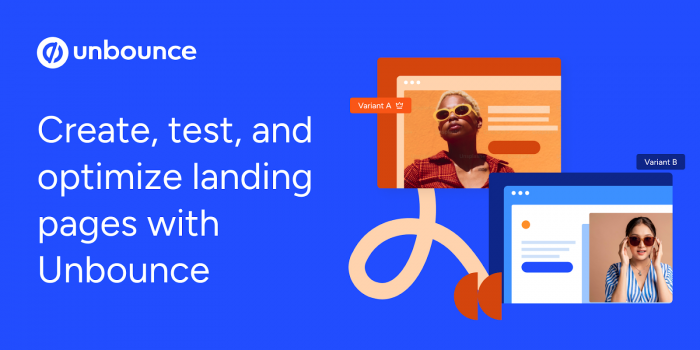
Unbounce is a landing page and conversion rate optimization platform that has layered AI on top of its builder. It uses AI to suggest copy, adjust layouts, personalize content, and run experiments that improve conversion rates from your traffic.
Why it’s valuable:
● Focuses on converting existing traffic rather than just driving more of it.
● AI‑assisted copy and design for landing pages and variants.
● Easy integration with CRM, email, and other tools for lead routing.
Unbounce is not a CRM or a full marketing automation suite, but that is also its strength: it concentrates on the “last mile” of the funnel. If your main challenge is turning clicks from ads or organic search into leads or customers, Unbounce adds AI‑driven experimentation around that point. Costs can rise for high‑traffic sites or agencies managing many pages, but the ROI can be significant if your traffic volumes are meaningful.
Pricing and best fit:
● Plans ranging from lower tiers for small teams to premium tiers for agencies and high‑volume advertisers.
● Best for marketers focused on paid acquisition and CRO who are ready to plug a specialized tool into their existing stack.
Final Verdict: Which Tool Should You Really Pick?
AI marketing automation in 2026 is less about chasing buzzwords and more about building a stack that actually makes your campaigns faster, smarter, and easier to run. The tools in this list sit on a spectrum: some are full platforms that can become your main operating system, while others are sharp instruments designed to fix one specific bottleneck.
Pick HubSpot or ActiveCampaign when you want a primary hub for campaigns and customer data with built‑in AI and a manageable learning curve. Choose Salesforce Marketing Cloud or Adobe Marketo Engage when you are dealing with multiple regions, long buying cycles, and strict governance, and you already have the internal muscle to run complex systems. Layer in GrowEasy.ai, Gumloop, 6sense, or Unbounce when you need extra lift in specific areas like paid growth, custom workflows, ABM, or conversions, instead of ripping out what already works.
A good rule of thumb : start with the tool that will clean up the biggest mess in their current funnel whether that is data, nurture, targeting, or conversion and then add AI tools around it only when new bottlenecks appear.
Comments