
Colossyan and DeepBrain AI are two of the strongest AI video platforms right now, but they shine in different scenarios: Colossyan leans into instructional and workplace learning content, while DeepBrain AI (AI Studios) pushes harder on realism, multilingual reach, and large‑scale content operations.
Why This Comparison Matters
AI avatar video tools have moved from “nice to have” to core infrastructure for training, marketing, and internal comms. Colossyan and DeepBrain AI consistently appear at the top of shortlists because both can turn a script into a studio‑style talking‑head video in minutes, without cameras, actors, or editors.
Yet for a buyer, the overlap is confusing: both offer dozens of avatars, hundreds of voices, templates, brand kits, and team features. The real decision comes down to use case: do you want fast, interactive learning videos that plug into your LMS, or incredibly realistic avatar videos in 80+ languages for global campaigns?
Colossyan: Text‑to‑Video for Training and Explainers
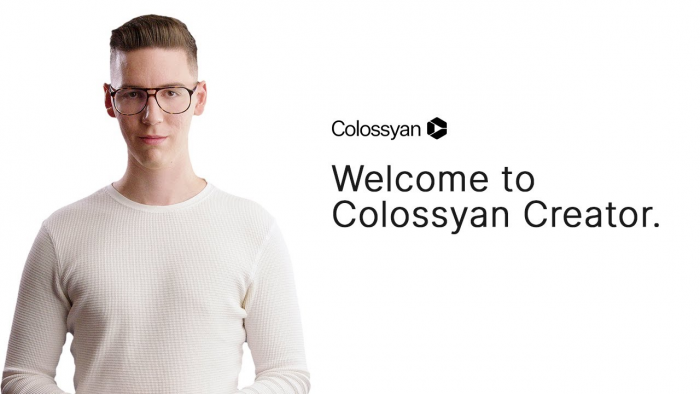
Colossyan is positioned primarily as a workplace learning and training video platform, designed to help L&D teams, HR, and operations create explainer content quickly. Its editor lets you paste or import a script, choose an AI avatar, and generate a talking‑head video with synced captions, b‑roll, and branded elements. The focus is on structured, repeatable content rather than cinematic storytelling.
Colossyan offers a solid range of stock avatars about 70+ on basic plans and up to 170–200+ on higher tiers along with custom avatar options. You can create quick “Instant” avatars using a webcam or more polished “Studio” avatars from professional recordings. The avatars are optimized for clear, professional delivery, making them ideal for training, onboarding, and internal communication.
Where it really stands out is in learning-focused features. You can build multi-scene videos with multiple avatars, add branching scenarios for interactive learning, include quizzes, and export SCORM packages for LMS integration. Its auto-translation also adapts on-screen text and visuals, making it useful for global teams.
Pricing follows a tiered model, starting at about $19/month for individuals and around $70/month for Pro plans, with Enterprise options offering advanced features, custom avatars, higher limits, and dedicated support
DeepBrain AI: Hyper‑Realistic Avatars and Multilingual Scale
DeepBrain AI’s AI Studios product leans more toward marketing, sales enablement, and global content campaigns where avatar realism and language coverage are critical. The editor is still drag‑and‑drop and script‑driven, but the visual output aims to mimic real presenters as closely as possible, with refined facial expressions, gesture control, and very tight lip‑syncing.
DeepBrain AI offers 150+ AI avatars across different demographics and industries, with a strong focus on realism especially natural movement and facial expressions. This makes it a popular choice for customer-facing videos, personalized content, and branded spokesperson use.
It also stands out in multilingual capabilities, supporting 80+ languages (or even more language–voice combinations) with accurate lip-sync. Built-in AI script generation helps users quickly turn prompts into ready-to-use video scripts, which is useful for non-writers and fast content creation.
Pricing is tiered, starting with a free plan for basic use. Paid plans begin around $24–30/month for individuals, while Team/Pro plans start near $55/month per user, adding features like 4K export, team collaboration, custom avatars, and brand tools. Enterprise plans focus on scalability, API access, and advanced customization.
Feature‑by‑Feature Comparison
To make the differences clearer, here is a structured look at key categories that matter for buyers.
Core Focus and Best Fit
Colossyan is optimized for internal learning content: onboarding, process training, compliance, and explainer modules that need to be updated frequently and plugged into LMS systems. DeepBrain AI is better aligned with marketing, external communication, and large‑scale multilingual content where visual realism and language coverage are non‑negotiable.
| Category | Colossyan | DeepBrain AI |
| Core focus | Workplace learning, training, explainers, internal comms. | Marketing, promotional content, personalized outreach, enterprise campaigns. |
| Ideal teams | L&D, HR, operations, customer education. | Marketing, sales, agencies, global comms. |
| Content volume | Optimized for recurring training modules and updates. | Optimized for high‑volume, multilingual campaigns and personalization. |
Avatar Realism, Library, and Customization
Both tools now offer large avatar libraries and custom avatar creation, but the qualitative experience differs. Colossyan avatars are polished and professional, while DeepBrain AI pushes closer to live‑action realism with finer control over emotion and gestures.
| Category | Colossyan | DeepBrain AI |
| Stock avatars | ~70+ on lower plans, 170–200+ on higher tiers. | 150+ AI avatars across demographics. |
| Realism | Professional, consistent, suited to training and explainers. | Widely regarded as more lifelike, with excellent lip‑sync. |
| Custom avatars | Instant and Studio custom avatars, aimed at corporate speakers. | Multiple custom avatar options, including premium clones for brand spokespeople. |
| Gesture/emotion control | Basic pose and framing controls. | Advanced gesture and emotion controls in higher‑tier plans. |
Languages, Voices, and Localization
Localization is a major differentiator once you move beyond a single market. Both platforms support dozens of languages and multiple accents, but DeepBrain AI covers slightly more languages overall.
Colossyan supports 70+ languages, with auto‑translation that can update subtitles and on‑screen design elements in one pass, which is extremely convenient for e‑learning localization. DeepBrain AI supports 80+ languages (and 150+ languages/voices in some configurations) with accurate lip‑sync, and is frequently recommended when “maximum language coverage” is the priority.
Both support voice cloning and brand voice features on higher tiers, enabling an avatar of a real presenter to speak multiple languages using a cloned voice profile.
Editor, Workflow, and Interactivity
From a pure editing standpoint, both tools allow drag‑and‑drop scene building, script timing, and layer management for text, images, and shapes. However, their workflows are optimized differently.
Colossyan’s editor emphasizes speed and learning‑specific constructs: multiple avatars per scene, branching paths, embedded quizzes, and SCORM export for LMS integration. This is valuable for anyone creating structured “courses” rather than one‑off videos.
DeepBrain AI’s workflow leans into creative control for marketing videos. Users can set multi‑avatar scenes for natural conversations, fine‑tune emotions and gestures, and integrate AI script generation to move from campaign idea to finished script without leaving the platform. For teams that already have marketing processes in place, this can slot into storyboards and campaign systems.
Templates and Getting Started
Most non‑video teams rely heavily on templates in the early stages. Here DeepBrain AI has a numerical advantage: it offers over 500 video templates, covering common formats such as social ads, product explainers, news‑style layouts, and corporate announcements. Colossyan, by contrast, offers around 30+ templates, mostly oriented toward training, onboarding, and explainer scenarios.
That means DeepBrain AI is often more appealing if you are churning out many campaign variants, while Colossyan’s template set is tuned for standardizing internal training content.
Pricing and Value for Money
Because both companies update pricing frequently, it is best to treat exact numbers as directional rather than fixed. Third‑party sources and pricing snapshots suggest the following structure.
| Plan level | Colossyan (indicative) | DeepBrain AI (indicative) |
| Free / trial | Free or trial options with limited minutes and avatars. | Free plan: 3 short exports, 1 custom avatar, 720p. |
| Entry individual | Around 19 USD/month with limited minutes and avatar access; good for solo creators. | Personal/Starter from ~24–30 USD/month with unlimited videos up to a certain length in 1080p. |
| Mid‑tier / Pro | Around 70 USD/month per user with more minutes, avatars, voice cloning, brand kit, and team features. | Team/Pro from ~55–225 USD/month, adds 4K, more credits, premium avatars, gestures, multi‑avatar scenes, collaboration. |
| Enterprise | Custom pricing, unlimited or high usage, full avatar library, advanced security, custom avatars, dedicated support. | Custom pricing, white‑label options, API access, high‑volume generation, advanced security. |
Strategically, Colossyan offers a slightly cheaper on‑ramp for small teams while still accommodating enterprise. DeepBrain AI comes in a bit higher at the team level but compensates with more realism, more templates, and deeper language coverage.
Data Security, Compliance, and Governance
For enterprise buyers, security and compliance can make or break a deal. Colossyan emphasizes GDPR compliance and robust privacy controls, positioning itself as safe for regulated business environments. DeepBrain AI similarly offers advanced security features such as encryption, access controls, secure database storage, and regular security audits, which are particularly important for government, finance, and healthcare deployments.
Both platforms provide enterprise‑grade options, but you will typically need to engage sales for detailed documentation and DPAs.
Ease of Use and Learning Curve
User experience is another subtle but important differentiator. Reviews consistently describe Colossyan as particularly user‑friendly, accessible even to non‑technical staff who have never edited video before. The interface is streamlined, and workflows map closely to how L&D and HR teams think about modules and lessons.
DeepBrain AI is still approachable but designed with professionals in mind. Its richer controls for gestures, emotions, and advanced editing can mean a steeper learning curve for absolute beginners, although it offers much more headroom for creative teams who want fine‑grained control.
Which One Should You Choose?
If you primarily create internal training, onboarding, SOP, and explainer content, Colossyan is often the more pragmatic choice. It gives you a fast, intuitive way to turn documentation into structured video lessons, with tools like quizzes, branching, and SCORM export built in, and a relatively lower barrier in terms of cost and complexity.
If your priority is lifelike, multilingual avatar content for external audiences marketing campaigns, personalized customer videos, or global announcements, DeepBrain AI usually edges ahead. Its more realistic avatars, broader language support, vast template library, and advanced gesture/emotion controls make it better suited to high‑visibility, brand‑sensitive work, especially at enterprise scale.
Verdict
If you look beyond features and specs, the real difference is how each tool reshapes your workflow. Colossyan turns static documentation into living, update‑friendly training assets that slot neatly into existing L&D systems. DeepBrain AI, on the other hand, behaves more like a virtual production studio, letting you ship hyper‑polished, multilingual avatar videos that feel close to a real presenter without the overhead of shoots, actors, or complex post‑production. In that sense, your choice is less about “which has more features” and more about whether you need a training engine for your workforce, or a virtual on‑camera team for your brand.
Comments