

DreamPress AI doesn’t feel like a typical SaaS tool; it feels more like walking into a dimly lit, always‑open story bar where the bartender is an over‑caffeinated novelist who never runs out of ideas. You don’t ask it to “perform a task.” You lean over the counter, whisper a scenario, and a few seconds later you’re staring at a scene you didn’t know you wanted, equal parts familiar and surprising.
This is where DreamPress AI lives : somewhere between fanfic community, NSFW playground, and serious writer’s messy sketchbook. Let’s peel it apart without killing the magic.
So, what is DreamPress AI, really?
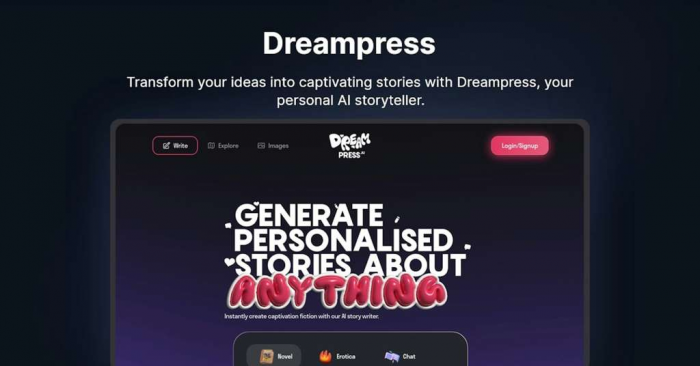
On paper, DreamPress AI is simple: an AI‑based story engine available on the web and in a mobile app that turns your prompts into fiction. But that’s like describing a bar as “a room that sells liquids.”
The platform is tuned almost obsessively for narrative. You give it a seed—“two rival mages forced into an arranged marriage,” “space truckers caught in a slow‑burn romance,” “dark fantasy with morally dubious angels,” or any NSFW setup you can imagine—and it responds with complete scenes or chapters, not snippets or half‑answers. Genres span the conventional (fantasy, sci‑fi, horror, adventure) and the unapologetically adult (romance, erotica, kink‑coded stories), making it a rare space where “uncensored” isn’t a marketing buzzword but a core design choice.
You can use it in a browser. You can carry it in your pocket via the “Dreampress AI: Story Generator” app. But conceptually, it wants to be a fiction studio that never clocks out.
The “fiction studio” under the hood
DreamPress is not a minimalist “one big button” generator; it’s more like a messy writer’s room disguised as a simple interface.
You start with a prompt box and a few decisions: genre, tone, and where you want to sit on the safe–NSFW spectrum. This is the surface layer. Behind that, DreamPress quietly offers structure: you can break sprawling tales into chapters, attach notes about your world’s politics or your characters’ trauma, and feed that context back into the model so it stops forgetting who hates whom and why.
There’s another personality hidden inside: the role‑play engine. Instead of asking for a “story,” you step into a character—“I’m the new knight sworn to protect a cursed prince,” “I’m the assassin hired by my childhood friend” and the AI answers as everyone and everything else. You talk; it reacts. The output reads less like a traditional story dump and more like a co‑written improvisation session where you’re sometimes actor, sometimes director, sometimes gleeful audience.
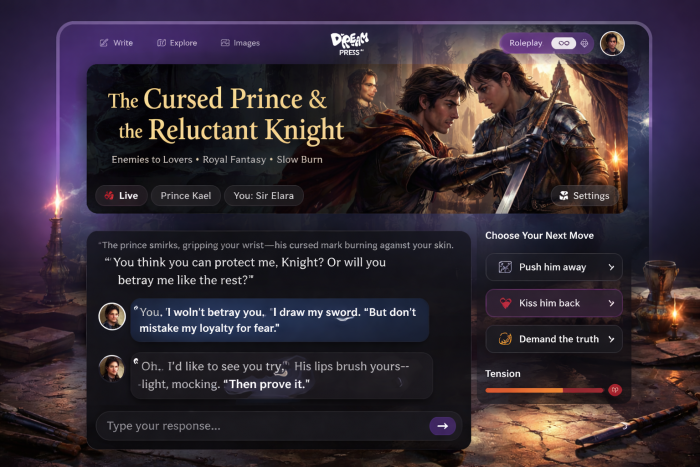
And then there are the images. DreamPress doesn’t stop at text; higher‑tier users get an integrated image generator that can churn out character portraits, scene art, or mood‑setting visuals by the thousands each month. The intended loop is obvious: write the scene, see the characters, rewrite the scene now that you can “see” them, and repeat.
It’s not a publishing suite. It’s not Scrivener. It’s the messy, indulgent part of writing where you let yourself play.
A day in the life of a DreamPress user
You’ve just created your account. No dashboards full of charts. Just a clean screen asking, “What do you want to write today?”
You type:
“Enemies to lovers, modern city, two rival tattoo artists sharing a studio by mistake. Slow burn, lots of banter, mildly spicy for now.”
You choose “romance,” tick a box that says you’re fine with adult content later if the scene goes there, and hit generate. A few seconds pass. Then your screen fills with a first chapter: the smell of ink, the buzz of needles, the electric tension when your leads realize their names are both on the lease. The prose might need trimming, but the bones are there.

You keep going. Chapter two: you nudge the AI “more focus on their creative rivalry; no explicit content yet” and watch it adjust. Later, curiosity wins. You flip into a role‑play mode, inhabit one of the artists, and let DreamPress handle the other, volleying dialogue back and forth like a game of narrative ping‑pong.
At some point the free tier politely taps you on the shoulder. You’ve hit your daily limit. The “Upgrade” button appears like a waiter refilling your glass while quietly sliding the bill closer. On a paid plan, that interruption mostly disappears. You shift from “I should ration my ideas” to “I can empty my brain onto this thing and see what sticks.”
Behind all this, a library view quietly accumulates your experiments: the half‑finished vampire epic, the uncomfortably personal breakup monologue, the pure chaos of that one fantasy role‑play session at 2 a.m. Some you keep private. Others you might polish and share into the community space where strangers can read or even continue your threads.
Where the words shine and where they crack
The most interesting thing about DreamPress isn’t that it can write; most AI tools can write. It’s what it chooses to be good at.
DreamPress leans hard into emotion and imagery. The platform has a knack for painting feelings: the way a character’s stomach flips when their crush brushes past them, the way a haunted forest feels hostile before anything actually attacks, the way heat builds over pages instead of one clumsy jump cut to explicit content. Ask for a quiet, aching reunion between ex‑lovers, and it tends to understand “quiet” and “aching” better than many generic chatbots thrown into creative mode.
Short and mid‑length stories are its sweet spot. Over a handful of scenes, characters keep their voices. A snarky rogue stays snarky; a nervous healer doesn’t suddenly become a swaggering warrior without reason. If you use DreamPress as an idea generator or a scene engine, it feels like you’ve hired an enthusiastic, slightly trope‑obsessed ghostwriter.
Stretch things to novel length and the seams start to show. Minor characters vanish. Mysteries set up three chapters ago are quietly forgotten if you don’t drag them back into the spotlight yourself. The prose, while vivid, sometimes slips into loops: the same metaphors for kisses, the same descriptive patterns for bodies and clothing, especially in NSFW scenes. If you binge multiple stories in the same niche, you start spotting the “DreamPress DNA” in how intimacy and conflict tend to unfold.
Control is possible, but not passive. Detailed prompts, clear boundaries, and periodic course corrections work wonders; left unattended, the model gravitates toward familiar emotional beats and popular fanfic tropes. That’s delightful when you want comfort food, and frustrating if you’re chasing something structurally bold or kink‑specific that the model keeps sanding down.
Think of DreamPress not as a co‑author who will respect every beat of your carefully plotted trilogy, but as an improviser who’s incredible at keeping the scene alive, less great at hitting act‑three deadlines without a director.
The skin it wears: interface, latency, rituals
If you’ve ever opened a “productivity AI” and been greeted with 40 settings and a corporate colour palette, DreamPress will feel almost disarmingly casual.
The interface is stripped down and legible: a place to pick your mode, a place to write, a place to read. The mobile app behaves like a reading and writing app, not a dashboard of toggles. You scroll, tap, type, and the story keeps up with you on trains, in bed, or in those liminal minutes between obligations.
Speed matters in this kind of intimacy‑driven storytelling, and DreamPress is usually quick on the draw. Scenes appear in seconds rather than dribbling in, which is vital when you’re mid‑banter or slowly escalating a romantic moment; lag kills chemistry faster than bad prose ever could.
The rough edges are mostly about friction and trust. The free tier’s hard limits can tear you out of flow at the worst moment: a cliffhanger, a big reveal, the threshold of something explicit because your daily quota just ran out. That’s not a bug; it’s a business model. But it’s noticeable.
Add to that the occasional stories from users about bugs, login issues, or rough support experiences, and you get a platform that feels intimate but occasionally reminds you, a bit rudely, that it’s still software living on someone else’s servers.
The price of unlimited fantasies
DreamPress’s pricing philosophy is simple: free to taste, subscription to feast.
The free plan is deliberately stingy. You can generate several pieces per day, enough to understand the vibe, but not enough to live inside it for hours on end. Exports are constrained, some features are dimmed out, and the cooldowns feel like a bartender cutting you off “for your own good” and for their conversion metrics.
The main attraction is the Unlimited plan. At list price, you’re paying around 19.99 USD a month for unrestricted storytelling and a very generous image quota, often advertised at up to roughly 2,000 images monthly. From the perspective of word count, that’s effectively “as much as you can physically read and edit,” turning cost per 100k words into a rounding error for heavy users.
Pricing Overview
| Plan name | Official price (USD) |
| Free Plan | $0 / month |
| Monthly Unlimited | $19.99 / month (standard list price) |
| Yearly Unlimited | Advertised as $10 / month (billed annually) on official offers (approx. $120/year before discounts) |
Is it worth it? If you’re the kind of person who will happily spin out dozens of chapters and thousands of images each month, the math works out in your favour. If you just want a few bedtime stories a week, the free tier plus the occasional promo might be all you need and broader AI tools might give you better overall value.
The uncomfortable but necessary questions: safety, privacy, ownership
DreamPress thrives because it dares to say “Yes” where many platforms say “We’re not comfortable with that.” That “Yes” is powerful and heavy.
The service openly courts adults who want erotica, kink exploration, and explicit romance, while still having to honour universal red lines: no minors, no non‑consensual violence glorified as fantasy, no outright illegal content. The result is a line that feels far more permissive than mainstream chatbots, but still not absolute freedom. Some prompts will simply be refused, some will be reshaped, and a few grey areas will fall to internal policy you don’t control.
Ownership is the more straightforward part. DreamPress tells paying users they own the stories they generate and can use them commercially, subject to the usual terms. Practically, that means you can take these AI‑assisted drafts, revise them into something truly yours, and sell them on Kindle, Patreon, or wherever you hustle your fiction without constantly looking over your shoulder. Always re‑check the latest terms, but this is the general posture.
Privacy is where the romance cools a notch. DreamPress, like most AI services, is not a locked notebook under your pillow. Prompts and outputs may be logged. Some stories feed into a community library. Analytics and model training need data, and your words are data. You can keep content private with the right settings, but you shouldn’t assume your most vulnerable, identifying fantasies live on a machine you alone control.
If you treat it like a trusted collaborator that still works for a company, not like a confessional booth, you’ll make healthier choices about what you put in and what you keep offline.
The chorus of users: cheers, boos, and wary side‑eyes
Look at public reviews and you don’t see quiet consensus; you see a split room. On major platforms, DreamPress hovers in the “mixed” zone roughly mid‑three stars out of five because the highs and lows average out.
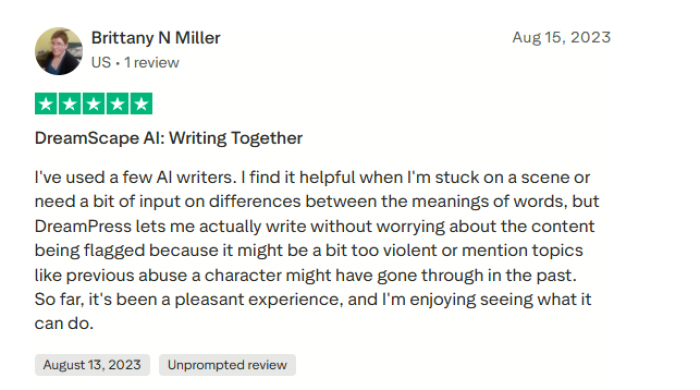
On one side of the aisle: people who are genuinely in love. They talk about finally having a tool that “gets” the kind of scenes they want, about the thrill of weaving themselves into worlds that would never pass through a corporate content filter, about using DreamPress as a daily writing warm‑up that unlocked previously stuck projects.
On the other: people who feel burned. They talk about subscriptions they thought they’d cancelled but hadn’t, about patchy support when billing went wrong, about bugs that blocked access right when they’d paid for “unlimited.” Add in some disappointment over repetitive tropes and uneven long‑form quality, and you get reviews that read less like “I hate AI” and more like “I loved what this could be and got frustrated by how it’s run.”
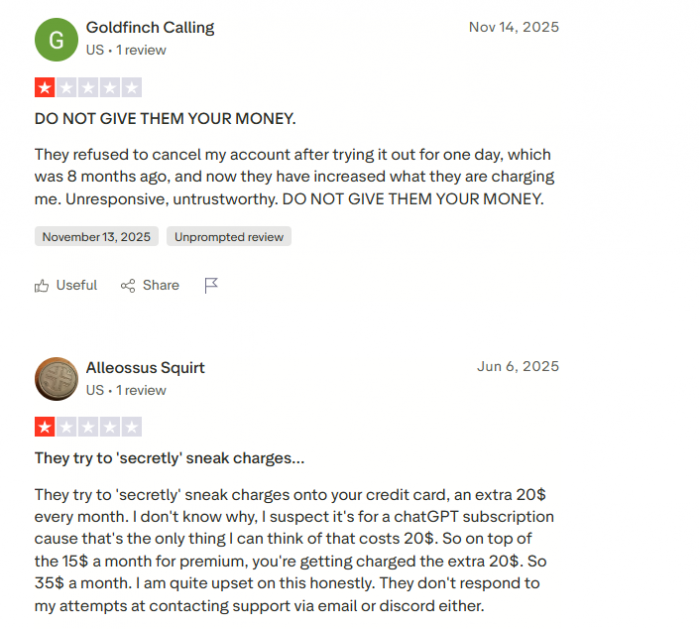
The through‑line is this: the core creative experience is often praised even by critics; it’s the surrounding business and reliability envelope that draws fire. The safest approach is to treat DreamPress like a passionate but imperfect tool: try it deeply, start with monthly billing, and watch your statements as closely as you watch your plot arcs.
Where it sits in the wider AI story universe
In the sprawling ecosystem of AI tools, DreamPress is a specialist, not a generalist. If traditional chatbots are Swiss Army knives, DreamPress is a very sharp, very specific blade: perfect for fiction, awkward for anything else.
Next to other story generators, it differentiates itself on three axes that matter to its audience:
● It is willing to go explicit where others slam the brakes.
● It treats images as a first‑class citizen, not an afterthought bolted on for marketing screenshots.
● It wraps solo writing, interactive role‑play, and a semi‑public story space into a single ecosystem.
You absolutely can coax excellent stories out of general‑purpose LLMs with the right system prompts and patience. But DreamPress’s bet is that many users don’t want to be prompt engineers; they want to be characters, or directors, or readers who occasionally lean over the shoulder of the AI and say, “No, more like this.”
Dreampress AI Nearest Alternatives
1. SmutFinder (NSFW‑first, highly personalized)
SmutFinder is an adult‑only AI story generator built specifically for personalized erotica and fantasy‑driven tales. You enter your own name, physical traits, preferences, and boundaries, then either steer the story via interactive choices or let the AI write a complete narrative around your persona. It emphasizes tone control, intensity sliders, and coherence across scenes, making it a natural alternative if a reader wants NSFW content with very fine‑grained control over kinks, limits, and emotional pacing.
2. DreamGen AI (role‑play and world‑building focus)
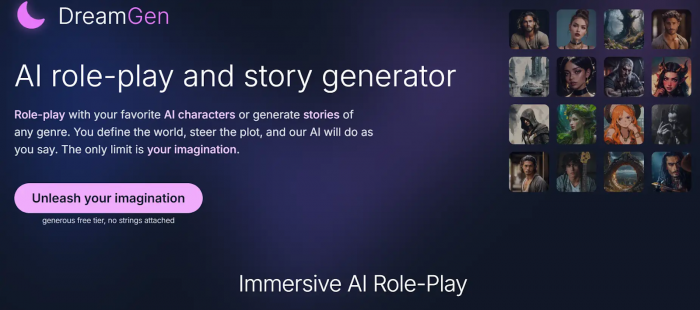
DreamGen AI is positioned as an uncensored role‑play and chat platform rather than a traditional “story dump” generator. Users build virtual AI characters (including anime‑style and realistic avatars), define worlds and backstories, and then interact with them in long‑form, NSFW‑optional conversations. It is frequently cited as a top Dreampress‑style alternative because it combines fast, explicit‑friendly writing with deep customization and world‑building tools, especially for people who care more about ongoing role‑play than static chapters.
3. AI Dungeon (game‑like interactive adventures)
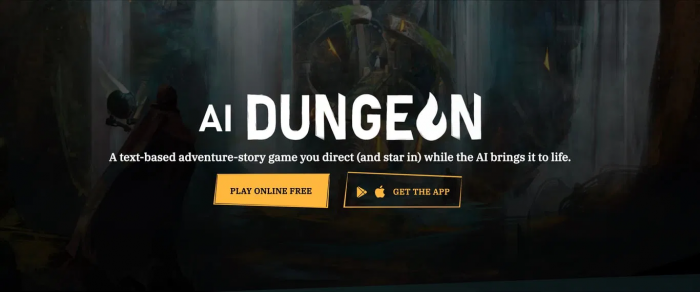
AI Dungeon remains one of the best‑known interactive AI fiction platforms, offering dynamic text adventures across fantasy, sci‑fi, mystery, and more, with both SFW and NSFW possibilities depending on mode and settings. It runs on a freemium model, with paid tiers (Adventurer, Champion, Legend, Mythic) ranging roughly from 9.99 to 49.99 USD per month, adding longer context windows, faster models, and image generation. For your article, you can frame it as the best choice for readers who see AI storytelling as a game procedurally generated quests and campaigns rather than as a pure smut or romance engine.
Who should pull up a chair and who should walk past
If you are an adult who reads or writes fiction for pleasure, enjoys fanfic‑adjacent spaces, and isn’t afraid of AI being messy and a little trope‑drunk, DreamPress can be intoxicating. It’s especially potent for:
● Fanfic writers testing dynamics and scenes before committing to full works.
● Romance and erotica creators looking for fast, emotionally tuned drafts to edit.
● Readers who want to be in the story, not just see it unfold from the outside.
If you are hoping for a reliable factory that will quietly produce polished, structurally perfect novels while you watch Netflix, this is not that. If billing mistakes keep you up at night or you want an AI you can safely demo in a classroom, this is definitely not that.
Final Verdict
DreamPress AI is less a “novel factory” and more a beautifully chaotic sandbox for adults who like their fiction messy, emotional, and sometimes explicit. If you treat its outputs as raw, over‑the‑top drafts to strip down and reshape not finished work it’s an incredibly fun, oddly inspiring subscription; if you want spotless long‑form structure and corporate‑grade reliability, it will drive you mad long before it writes your masterpiece.
Comments