

I didn’t need long on Granny Space to realize I wasn’t inside a normal mature‑dating site at all, I was inside a coin‑driven fantasy machine that looks like romance on the surface but behaves like a scripted chat arcade underneath. The branding promises older women “ready to chat tonight”, but everything from the terms to the user reviews screams something very different.
Chapter 1. The Promise: “Real Grannies Waiting”
The first impression is deliberately comforting: soft colors, smiling “grannies”, easy sign‑up, and the suggestion that you’re just a few clicks away from a warm conversation with a real mature woman.
What the site wants you to believe:
● You’re joining a niche dating community focused on older women and those who like them.
● Those profiles are real singles nearby, “online now”, waiting for you to say hi.
● It’s a casual, fun place to flirt, connect, and maybe take things further—like any other dating site, just with a granny twist.
But that promise only holds if the people you see are real, and if the goal is actually to connect you with them.
Chapter 2. Behind the Curtain: What Granny Space Really Is
Once you step past the landing page and into the legal and practical reality, Granny Space stops looking like dating and starts looking like a paid fantasy chat service built around virtual or operator‑run profiles.
What independent investigations consistently find:
● The platform classifies interactions as entertainment, not matchmaking, in its fine print.
● It acknowledges “content providers”, “moderators”, or “fantasy simulations” that may respond on behalf of profiles.
● Conversations are not designed to lead to real‑life meetings; they are designed to keep you chatting and paying inside the system.
In simple terms: you are not buying a chance at a date, you are buying time inside a scripted fantasy environment that looks like dating.
Chapter 3. The Onboarding Trap: How the Site Pulls You In

Granny Space’s signup flow feels friendly and light, but each step is engineered to move you closer to spending coins rather than closer to meeting someone real.
You usually experience it like this:
● Minimal friction at signup : a quick form, often no serious verification, and you’re “in” within minutes.
● A sudden wave of attention : messages appear from multiple “grannies” almost immediately, even if your profile is empty.
● An addictive profile grid : rows of older‑looking women with glam photos, green “online” dots, and suggestive bios that all nudge you to click.
● A subtle paywall : you can look around for free, but the interface subtly funnels you toward replying, which is where the coin system kicks in.
The design doesn’t feel like “create a good profile and meet compatible people”; it feels like “respond quickly to all this attention before it disappears”—and that urgency is what makes many users reach for their card.
Chapter 4. Coins, Credits, and the Psychology of Tiny Payments
Granny Space doesn’t run on simple subscriptions. It runs on coins—small, abstract units that turn your money into bite‑sized chat impulses.
How the coin economy usually works:
● Browsing is free, but replying or initiating meaningful chat costs coins.
● Messages are priced per unit; a few coins per message sounds harmless until you realize how fast a back‑and‑forth burns through them.
● Coin bundles are structured so the “best value” pack pushes you to spend more upfront, and the real per‑message cost feels fuzzy in your head.
● There is no natural spending cap, once a pack is empty during a heated chat, the only way forward is to buy more.
Multiple reviewers describe losing large sums in what felt like a blur of small payments:
● Users mention burning the equivalent of tens or hundreds of dollars in a single evening of chat.
● One Trustpilot story describes an 85‑year‑old losing about $25,000, being charged around $100 per session, and never meeting anyone.
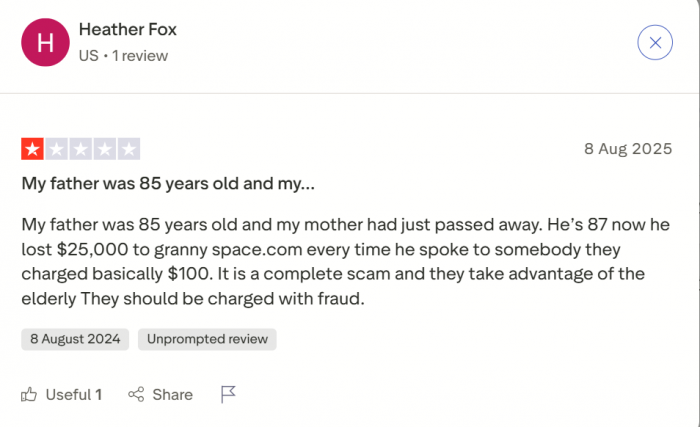
The coin system turns emotions into a meter that runs in the background, ticking upwards with every flirty line you answer.
Chapter 5. Are These Women Even Real?
This is the question that sits at the center of almost every user : who is actually talking to you?
Evidence from terms, user reports, and external checks points in the same direction.
Red flags around authenticity:
● The fine print admits that “moderators” or “content providers” may respond on behalf of profiles, meaning the photo and the typist can be entirely different people.
● Many profile photos look like stock, glamour, or adult‑site images rather than ordinary snapshots; users report reverse image searches confirming this.
● “Everyone” seems online all the time; grids full of green dots at odd hours raise suspicion that availability is simulated rather than real.
● Conversations avoid direct questions, feel repetitive, and always end on a question to keep you answering (and paying).
On top of that, attempts to move a chat off‑platform often hit a brick wall:
● When users ask for WhatsApp, email, or a phone number, responses become evasive or the topic gets deflected entirely.
● Some reviews describe a pattern where every profile has a reason not to meet or share contact details, no matter how long you chat.
You’re not just paying to talk, you’re paying to talk inside a sealed box that you cannot open.
Chapter 6. “We’re Just Entertainment”: Transparency, Safety, and Data
From a legal standpoint, Granny Space protects itself by framing the whole thing as entertainment, not real dating.
Key transparency and safety issues:
● The platform positions itself in policy as a fantasy or entertainment service, explicitly distancing itself from responsibility for real‑life dating outcomes.
● There is no strong identity verification system comparable to what mainstream dating apps use (ID checks, selfie verification, etc.).
● Chats may be monitored not just by software but by staff, raising privacy concerns about who sees your intimate messages.
● Off‑platform communication is discouraged or blocked, which means you must keep revealing personal details—if you choose to—inside their paid ecosystem.
On the financial and trust side:
● Third‑party scam‑checkers assign low trust scores to grannyspace.com, often citing hidden ownership structures and recurring scam complaints.
● Users report difficulties securing refunds and describe credits as explicitly non‑refundable in the terms.
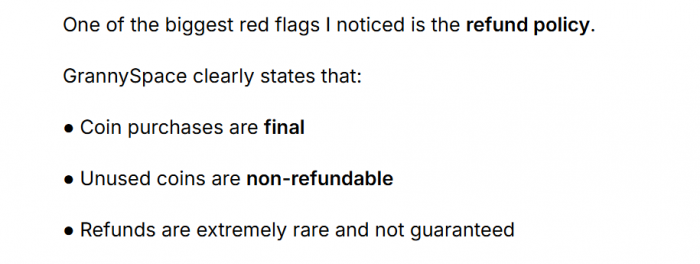
Granny Space doesn’t just keep conversations boxed in—it keeps your money and your vulnerability inside the same box.
Chapter 7. The Illusion of Connection: How Conversations Feel
On a purely technical level, Granny Space’s chats can feel impressive: fast replies, flirty energy, and seemingly constant availability. But the emotional experience is strangely hollow.
Patterns users describe in conversation quality:
● Replies are extremely quick, sometimes unrealistically so, suggesting scripts or multiple operators rather than one genuine person.
● Messages circle back to generic compliments and teasey lines instead of building real depth or sharing concrete, verifiable life details.
● When you test them with specific questions, local landmarks, time zones, personal details, answers stay vague or change over time.
● Pushback (like asking “Are you real?” or challenging the costs) usually gets derailed with emotional hooks rather than honest discussion.
The result is a treadmill: constant digital affection, zero progress toward a real person.
Chapter 8. Outside Opinions: Ratings, Complaints, and Warnings
Once you leave the site bubble and look at external feedback, the picture sharpens quickly.
On Trustpilot and similar platforms:
● Granny Space / grannyspace.net typically sits in the “Bad” category with ratings around 2 out of 5.
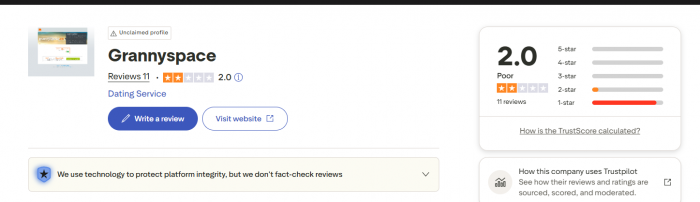
● Common complaints include “fake profiles”, “scripted conversations”, “no real meetings”, and “huge bills for nothing”.

● The already mentioned case of an 85‑year‑old losing around $25,000 is not an outlier in sentiment, even if it is extreme in amount.
On forums, Reddit, and YouTube:
● Reddit threads explicitly ask whether Granny Space is a scam and tend to conclude that it is a total scam or close enough. reddit
● Commenters report identical messages from different profiles, suggesting copy‑pasted scripts.
● YouTube reviewers show examples of the chat behavior and describe the site as a “ridiculous scam”, pointing to coin burns and never‑ending on‑site chats with no offline path.
On scam‑analysis sites:
● Tools that rate domain trust often flag grannyspace.com as high‑risk, citing user complaints, unclear ownership, and patterns typical of exploitative chat sites.
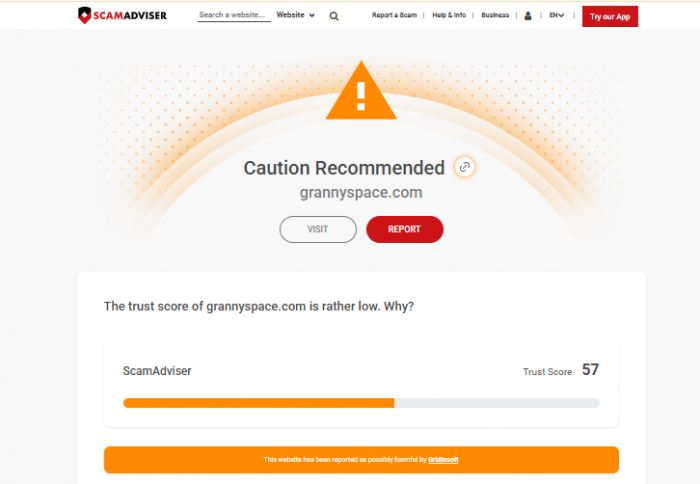
Put simply: almost nobody outside the platform itself describes Granny Space as a legitimate dating site.
Chapter 9. A Quick Reality Check: Granny Space vs Real Dating Apps
To ground all this, here’s the contrast in plain terms.
Granny Space behaves like:
● A coin‑based fantasy chat service centered on virtual or operator‑run personas.
● An ecosystem with no built‑in path to off‑platform contact or real‑world dates.
● A system where financial risk and emotional manipulation are core to the revenue model, not accidental side effects.
Mainstream dating apps, by comparison, typically offer:
● Real users with at least some level of profile verification and anti‑bot tools.
● Clearer pricing (free tiers plus optional subscriptions or boosts instead of per‑message coins).
● The explicit expectation that serious users will move off‑platform—exchange numbers, meet, or video chat.
They come with their own problems (catfishing, ghosting), but the core aim is to connect real people, not to keep you inside a paywalled fantasy loop.
Chapter 10. Who Should Stay Away, Who Might Still Try It
No review is complete without saying clearly who this site is not for.
You should absolutely stay away if:
● You are looking for real companionship, dates, or relationships with older partners.
● You’re elderly, grieving, or otherwise emotionally vulnerable; the power imbalance is too strong.
● You’ve ever struggled with overspending in emotional situations or find it hard to stop once you start paying for attention.
The only people who might tolerate Granny Space are those who:
● Know exactly what it is: expensive, scripted fantasy chat with no real‑life outcome.
● Set hard, non‑negotiable spending limits and treat it like a one‑off curiosity, not a habit.
Even then, there are more honest entertainment platforms and AI chat tools that give you similar fantasy with less deception baked into the framing.
Chapter 11. Smarter Alternatives: Where to Go Instead
Depending on what you actually want, the alternatives split into two categories.
If you want real mature dating:
● Use mainstream dating apps and filter by age so you’re actually matching with older adults.
● Prefer platforms with visible verification features, safety centers, and transparent subscription pricing over any site that hides behind coin packs.
If you want fantasy chat and not real‑life dating:
● Look for platforms that openly describe themselves as fantasy, roleplay, or AI chat services and don’t hide that behind “dating” language.
● Prioritize services with clearer terms, better external ratings, and understandable billing (flat subscriptions or clearly stated message limits).
When you compare them side by side, Granny Space offers neither honesty nor good value; it simply wraps an old‑school pay‑per‑chat model in the costume of “mature dating”.
Final Word: What Granny Space Really Sells You
At the end of all the marketing slogans, Trustpilot horror stories, Reddit warnings, and legal disclaimers, Granny Space looks less like a dating site and more like a high‑risk, high‑friction emotional vending machine. You put in coins, you get lines of text that feel like attention, but the person in the photo never steps out of the screen, never leaves the chat window, and never joins you in the real world.
Comments