

Lapzoo.com looks, at first glance, like a clean, modern tech blog that promises “Smart Tech Solutions for a Digital Future,” but after actually clicking through multiple posts, it feels more like a generic content site than a truly trustworthy tech authority. It’s fine for casual reads, yet not a place to rely on for big buying decisions or deep technical insight.
First Impressions: What Lapzoo.com Is
Landing on Lapzoo, the homepage immediately framed it as a tech site for everyday users.
● The hero section and tagline pitch it as a smart‑solutions hub, and the layout is minimal: logo, menu, list of latest posts.
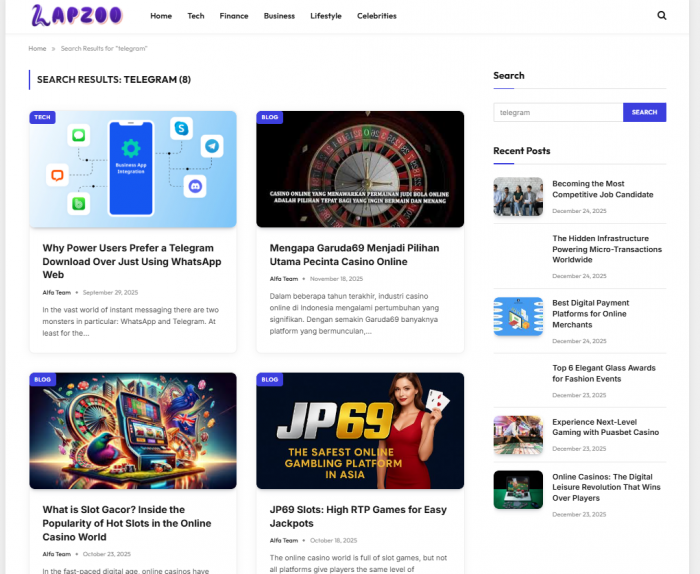
● The latest articles I saw ranged from freelancing and Claude AI to Pakistan’s economy, WhatsApp vs Telegram, AI in enterprises, energy investing, and even a very random streetwear‑style post about “wearing nothing but Corteiz”, which already told me the niche focus is fuzzy.

It does not feel like a specialized “smart tech solutions” site; it feels like a mixed bag of tech, money, lifestyle, and trend pieces dressed in a tech‑blog skin.
What Lapzoo Actually Offers (After Clicking Around)
Once I started opening articles, a pattern became obvious: Lapzoo is a free reading site with broad, SEO‑friendly explainers, not a software product or AI tool.
● Articles like the Claude AI piece and enterprise AI guide read like basic explainers, summarizing what the tool/tech is, some pros/cons, and generic use cases, with no hands‑on screenshots, benchmarks, or real testing behind them.
● The WhatsApp vs Telegram piece covers the expected points (privacy, features, groups, media limits) in a light way, but never goes into protocol details, specific version numbers, or security research; it’s more “overview for beginners” than expert analysis.
● The Pakistan economy and energy‑sector posts felt more like broad finance/market commentary, again with a simple narrative and no serious data tables, graphs, or original research.
From a content‑writer and SEO perspective, it looks like a multi‑topic blog aimed at ranking for informational queries rather than a place where someone actually tests tools or publishes proprietary insights.
Claims vs Reality: How It Feels As a Real User
Reading the branding and then experiencing the site side by side, there is a noticeable gap.
● What they implicitly claim:
● The tagline and LinkedIn description frame Lapzoo as a “trusted source” for smart tech solutions, news, and reviews, which sets expectations of expert‑backed guidance.
● The way topics are chosen (Claude AI, AI in enterprises, messaging apps, etc.) suggests they want to look like an up‑to‑date guide to modern tech decisions.
● What it actually feels like when you read:
● The posts are readable, but very top‑of‑funnel: no testing methodology, no author perspective like “I tried this for 30 days”, and rarely any verifiable stats or charts that you would expect from a true review or data‑driven guide.
● There is no proper About page or visible editorial team; as a user, you never know who wrote what, what their background is, or whether they have any conflict of interest.
● Independent reviews of Lapzoo echo the same feeling: a decent‑looking site fronting mostly generic, low‑authority content, not an established tech publication.
If you go in expecting a light blog to skim during a coffee break, it does the job; if you go in expecting CNET‑level rigor, it disappoints quickly.
Key Features You Notice While Using It
From a practical user standpoint, here’s what actually stands out when you navigate the site.
● Clean, simple layout
● Pages load quickly, typography is straightforward, and there’s no aggressive pop‑up circus, which makes casual reading comfortable.
● The navigation is minimal but clear enough: you scroll through latest posts and click into whatever headline grabs your eye.
● Varied but unfocused topics
● On a single scroll, you jump from freelancing to AI tools, to macroeconomics and energy, to messaging apps, to fashion‑style content. As a reader, it feels scattered instead of niche.
● That variety is nice if you like random browsing, but it hurts the site’s identity as a “smart tech solutions” destination.
● No real interactive or advanced features
● There are no dashboards, calculators, AI widgets, user accounts, or personalization features; it’s just articles.
● Comment activity is low, and there is no sense of an active community built around the content.
Feature Snapshot from a User View
| Aspect | My Experience on Lapzoo |
| Interface | Clean and readable, mobile‑friendly. |
| Topic focus | Very broad, sometimes random mix. |
| Depth of content | Surface‑level intros, few data points |
| Interactivity | Basic blog only, light comments |
| Overall “feel” | SEO‑style info blog, not a pro reviewer site. |
Pricing, Performance & Trust (From a Reader’s Lens)
Because it’s “just” a content site, the pricing and performance picture is simple but important.
● Pricing & monetization as I experienced it:
● All content I accessed was free; there were no paywalls, no sign‑up walls, and no obvious premium tiers.
● Ads and affiliate links seem to be the main monetization route, and external marketplaces explicitly pitch Lapzoo as a site where you can buy guest posts and backlinks, which confirms the SEO‑monetization angle.
● Performance and quality in the “tech info” category:
● Page speed and readability are fine, so from a UX point of view the performance is okay.
● Content quality is the weak spot: it’s “good enough” for beginners who want a quick overview, but nowhere near the depth, testing, or transparency a serious buyer or professional would need.
● Transparency & safety signals as I checked them:
● Security scanners classify the domain as generally safe, with HTTPS in place and no obvious malware flags, so reading it in a browser feels low‑risk.
● However, the lack of ownership details, unclear editorial standards, and strong focus on guest posting/backlinks get flagged by multiple review sites as red flags in terms of credibility.
It feels technically safe to visit, but not yet earned‑trustworthy enough for big decisions or for sharing personal information beyond casual browsing.
User Reviews & What Other People Say
After forming my own impression, I checked how others felt, and their comments line up closely with that personal experience.
● Where people are neutral‑to‑positive:
● Some bloggers and casual readers mention that Lapzoo is “fine for beginners” and “easy to read” when you just need a quick intro to a topic like Claude AI or WhatsApp vs Telegram.

● SEO professionals like that it’s open to guest posts and link placements, since that gives them a new domain to promote their content on.
● Where people are skeptical:
● Multiple independent reviews explicitly question whether Lapzoo is “legit or a scam”, not because of malware, but because of hidden ownership, generic content, and a lack of clear accountability.
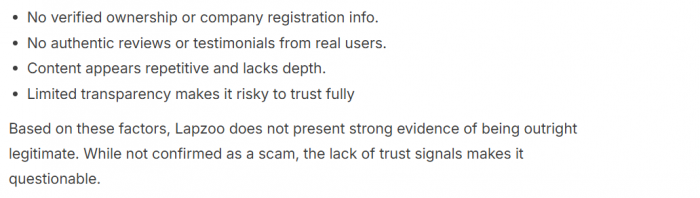
● Others describe it as a “low‑authority tech blog” that should never be used as your sole source of truth; they recommend cross‑checking its suggestions against established brands before acting on them.

So my own mild skepticism as a user is backed up by outside sentiment: it’s more of a filler‑content destination than a flagship authority.
Nearest Alternatives That Feel Stronger
When you step off Lapzoo and back onto better‑known sites, the contrast is obvious. If you want the “same type of topics, but done properly,” these are the closest fits.
● CNET: Great for phones, laptops, TVs, and consumer gadgets, with testing labs, clear scoring, and transparent affiliate disclosures that inspire more confidence than Lapzoo.

● TechRadar: Very strong on consumer tech, software, and subscription services; their guides are structured, updated, and explicitly based on testing, not just reworded specs.

● Wired & The Verge: If you like the blend of tech, culture, and trends that Lapzoo loosely aims for, these outlets deliver it with clear author bylines, deep reporting, and strong editorial oversight.

My Final Take
Lapzoo.com is a clean, easy‑to‑read tech‑style blog that works reasonably well for quick, surface‑level introductions to topics like AI tools, messaging apps, freelancing, and even broad economy or lifestyle themes, but it falls short of its “smart tech solutions” positioning in almost every serious sense. There is no visible editorial team, no clear ownership, and no evidence of real product testing or data‑backed analysis, while external reviews repeatedly flag it as a low‑authority, SEO‑driven content site that should be used cautiously and always cross‑checked with more established tech publications.
For casual browsing it is fine, but for important buying decisions, security questions, or investment‑related research, users are better off treating Lapzoo as a starting glance and then relying on trusted outlets such as CNET, TechRadar, Wired, The Verge, or niche specialists like PCWorld for final guidance
Comments