

Choosing HR and payroll software is not about finding the most features, it’s about finding the right operational fit for your company size, workforce type, compliance needs, and internal HR maturity.
Paylocity is frequently positioned as an “all-in-one” HCM platform for mid-sized businesses. It promises to unify payroll, HR, benefits, time tracking, talent management, and employee engagement under a single system.
But is Paylocity actually the right solution for your business, or just a well-marketed one?
This review answers that question directly by evaluating capabilities, trade-offs, real user feedback, pricing realities, and ideal use cases.
What is Paylocity? A Quick Overview
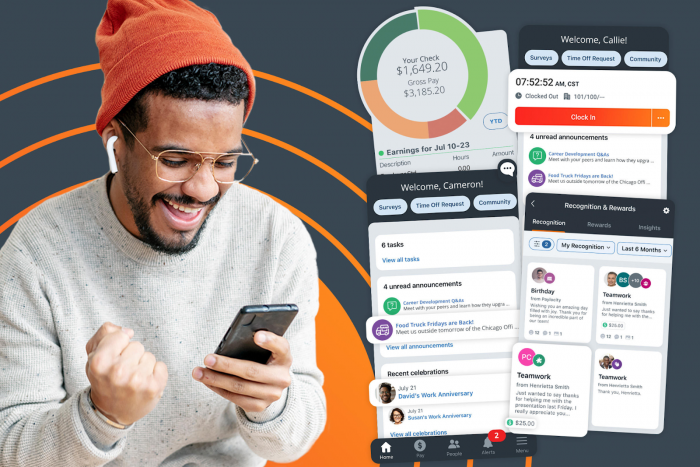
Paylocity is a cloud-based HCM platform designed primarily for mid-sized businesses in the United States. It's not just a payroll processor; it's a comprehensive suite of tools that aims to manage the entire employee lifecycle. This includes everything from recruitment and onboarding to performance reviews, benefits administration, and daily timekeeping.
The company operates in the massive global human resource management market, which was valued at over $28 billion in 2023 and is projected to continue its rapid growth (Fortune Business Insights). Paylocity has carved out a significant piece of this pie, reporting total revenues of $453.0 million for just the third quarter of its 2024 fiscal year. This isn't a small startup; it's a major player with the resources and scale to back its platform.
The core value proposition is simple: unify disparate HR functions into one system to increase efficiency, ensure compliance, and improve the employee experience.
Core Features: A Deep Dive into the Platform
Paylocity’s strength lies in the breadth of its offerings. It’s a modular system, allowing businesses to pick and choose what they need, but its real power is unlocked when the modules work together. Let's break down the key components.
Payroll & Tax Compliance (Core Strength)
Payroll is where Paylocity performs most consistently.
- Automated payroll runs with minimal manual intervention
- Handles federal, state, and local tax filing across all 50 U.S. states
- Built-in wage garnishment management
- Direct deposit, paper checks, and pay cards supported
For businesses dealing with multi-state payroll complexity, Paylocity significantly reduces compliance risk. Most negative feedback is not about payroll accuracy, but about report customization and initial setup complexity.
Decision impact:
Strong choice if payroll compliance and reliability are top priorities.
HRIS & Benefits Administration (Operationally Solid, Not Best-in-Class)
Paylocity’s HR module acts as the system of record for employee data.
- Centralized employee profiles
- Digital onboarding (I-9s, documents, benefits enrollment)
- Open enrollment and life-event benefit changes
- Carrier data synchronization
While the workflows are efficient, benefit troubleshooting and complex eligibility scenarios often require support intervention. This is functional HR infrastructure, not cutting-edge innovation.
Decision impact:
Good for companies consolidating HR systems
Less ideal if benefits complexity is extreme or highly customized
Time, Attendance & Workforce Management
Paylocity integrates time tracking directly into payroll.
- Web, mobile, and physical clock punch options
- Geofencing for mobile punches
- Overtime alerts and scheduling tools
- PTO and absence automation
The advantage is data continuity, hours flow directly into payroll. However, some managers find the interface less intuitive than standalone time-tracking tools.
Decision impact:
Best for hourly or mixed workforces
Not best-of-breed for scheduling-heavy environments
Talent, Performance & Engagement Tools (Differentiator)
This is where Paylocity separates itself from older payroll systems.
- Applicant Tracking System (ATS)
- Performance reviews and goal tracking
- Learning Management System (basic)
- Compensation planning
Most notably, Paylocity Community functions like an internal social network:
- Peer recognition
- Company announcements
- Engagement surveys
This feature is frequently cited by users as improving internal communication and culture, especially in hybrid or distributed teams.
Decision impact:
Strong fit for companies prioritizing employee experience
Overkill for organizations that only want payroll + HR basics
The User Experience: For Admins and Employees

A platform can have all the features in the world, but it's useless if people can't figure out how to use it. Paylocity's UX gets mixed but generally positive reviews.
For employees, the experience is widely praised. The mobile app is modern, intuitive, and gives them easy access to pay stubs, PTO balances, and company communications. The ability to request time off or view their schedule from their phone is a significant win.
For administrators (HR and payroll managers), the picture is a bit more complex. The interface is clean, but the sheer number of features and menus can be overwhelming at first. Users report that once you learn the system, daily tasks are straightforward. However, setting up custom reports or navigating complex, multi-state payroll scenarios can present a steep learning curve. The consensus is that it's powerful, but not always perfectly intuitive on the back end.
Performance, Reliability, and Mobile Access
As a cloud-based SaaS platform, uptime is critical. Paylocity has a strong record of reliability with minimal reported downtime. The system performs well even during peak processing times, like year-end tax season.
The mobile app is a standout feature. Available for both iOS and Android, it consistently receives high ratings in the app stores. It’s not a watered-down version of the desktop site; it’s a fully functional tool that allows employees to clock in/out, view pay stubs, manage benefits, and engage with the Community feature. This mobile-first approach is a major advantage for businesses with a distributed or non-desktop workforce.
Diving into Customer Support and Implementation
This is Paylocity’s most polarizing area.
Implementation
- Dedicated implementation specialists
- Structured onboarding process
- Requires time and internal coordination
Ongoing Support
- Experiences vary significantly
- Some users report excellent account managers
- Others report slow response times and generic support tickets
Reality check: support quality is inconsistent, which can be risky for payroll-critical systems.
Paylocity Pros and Cons
| Pros | Cons |
| Unified All-in-One Platform: Consolidates dozens of HR tasks into a single system, reducing data entry and integration headaches. | Inconsistent Customer Support: The quality of support can vary wildly, with some users reporting long wait times and unresolved issues. |
| Strong Employee-Facing Tools: The mobile app and employee self-service portal are modern, intuitive, and highly rated. | Steep Learning Curve for Admins: The backend can be complex, and mastering advanced features like custom reporting takes time. |
| Excellent Employee Engagement Features: The "Community" and peer recognition tools are effective for building company culture. | Pricing Lacks Transparency: You must go through a sales process for a custom quote, and some features may come at an additional cost. |
| Robust Payroll and Tax Engine: Highly reliable for its core function of paying people accurately and handling tax compliance. | Some Modules Feel Less Developed: While the suite is broad, specialized modules like the ATS or LMS may not be as robust as standalone best-of-breed solutions. |
Who is Paylocity Actually Best For?
Paylocity hits a sweet spot for a specific type of company:
Mid-Sized Businesses (50-1,000 employees): This is their core market. These companies are large enough to need a comprehensive HCM suite but may not have the budget or IT resources for enterprise-level systems like Workday or Oracle.
Companies Prioritizing Employee Experience: If your goal is to provide employees with modern, mobile-first tools and foster a sense of community, Paylocity’s platform is designed with that in mind.
Primarily US-Based Operations: Paylocity's core strength is navigating the complexities of U.S. payroll and compliance. It's important to note that while they technically support payroll processing in over 100 countries, this is for companies that already have established legal entities in those countries. It is not a true global Employer of Record (EOR) solution for hiring international talent without a local entity.
It may be a less ideal fit for very small businesses (under 50 employees) who might find the platform too complex and expensive for their needs, or for large enterprises that require a dedicated EOR partner for global expansion.
Understanding Paylocity's Pricing
Paylocity uses a Per Employee Per Month (PEPM) pricing model, which is standard in the industry. However, they do not publish their prices online. You must contact their sales team to get a custom quote based on your company size and the specific modules you need.
While some sources might cite a low "starting at" price floor around $5 per employee, this can be misleading. Real-world costs for a typical implementation, including core HR and payroll features, generally fall between $22 and $32 per employee per month. Furthermore, smaller companies should be aware that Paylocity often imposes minimum monthly fees, so the PEPM rate may not be the final word on your total cost. Be sure to ask for a detailed breakdown of what's included in your base price versus what costs extra.
The Final Verdict: Is Paylocity Worth It?
Paylocity successfully delivers on its promise of a unified HCM platform. Its greatest strength is bringing a wide array of HR functions, from payroll to performance management, under one roof, all while providing an excellent, modern experience for the end-user employee. The Community feature is a genuine differentiator that can have a real impact on company culture.
However, the platform is not without its flaws. The learning curve for administrators is real, and the inconsistency of its customer support is a significant concern that potential buyers must weigh carefully. While its individual modules might not always outshine the best standalone competitor, the power of their integration is the main selling point.
So, is it worth it?
For a mid-sized U.S. company looking to upgrade from a patchwork of disconnected HR systems to a single, modern platform, Paylocity is a very strong contender. It offers a powerful, comprehensive solution that can streamline operations and significantly improve the employee experience. Just be prepared to invest time in learning the system and be persistent if you run into support issues. It’s a robust tool that, for the right organization, can truly be the all-in-one solution it claims to be.
Comments