

Triips.com markets itself as an AI-powered flight deal discovery platform that helps travelers avoid overpaying for airfare. Rather than acting as a traditional flight search engine, it positions itself as a “cheap flight club”, a service that proactively scans airfare data and surfaces unusually low prices before most travelers notice them.
The promise is compelling: no endless searching, no complex filters, just curated deals delivered automatically.
However, in an industry where “AI-powered” is frequently used as a marketing label, the real question is not whether the idea is valid, but whether execution, transparency, and pricing align with user expectations.
How We Evaluated Triips
This review assesses Triips across five practical criteria:
● Legitimacy of the service (is it real or deceptive?)
● Transparency around billing and cancellation
● Actual usefulness compared to free tools
● Consistency of user complaints
● Risk vs convenience trade-off for travelers
This distinction matters: a service can be legitimate without being a good value.
How Does It Actually Work?

At its core, Triips isn't a flight search engine like Google Flights. You don't plug in a specific destination and date. Instead, it operates as a proactive deal-finding service designed for travelers with flexibility.
Here’s the process:
1. You Sign Up: You create an account and tell Triips your home airport or airports. This usually involves a trial period that requires payment information.
2. The AI Gets to Work: Triips's systems continuously scan for flight deals departing from your selected airports. It crunches thousands of possible date combinations for countless destinations to find fares that are significantly lower than the historical average.
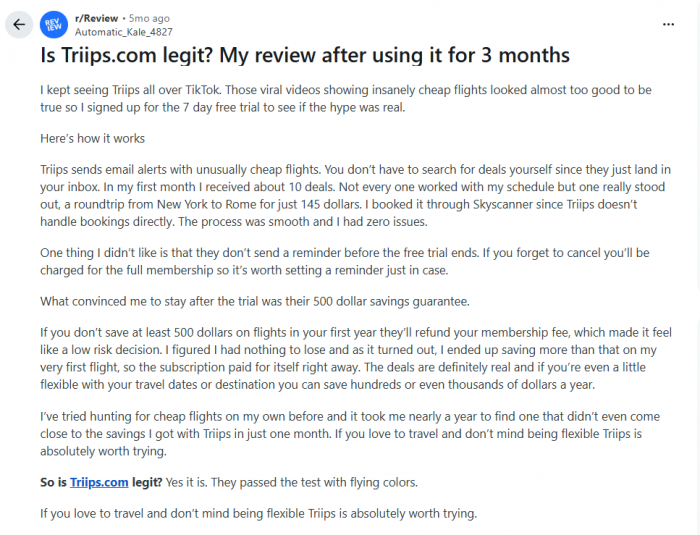
3. Deal Alerts & Booking: When the AI finds a notable deal, it appears in your feed. Crucially, Triips does not process bookings. It is a discovery tool, not a travel agent. When you click a deal, it redirects you to book directly with the airline or a standard booking engine. This means prices aren't marked up, but it also means Triips offers no customer support for booking changes, cancellations, or any issues that arise after you click away from their site.
This distinction matters: Triips is a discovery tool, not a travel agency. Once you leave their site, responsibility shifts entirely to the airline or booking platform.
Core Features Analysis: A Look at the Engine
The AI Scanning Engine
Triips claims to use machine-learning models that track historical price baselines and detect significant deviations. In practice, this is similar to price-tracking logic used by many airfare tools.
There is no evidence of exclusive airline access or hidden inventory, the advantage is automation, not exclusivity.
Deal Feed Interface
The platform is designed for browsing and inspiration rather than targeted planning. Users scroll deals instead of searching specific routes.
Subscription Model (Key Risk Area)
Triips promotes a 7-day free trial and operates entirely on recurring subscriptions.
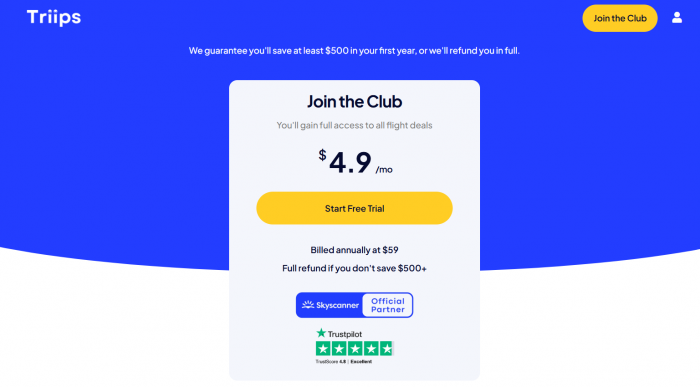
Numerous complaints stem from:
● Auto-renewals after trials
● Missed cancellation windows
● Confusion over billing timelines
This is not uncommon in subscription services, but the volume of complaints suggests communication clarity is insufficient.
The Market Context: Why Tools Like Triips Exist

The global online travel market is approaching $1 trillion annually, driven by algorithmic pricing, demand forecasting, and yield management. Airlines adjust prices multiple times per day based on:
● Seat availability
● Search demand
● User behavior
● Competitive routes
Triips’ pitch—“use algorithms against algorithms”—is conceptually valid. The issue isn’t the idea, but whether the execution and cost align with user expectations.
Performance and Real-World Use Cases
Triips works best under very specific conditions:
Where It Performs Well
● Travelers near major hubs
● Flexible schedules (no fixed dates or destinations)
● Users open to spontaneous trips
● People who dislike manual fare hunting
Where It Falls Short
● Fixed-date travel (weddings, exams, family events)
● Regional or smaller airports
● Users expecting exclusive or “hidden” fares
● Travelers who already use alerts on free platforms
Multiple independent reviewers note that many Triips deals can also be found, with effort, on free tools. The difference is automation and convenience, not exclusivity.
User Experience: Is the Platform Easy to Use?
From a usability standpoint, Triips does well:
● Clean layout
● No cluttered filters
● Low learning curve
Mobile-friendly browsing
However, simplicity cuts both ways. Power users may find the lack of advanced filters limiting compared to Google Flights’ Explore or price-tracking tools.
What Are Customers Saying?
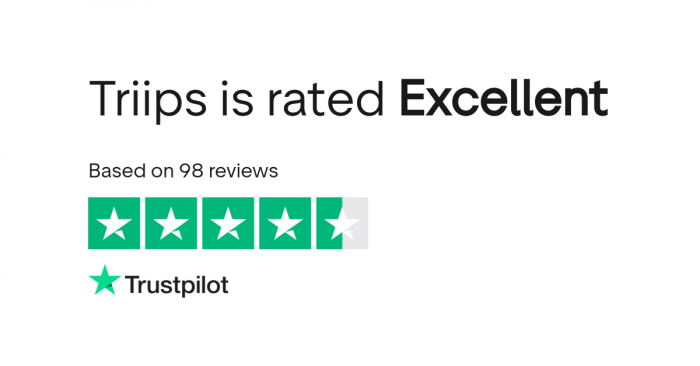
Synthesizing user sentiment from platforms like Trustpilot, Reddit, and ScamAdviser reveals a divided picture.
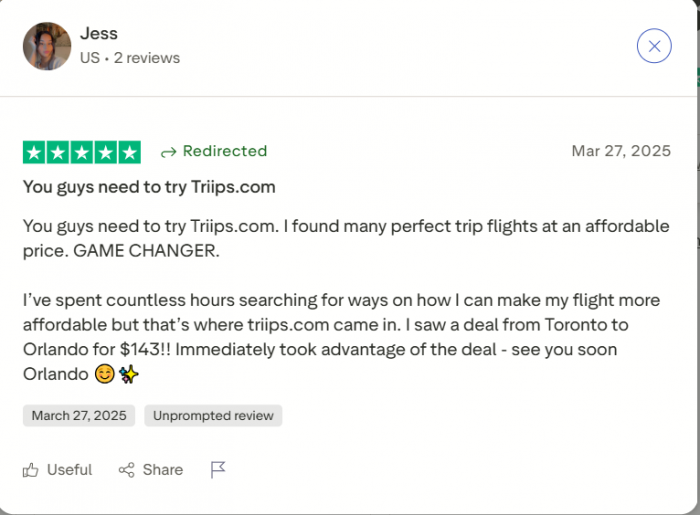
The Good:
● Real savings for flexible travelers
● Convenience over constant manual searching
● Legitimate deals (not bait-and-switch pricing)
● Useful for spontaneous trips
The Bad and The Ugly:
Despite the positive reviews, a pattern of serious complaints exists.
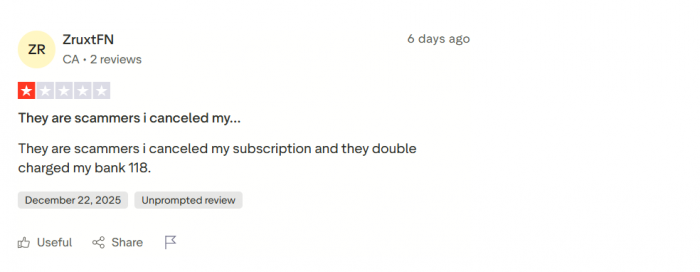
Surprise Charges and Cancellation Woes: The most frequent negative report involves billing. Many users express frustration with unclear cancellation policies, leading to unexpected charges after a trial period expires. Canceling the service can reportedly be a difficult process (Trustpilot).
Unresponsive Customer Service: Numerous users report that customer service is slow to respond or unhelpful when dealing with billing disputes or technical issues.
Unverified Allegations: While impossible to confirm, some online discussions allege that Triips may filter or remove negative comments from certain platforms. These claims remain unverified and should be treated with caution, but they contribute to the skepticism surrounding the brand's reputation management.
Triips vs. The Competition: A Head-to-Head Comparison
Triips’s biggest challenge isn’t other AI scanners; it's the array of powerful, free alternatives. Many savvy travelers argue that comparable deals can be found using tools like Google Flights Explore, Skyscanner, and deal sites like The Points Guy (Reddit).
The key difference is effort. Triips automates the process into a convenient feed. Free tools require more hands-on, manual searching.
| Feature | Triips | Google Flights | Going.com (Scott's Cheap Flights) |
| Primary Use | Automated, proactive deal discovery | Active, specific searching | Human-curated deal alerts (email) |
| Value Prop. | Convenience and automation | Power and comprehensive filters | Expert curation of "mistake fares" |
| Cost | Subscription Fee | Free | Freemium / Premium Subscription |
| Main Drawback | Cost, customer service issues | Requires manual effort | Limited to deals the experts find |
The Final Verdict
So, is Triips a legitimate service? Yes, it is not a direct scam. It provides a real service and many users are happy with it. However, legitimacy is not the same as value or trustworthiness.
The decision to subscribe to Triips boils down to a clear trade-off: Are you willing to pay a recurring fee for the convenience of automated deal discovery?
Triips is likely a good fit for you if:
● You are a frequent, flexible traveler based near a major international airport.
● You place a high value on your time and hate the process of manually searching for deals.
● You are diligent about managing subscriptions and will remember to cancel a trial if you don't find it valuable.
You should avoid Triips if:
● You are a budget-conscious traveler who prefers using free tools.
● You travel infrequently or have fixed travel dates and destinations.
● You are wary of companies with multiple reports of poor customer service and difficult cancellation processes.
Ultimately, while Triips's AI-powered approach is technologically sound, the company's operational practices present a risk. There is no proven fraud, but buyers are cautioned to understand the service's limitations and the potential for billing headaches. For many, the manual effort of using free, powerful tools like Google Flights remains the more prudent choice.
Comments