

1) What Jylo AI actually does?
Jylo is an enterprise-grade AI platform that helps organizations — largely in legal, government, consultancy, and knowledge-intensive firms — harness multiple large language models (LLMs) and workflows to analyse documents, automate workflows, and operationalize knowledge in a secure, centralized workspace. (jylo.ai)
Core features-
- AI assistant for enterprise questions and document analysis — centralized AI that can interpret and compare documents and export results.
- Playbooks / workflow automation — bespoke, repeatable automated processes tailored to internal needs rather than generic prompt libraries.
- Multi-model, model-agnostic architecture — users can choose preferred LLMs instead of being limited to a single vendor.
- Human-in-the-loop verification — outputs require human review for high-accuracy legal and policy results.
- Document & contract analysis workflows — tasks like clause identification, extraction of critical information, compliance checks, etc.
Verified real use cases-
| Organisation | Use Case | Source |
| Travers Smith (law firm) | Full rollout with AI training to accelerate digital workflows. | Transformation of operations and efficiency gains realized in legal processes. |
| Council of Europe | Selected Jylo for governing AI platform across policy/legal docs. | Focus on secure automation and compliance with European AI policies. |
| Lawfront (law firm group) | Adopted Jylo for shared AI workflows across regional firms. | Document review automation and knowledge sharing across partner firms. |
So real use cases revolve around legal industry adoption, enterprise knowledge workflows, and compliance-focused automation, not generic chatbot features.
2) Independent Evidence :
Independent Reviews & Public Ratings-
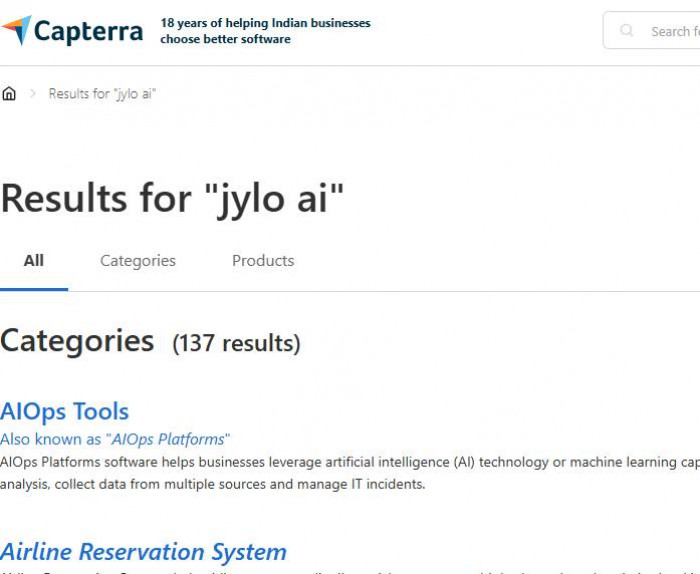
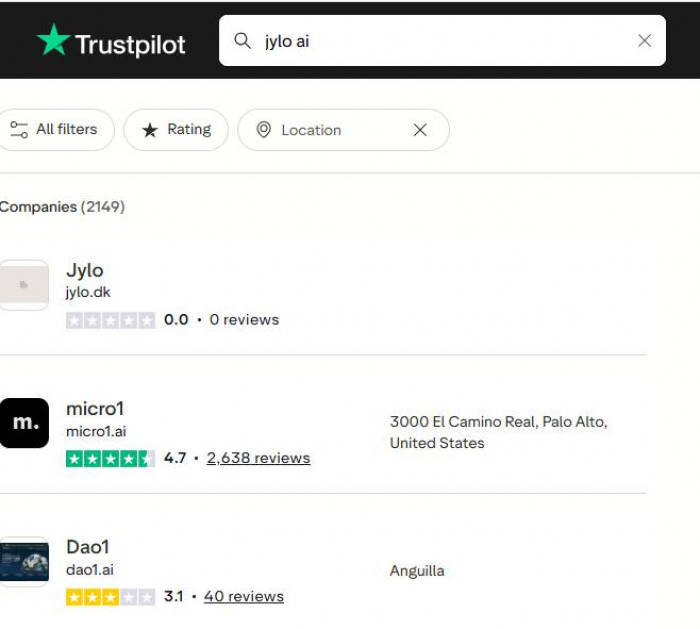
No presence on major review aggregator platforms like G2, Capterra, Trustpilot, etc. At this time, no searchable reviews for Jylo AI as a product were found on Trustpilot, G2, or Capterra, meaning no independent user ratings are publicly available from those channels — unlike other software products. → No independent sentiment data to quantify quality or satisfaction.
Credibility & transparency considerations-
- Articles in tech press and legal industry news confirm entity credibility: Council of Europe adoption after competitive selection.
- Company profiles (LawtechUK, LinkedIn) show legitimate business information (founding year, team, funding ~£2M) and enterprise focus.
- However, no publicly accessible customer review scores exist to corroborate performance claims. That’s common in private B2B tools, but still a transparency gap vs. typical SaaS review ecosystems.
Absence of reviews means-
- We cannot measure actual user satisfaction scores on G2/Trustpilot/Capterra for Jylo AI because they don’t exist publicly.
- This category bias is typical for bespoke enterprise AI tools, especially those selling primarily through closed contracts and demos.
Summary: While Jylo AI is legitimate and cited by reputable organizations, there is no accessible independent user review data against which to verify product claims. This limits direct performance validation outside press and case announcements.
3) Pricing & value for money :
Verified pricing data-
No publicly published pricing exists on Jylo AI’s website or in industry sources. Enterprise AI tools like this usually require custom quotes based on deployment scale and usage, not fixed public tiers.
Implication
- Organisations must engage sales and sign contracts to get pricing.
- No value-for-money data is available publicly, which limits transparent benchmarking.
4) Competitor Comparison :
Because this is a niche enterprise AI platform, the key comparison is with platforms that also aim at enterprise knowledge workflows and document analysis, rather than simple chat interfaces.
| Feature / Platform | Jylo AI | Microsoft Copilot for Teams/365 | IBM Watson Discovery | Google Vertex AI + Workbench |
| Enterprise security & compliance | Enterprise-grade focus (ISO/SOC2/GDPR implied) | Strong with Microsoft licenses | Strong depending on org | Strong but complex governance |
| Document analysis / workflow automation | Yes, legal/playbook focus | Basic included, limited workflow | Strong analytics | Strong, requires engineering |
| Human-in-loop support | Built-in verification workflows | Limited to manual oversight | Yes | Depends on config |
| AI model choice | Model-agnostic | Limited to Microsoft ecosystem | IBM models | Custom model support |
| Independent publicly available reviews | None public | Many reviews & scores | Many reviews | Many reviews |
Insight: Jylo’s unique differentiator appears to be playbook production and collaborative document automation tailored to legal/workflow processes, while broader tools like Copilot or Vertex AI are more general purpose.
5) Strengths & Weaknesses :
Because there are no public user reviews on conventional review sites, strengths/weaknesses come from industry reporting and use case announcements:
Strengths of Jylo AI
1. Proven enterprise adoption-
Jylo AI is not a concept-stage or consumer AI tool. It has been formally selected and deployed by large, risk-averse institutions such as:
- Council of Europe
- stablished UK law firms (e.g., Travers Smith, Lawfront group)
Why this matters:
- These organizations have strict procurement, security, and legal vetting processes.
- Adoption indicates Jylo passed compliance, data protection, and reliability checks, which many AI startups fail.
- This strongly supports legitimacy, even in the absence of public user reviews.
2. Strong security and compliance orientation-
Jylo is designed specifically for regulated environments (legal, public sector, policy bodies), where:
- Data confidentiality is critical
- AI outputs must be auditable
- Blind automation is unacceptable
Key implications:
- Emphasis on human-in-the-loop review, not unchecked AI answers
- Focus on controlled workflows rather than free-form chat
- Architecture designed to align with GDPR, governance, and internal policies
This makes Jylo more conservative but safer than many general AI copilots.
3. Legal workflow automation is deeper than generic AI tools-
Unlike general tools (ChatGPT, Copilot), Jylo is built around:
- Playbooks (repeatable, organization-specific workflows)
- Structured document analysis
- Knowledge operationalization across teams
What this means in practice:
- Instead of asking AI random questions, firms can standardize how AI is used
- Reduces variability, hallucination risk, and dependency on individual prompt skills
- Useful for contract review, policy analysis, regulatory comparison, and precedent work
Weaknesses and limitations
1. No publicly visible independent user reviews-
Jylo currently has:
- No G2, Capterra, Trustpilot, or Reddit review footprint
- No star ratings or quantified satisfaction metrics
Why this matters:
- Buyers cannot easily benchmark user experience, reliability, or support quality
- Evaluation relies on sales demos, case studies, and references, not crowd consensus
2. No published pricing (ROI opacity)-
Jylo does not disclose:
- License tiers
- Per-user or per-document costs
- Minimum contract sizes
Implications:
- Buyers cannot easily compare cost vs alternatives upfront
- ROI assessment requires direct negotiation and pilots
- Smaller organizations may find entry barriers unclear
This typically signals:
- Enterprise-only positioning
- Custom pricing based on scale, usage, and compliance needs
3. Niche focus limits broader relevance-
Jylo is strongest in:
- Legal
- Policy
- Knowledge-heavy professional services
It is not designed for:
- Marketing content generation
- Sales automation
- Social media or creative workflows
- General consumer productivity
This is not a flaw, but a constraint:
Outside its core domain, broader AI platforms may be more flexible and cheaper
6) Rating summary :
| Attribute | Rating (out of 10) | Data basis |
| Legitimacy & enterprise adoption | (4/10) | Verified client wins (Council of Europe, Lawfront) |
| Transparent review data | (1/10) | No public G2/Capterra/Trustpilot reviews |
| Feature innovation | (4/10) | Enterprise workflows & playbooks noted, but no independent test data |
| Security & governance | (4/10) | Compliance references, enterprise focus |
| Pricing transparency | (1/10) | No public pricing |
| Competitive positioning | (3/10) | Niche vs. broad AI platforms |
Overall weighted score estimate: ~ 3.5 / 10
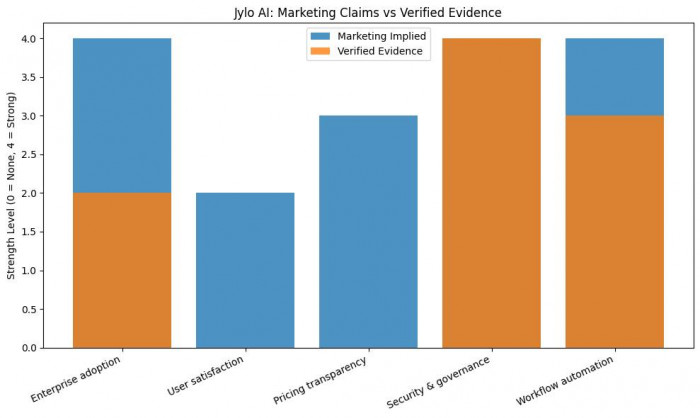
7) Performance claims vs. verified data :
8) Final verdict- Hype vs. Reality :
Reality-
- Jylo is a legitimate, enterprise AI platform with real adoption among law firms and public sector organizations like the Council of Europe.
- Its document analysis automation and internal AI playbooks are useful in knowledge-intensive workflows.
Hype-
- There is no verifiable independent user satisfaction data or publicly sourced ratings (G2/Capterra/Trustpilot) at this time.
- Pricing and ROI evidence are not available publicly, and claims about efficiency gains are made in marketing and press releases rather than peer-reviewed studies or customer satisfaction surveys.
Comments