

What Lapzoo.com Claims to Be
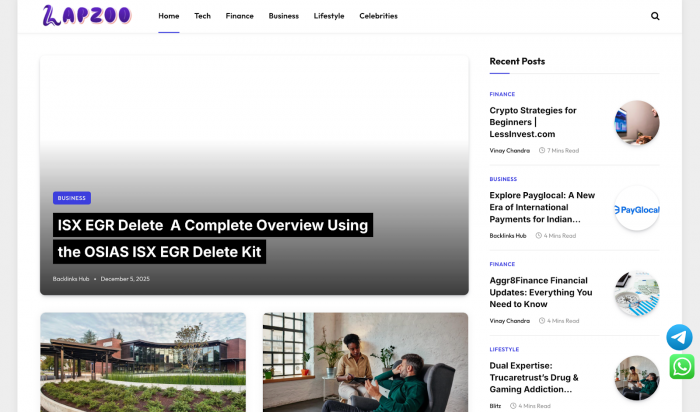
Lapzoo.com presents itself as a platform offering “smart tech solutions” and digital guidance. On the surface, the site appears polished—modern layout, fast loading speeds, and clean category navigation. This design initially suggests a structured technology publication.
However, once readers engage with the content, that expectation quickly collapses.
Rather than operating as a focused tech outlet, Lapzoo publishes a wide mix of unrelated topics—many of which have no meaningful connection to technology, innovation, or digital analysis.
How We Evaluated Lapzoo and Its Alternatives
A brief look at Lapzoo before discussing alternatives
To assess Lapzoo fairly, this review compares it against established tech publications using five core criteria:
- Editorial consistency
- Subject matter expertise
- Transparency (authors, ownership, methodology)
- Content depth and originality
- Reader usefulness for real decision-making
These benchmarks reflect how serious tech readers evaluate credibility—not just how often a site appears in search results.
Editorial Structure and Content Intent at Lapzoo
The most defining characteristic of Lapzoo is content inconsistency.
Its category labels do not align with what is actually published:
“Tech” includes casino promotions, surface-level AI filler, and keyword-driven summaries
“Lifestyle” features rehabilitation center write-ups that read like advertisements
“Business” contains backlink-oriented finance pieces with no original analysis
This pattern suggests search-reactive publishing, not editorial planning.
Rather than producing researched articles, Lapzoo aggregates broad explanations aimed at capturing search traffic. There is no evidence of testing, reporting, interviews, or domain specialization.
Transparency, Authorship, and Credibility Signals
Another major limitation is the lack of transparency.
Author names repeat across unrelated subjects
There are no visible author bios explaining expertise
Ownership and editorial policies are not disclosed
No methodology is explained for reviews or recommendations
For comparison, established tech publications clearly separate opinion, reporting, and testing—often disclosing conflicts, sources, and review standards. Lapzoo does none of this.
Why Lapzoo Falls Behind Real Tech Publications
Lapzoo does not fail because of design or performance. It falls behind because it lacks editorial purpose.
The site behaves like a content network optimized for keyword capture rather than a publication built for reader trust. While it may offer simple explanations suitable for beginners, it cannot support informed decisions, research, or professional insight.
This distinction becomes clear when Lapzoo is compared with long-standing tech platforms.
The strongest alternatives to Lapzoo
Below are the platforms that consistently outperform Lapzoo across credibility, content depth, consistency, and industry recognition. The ratings reflect how capable each site is as a replacement for Lapzoo based on real use cases.
1. Gizmodo
Rating: ⭐⭐⭐⭐☆ (4.3/5)

Gizmodo blends technology, science, and internet culture, offering articles with personality and strong editorial voice. It publishes hands on reviews, cultural commentary, and deeper reporting than anything found on Lapzoo.
Best for readers who want:
● detailed explanations backed by reporters
● science and culture coverage that adds context
● consistent editorial standards
Its only drawback is the occasional sensational tone, which may feel overwhelming if someone prefers quiet, purely informational content.
2. TechCrunch
Rating: ⭐⭐⭐⭐⭐ (4.8/5)

TechCrunch is the gold standard for startup news, emerging tech, and industry updates. It provides insider level reporting and event coverage that Lapzoo does not attempt.
Ideal when:
● tracking founders and funding rounds
● following global AI and enterprise shifts
● researching new businesses or accelerators
The downside is its narrow emphasis on startups. Readers who want broader consumer tech may find it too specialized.
3. The Verge
Rating: ⭐⭐⭐⭐☆ (4.5/5)

The Verge combines technology with culture, design, and policy, offering deep analysis and multimedia presentations. It excels at storytelling and context driven reporting.
Choose The Verge if you prefer:
● long form features
● video reviews
● deeper commentary on how tech affects daily life
Update frequency is slower than some competitors, but the quality of work is consistently high.
4. Engadget
Rating: ⭐⭐⭐⭐☆ (4.2/5)

Engadget focuses heavily on hardware, consumer electronics, and hands on testing. It is ideal for readers who want grounded observations about products rather than general overviews.
Great for:
● gadget comparisons
● event announcements
● previews of new devices
Ad clutter is its main weakness, which can disrupt the reading experience.
5. CNET
Rating: ⭐⭐⭐⭐☆ (4.4/5)

CNET has built a reputation for practical buying guides, product ratings, and consumer advice. It helps users make informed decisions based on structured testing.
Recommended for readers who want:
● clear scores and rankings
● best of lists
● how to guides with steps
Some reviews occasionally feel formulaic, but the site remains reliable for product decisions.
6. Wired
Rating: ⭐⭐⭐⭐☆ (4.6/5)

Wired focuses on innovation, science, policy, and global impact stories. It investigates larger questions about the future, privacy, governance, and technology’s influence on society.
Perfect for readers who enjoy:
● deep reporting
● narrative journalism
● sophisticated analysis
It is broader than standard tech blogs, but that is exactly why it outshines sites like Lapzoo on long term relevance.
7. Digital Trends
Rating: ⭐⭐⭐⭐☆ (4.1/5)

Digital Trends offers approachable coverage on home electronics, lifestyle tech, and consumer gear, with readable comparisons and guides.
Great option when:
● researching products for home or personal use
● exploring buying guides that avoid jargon
Its depth is lighter compared to TechRadar or CNET, but it surpasses Lapzoo in structure and editorial clarity.
Comparison Table: Lapzoo vs its strongest alternatives
| Site | Strengths | Weaknesses | Ideal for | Overall Rating |
| Lapzoo | Fast loading pages, wide spread of topics, simple summaries | No clear editorial purpose, inconsistent categories, SEO farm patterns, lack of transparency | Readers who only want very basic overviews and do not rely on accuracy | ⭐⭐☆☆☆ |
| Gizmodo | Cultural tech angles, lively coverage | Sometimes sensational | Readers who enjoy personality in tech | ⭐⭐⭐⭐☆ |
| TechCrunch | Best for startup and funding news | Very startup centric | Entrepreneurs and tech professionals | ⭐⭐⭐⭐⭐ |
| The Verge | Strong analysis and design focused work | Slower publishing pace | Readers who prefer storytelling | ⭐⭐⭐⭐☆ |
| Engadget | Reliable hands on hardware testing | Heavy ad presence | Gadget lovers and early adopters | ⭐⭐⭐⭐☆ |
| CNET | Trusted ratings and consumer advice | Some generic reviews | Buyers seeking product guidance | ⭐⭐⭐⭐☆ |
| Wired | Investigative and society focused tech | Broader scope than consumer tech | Readers chasing big picture trends | ⭐⭐⭐⭐☆ |
| Digital Trends | Easy guides and lifestyle tech | Less technical depth | Users wanting friendly comparisons | ⭐⭐⭐⭐☆ |
Final thoughts
Lapzoo.com functions as a traffic-oriented content site rather than a reliable technology publication. Its lack of editorial focus, transparency, and subject expertise prevents it from serving readers who need trustworthy information.
While it may attract search traffic and beginner readers, it cannot compete with established tech platforms that invest in reporting, testing, and accountability. For anyone seeking clarity, depth, or informed analysis, the alternatives discussed here consistently deliver far greater value.
Lapzoo should be treated as a lightweight SEO blog, not a dependable tech authority, and readers benefit most when they recognize that distinction.
Comments