

Intraday trading can be one of the most exciting yet challenging paths in the financial world. It refers to buying and selling financial instruments such as stocks, futures, or currencies within the same trading day, to make quick profits from short-term price movements.
For many absolute beginners, intraday trading seems complex, risky, and unpredictable. But with the right profitable intraday trading advice for novices, along with discipline and preparation, it’s entirely possible to trade confidently and responsibly.
This guide will walk you through everything you need to know, from basic concepts to advanced strategies, risk management, tools, psychology, and practical tips that help you build consistency in your intraday trading journey.
What Is Intraday Trading?
Intraday trading, also called day trading, involves:
Buying and selling the same security on the same day.
- Closing all positions before the market closes, so nothing is carried overnight.
- Profit or loss is determined by price fluctuations within that single trading session.
- Unlike long-term investing, which relies on fundamentals and company growth, intraday trading depends on technical movements, market sentiment, and timing.
Because profitable intraday trading requires fast decisions and focus, novices must begin with strong fundamentals.
Why Profitable Intraday Trading Advice for Novices Matters
Many beginners start intraday trading with excitement but without preparation and lose money quickly. That’s where profitable intraday trading advice for novices becomes essential.
This advice will help you:
- Avoid early career-ending mistakes
- Build logical, repeatable strategies
- Trade without emotional bias
- Manage losses and protect capital
The key is not just trading but trading intelligently.
The Core Requirements Before You Begin Trading
1. Education Comes First
Before you place your first trade:
- Learn how the stock market works.
- Understand key terms like bid/ask, support and resistance, volume, orders, and volatility.
- Study different instruments, stocks, indices, commodities, and forex.
Profitable intraday trading advice for novices always begins with learning. Without foundational knowledge, even good luck won’t last long.
2. Technical Analysis: Read the Market Like a Pro
Intraday traders rely heavily on technical analysis, the study of past price data and patterns, to forecast price movement.
Important technical tools include:
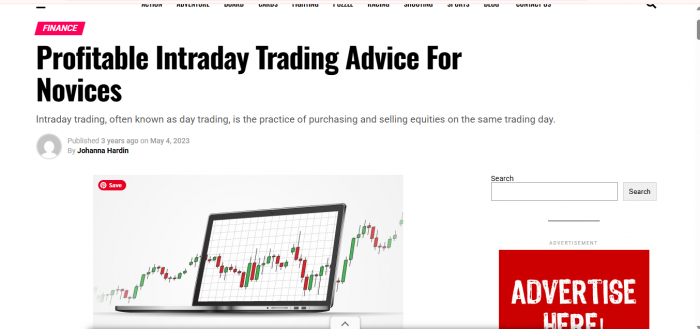
- Candlestick charts (they show price movement within each period).
- Moving Averages (MA) — like 9-MA, 20-MA, or 50-MA.
- Relative Strength Index (RSI) — reveals overbought or oversold conditions.
- MACD (Moving Average Convergence Divergence) — shows trend momentum.
- Volume analysis — confirms the strength of price movements.
These tools help you find entry and exit points critical for profitable intraday trading.
Choosing the Right Stocks for Intraday Trading
Not every stock is ideal for intraday trading. Beginners should select:
- Highly liquid stocks are easy to enter and exit
- Stocks with stable volume trends
- Securities with clear momentum patterns
A good rule in profitable intraday trading advice for novices:
- Focus on 3-5 high-liquidity stocks rather than chasing random tickers.
Why?
- Liquidity reduces slippage.
- Patterns are easier to interpret.
- Risk can be managed better.
Entry and Exit Rules: When to Trade
A common mistake beginners make is entering a trade without a system.
Here’s a simple way to think about entries and exits:
Entry Criteria
You might enter a trade when:
- A stock breaks above a resistance level on good volume.
- A moving average crossover happens (e.g., short MA crosses above long MA).
- Momentum indicators confirm direction.
Exit Strategy
Decide:
Profit target — where you want to sell for a gain.
Stop-loss — where you will exit if the trade goes against you.
For instance, if you buy at ₹200:
- Stop-loss might be at ₹196 (2% loss)
- Target could be at ₹206 (3% gain)
- Profitable intraday traders always define these before they place the trade.
Risk Management: Protect Your Capital
Risk control is the backbone of profitable intraday trading advice for novices.
Key Risk Rules:
- Never risk more than 1–2% of your trading capital on a single trade
- Use a stop-loss every time
- Limit the number of open positions
- Don’t increase trade size after losses
Why?
Because even good strategies fail sometimes, but managing risk keeps your account safe.
Time Frames That Matter
Intraday traders usually watch:
- 1-minute to 15-minute charts — for precise entries and exits
- 5-minute charts — most popular for trend analysis
- Hourly charts — for overall trend direction
Shorter time frames are best for spotting specific entry and exit signals, a must for profitable intraday trading.
Top 3 Intraday Strategies Every Novice Should Know
1. Momentum Trading
Buy when the price is strongly moving up with high volume
Sell when momentum fades
This is one of the most common and reliable strategies.
2. Breakout Trading
- When a stock price breaks a key level (support or resistance), it often continues in that direction.
- Novices should confirm the breakout with volume before acting.
3. Scalping
This approach targets very small profits repeatedly throughout the session.
It’s fast and requires discipline.
All three strategies are part of profitable intraday trading advice for novices 66unblockedgames.com because they focus on trend, not luck.
Avoid These Beginner Mistakes
- Trading without a plan
- Forgetting stop-loss orders
- Chasing every price movement
- Adding to losing positions
- Trading out of fear or greed
Remember:
A disciplined trader learns from losses, not repeats them.
Psychology: The Hidden Game Changer
Trading isn’t just numbers, it’s a mindset.
Successful intraday traders:
- Accept losses
- Stay calm under pressure
- Don’t chase trades
- Avoid revenge trading
Good psychology increases consistency, the very definition of profitable intraday trading advice for novices.
Maintain a Trading Journal
Record every trade:
- Entry price
- Exit price
- Reason for trade
- Outcome
- Emotional state
Later, review:
- What worked
- What didn’t
- Patterns in your behavior
Over time, this journal becomes your personal roadmap to success.
Tools That Make Trading Easier
Good tools help profitable intraday trading:
- Real-time charting platforms
- Fast order execution
- Indicators like RSI, MACD, and Bollinger Bands
- News feeds
Choose a broker with low intraday fees, fast execution, and reliable data.
Final Thoughts: Path to Success
Profitable intraday trading isn’t about luck, it’s about system, discipline, and continuous improvement.
Here’s a final checklist:
- Educate yourself first
- Trade with a plan
- Use risk control
- Start small
- Stay consistent
- Review and refine
If you follow these principles, you’ll not only understand the market, but you’ll trade it confidently.
Comments