

SSA is no longer just a government acronym. It has quietly evolved into a multi-meaning digital shorthand used across social media, gaming communities, religious discussions, and everyday texting.
What makes SSA especially interesting is why it’s being used so heavily right now. Much of its popularity is driven by algorithm avoidance, identity nuance, and niche online cultures, all happening at the same time.
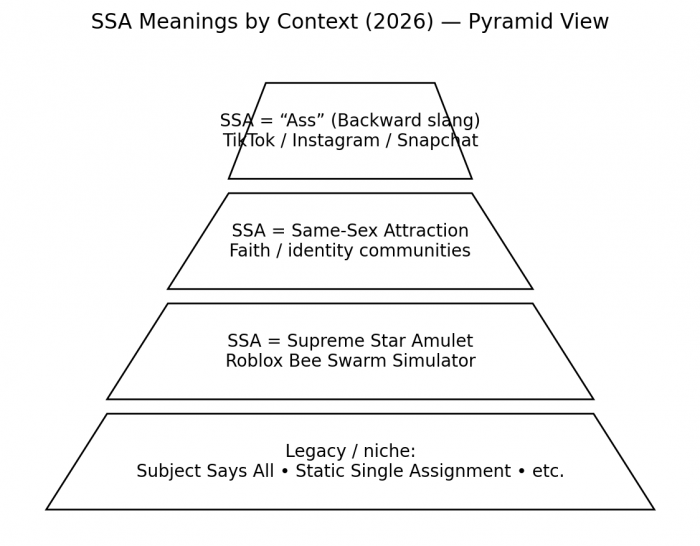
This article breaks down what SSA means today, how people use it, and how context completely changes its interpretation.
SSA as Slang: “Ass” (Spelled Backward)
The Most Common Meaning on Social Media
On platforms like TikTok, Instagram, Snapchat, and X, SSA is most commonly used as a backward spelling of the word “ass.” This usage is intentional and strategic rather than playful.
Instead of writing a word that might trigger moderation systems, users flip the spelling to avoid detection.
Why People Use SSA Instead of “Ass”
Social platforms rely heavily on automated moderation systems that scan for:
- Profanity
- Harassment
- Sexualized language
By using SSA, users reduce the chances of:
- Shadowbans
- Reduced reach
- Content removal
This technique is part of a broader trend known as algospeak, where users creatively alter words to stay visible.
According to breakdowns like the one on Dexerto’s TikTok slang guide , SSA has become especially common in comment sections where tone is sarcastic, insulting, or emphatic.
Common Examples in Context
Insults:
“That ssa really thought he was right.”
Emphasis:
“I’m tired ssa hell today.”
Appearance Commentary:
Used to comment on looks while avoiding sexual-content flags.
In these cases, SSA is almost never explained—it’s assumed the reader understands the coded meaning.
SSA as an Identity Term: “Same-Sex Attraction”
Outside of slang, SSA still carries serious meaning in religious and identity-based communities.
What SSA Means Here
In this context, SSA stands for “Same-Sex Attraction.”
It is commonly used by individuals, especially within Christian or faith-based communities, who experience attraction to the same gender but do not identify as gay, lesbian, or queer.
Why This Term Is Used
For many people, SSA:
- Describes experience, not identity
- Separates attraction from behavior
- Aligns better with specific theological beliefs
Rather than adopting an identity label, SSA allows people to discuss personal experiences without redefining how they see themselves.
Where You’ll See This Usage
- Reddit support communities
- Discord faith-based servers
- Religious forums and blogs
Unlike slang usage, this meaning of SSA is intentional, serious, and community-specific. Misinterpreting it in these spaces can lead to confusion or offense.
SSA in Gaming and Technical Communities
Bee Swarm Simulator (Roblox)
In gaming, particularly within Roblox’s Bee Swarm Simulator, SSA has a completely different meaning:
Supreme Star Amulet.
This is a rare and powerful in-game item, and players frequently discuss:
“5/5 SSA” (perfect stats)
SSA roll quality
Optimal SSA builds
A Reddit thread explaining this terminology can be found here:
https://www.reddit.com/r/BeeSwarmSimulator/comments/1dosbac/can_someone_explain_what_ssa_terminology_is/
For gamers, SSA has nothing to do with slang or identity, it’s purely mechanical.
SSA in Computer Science: Static Single Assignment
In programming and compiler design, SSA stands for Static Single Assignment, a formal concept where:
Each variable is assigned exactly once
New variables are created for each reassignment
This usage appears in:
Computer science textbooks
Compiler optimization discussions
Advanced programming forums
While niche, this meaning still appears in academic and professional contexts.
SSA in Traditional Texting and Older Internet Usage
Before SSA exploded on TikTok, it already existed as shorthand in other contexts.
Common Older Meanings
Subject Says All
Used in emails or forum posts when the subject line contains the entire message.
Stupid Shole
A more aggressive insult, less common today but still used in heated chats.
These meanings haven’t disappeared, but they’ve been largely overshadowed by social-media slang.
Why SSA Is Trending So Heavily in 2026
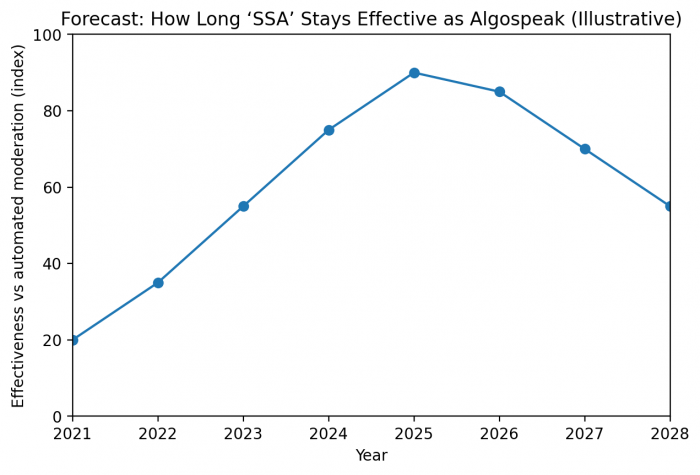
The rise of SSA is closely tied to platform moderation and algorithm behavior.
As tools like TikTok’s automated sentiment analysis become stricter, users respond by:
- Altering spelling
- Using acronyms
- Reversing words
- This allows them to:
- Maintain organic reach
- Avoid content suppression
- Speak freely without penalties
Resources like Wondershare FamiSafe’s slang explainer highlight SSA as part of a much larger shift in how people communicate under algorithmic pressure.
What Does SSA Mean in Dating?
In dating contexts, SSA usually depends on the platform:
On TikTok or Instagram → “ass” (backward)
On dating apps or bios → “Safe Sex Always”
In religious profiles → “Same-Sex Attraction”
This makes SSA one of those acronyms where context matters more than the letters themselves.
What Does “SSA Guy” Mean?
“SSA guy” is most commonly used online as:
A slang insult (referring to someone behaving foolishly)
A casual descriptor in algospeak comments
In religious or support contexts, however, “SSA guy” may refer to a man who identifies with Same-Sex Attraction rather than LGBTQ labels.
Again, meaning shifts entirely based on where you see it.
Quick Reference: SSA Meanings by Context
| Context | Meaning |
| Social Media | “Ass” (backward) |
| Religious / Identity | Same-Sex Attraction |
| Roblox Gaming | Supreme Star Amulet |
| Email / Forums | Subject Says All |
| Government | Social Security Administration |
Final Thoughts: Why SSA Is a “Context-First” Term Now
SSA is a perfect example of how modern internet language fragments. The same three letters can signal:
- A joke
- An insult
- A personal identity
- A game mechanic
- A government agency
In 2026, understanding SSA isn’t about memorizing definitions, it’s about reading the room. Platform, tone, and audience determine meaning far more than the acronym itself.
If you see SSA online and feel confused, that’s normal. The confusion is part of how digital language now works.
Comments