

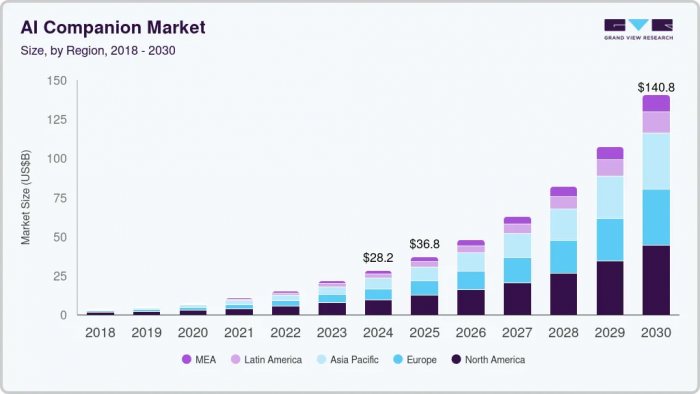
You are tired of your AI chatbot hitting a wall. You are deep in a creative story, the narrative is flowing, and then you get the dreaded, “I cannot generate a response to that.” This very frustration is what led to the explosive growth of Museland AI. It carved out a massive space in the $28 billion AI companion market (Source: Grand View Research, 2024) by promising one thing its biggest competitors wouldn’t: unfiltered creative freedom.
But the dream ended abruptly. Museland AI shut down in March 2025, becoming a cautionary tale of the high operational costs and inherent fragility of centralized AI platforms.
This 2025 Post-Mortem reviews the platform’s immense potential, dissects the reasons for its failure, and outlines the critical lessons its loss left for creative writers and developers in the AI space.
The Museland Paradox: Freedom at an Unsustainable Price

Museland AI’s identity was defined by a classic trade-off: it achieved high user satisfaction by offering maximum freedom, but this freedom required unsustainably expensive infrastructure.
The Core Appeal: Unfiltered Creative Freedom
The number one reason for Museland’s popularity was its lenient content filter. By allowing mature, complex, and high-conflict narratives, it attracted a massive community of writers and roleplayers who felt censored by the strict “safe-for-work” (SFW) filters of rivals like Character.AI. This split between filtered and unfiltered experiences is the industry’s defining feature.
Final Scorecard: Value vs. Viability
| Aspect | Rating (Pre-Shutdown) | Summary |
|---|---|---|
| Creative Freedom | ★★★★★ | Unmatched content allowance; the best in its class for narrative depth. |
| AI Performance (Short-Term) | ★★★★☆ | Excellent creativity and prose; great at adopting personas. |
| Long-Term Viability | ★☆☆☆☆ | Failed due to overwhelming operational costs and server capacity issues. |
| The Achilles’ Heel (Memory) | ★★☆☆☆ | Severe long-term memory problem, frustrating serious storytellers. |
The Technological Flaw: Why the Memory Always Broke
Despite its advanced creative abilities, Museland suffered from a severe technical flaw that doomed long-term storytelling: the Context Window Limit.
Understanding “Catastrophic Amnesia”
Museland’s “Achilles’ Heel” was its poor long-term memory. This is not a software bug, but a limitation of the Large Language Model (LLM) itself. The LLM operates with a “context window,” a fixed memory buffer measured in tokens.
As a conversation extends past 100–150 messages, older, critical plot points are pushed out of this window to make room for new input. The AI then “guesses” the missing context, leading to:
- Plot Erosion: The AI forgetting key events or relationships.
- Inconsistency: The AI contradicts its own established persona.
This flaw prevented serious users from building the “long, epic saga” that the platform’s creative freedom encouraged.
The Fatal Flaw: The Cost of Existence

The official reason for the shutdown in March 2025 was the overwhelming server capacity and the high operational costs required to maintain the AI models and infrastructure.
The High Cost of Openness
Unfiltered AI requires more extensive and costly safety infrastructure and monitoring. Furthermore, running the highly demanding LLM and visual generation models for a large, active, power-user base proved financially unsustainable. This event highlights a key vulnerability for AI startups: innovation is not enough; a sustainable business model must come first.
The Loss of Digital Assets
The emotional fallout was immense. Users who had poured weeks of creative energy into their stories and characters found the servers offline, their “digital memorial ground” full of shared archived chats and emotional farewells. The platform vanished overnight, taking user-created content and history with it.
The Legacy of Museland: Lessons Learned
Museland AI’s short, brilliant life provides essential lessons for both creators and consumers in the consumer AI market, which is projected to grow at a 30.8% CAGR.
For Developers and Platforms
The market demands visually-driven, free-flowing creative tools, but developers must:
- Prioritize Sustainable Infrastructure: High operational costs are a primary killer of AI startups.
- Invest in RAG: Implement an advanced Retrieval-Augmented Generation (RAG) architecture to solve the memory flaw, which requires intelligent memory retrieval beyond the current context window (Source: Reddit, Sep 2025).
For Users and Creators
The primary lesson is about platform risk. Centralized, proprietary platforms can disappear overnight, taking your creations and connections with them.
Museland AI vs. The Competition (The Trade-Off)
Platform Risk (The Lesson)
- Museland: Wins on Freedom, Loses on Memory/Viability.
- Do not invest emotional or creative energy into closed ecosystems without a backup plan.
- Character.AI: Wins on Memory/Stability, Loses on Freedom.
- Archive or export critical narrative elements regularly.
- Chai: Lower quality, but Unfiltered Freedom remains its core appeal.
- The cost of the subscription may be cheap, but the cost of data loss is infinite.
Final Verdict: The Cost of a Dream
Museland AI was a glorious dream for writers who craved creative freedom. It proved that a massive market exists for unfiltered, engaging storytelling. However, its closure serves as a permanent, powerful warning: in the AI landscape, a sustainable financial model and robust server capacity are more critical than groundbreaking innovation. The emotional investment of its users was ultimately built on borrowed and eventually confiscated land.
Comments