

Digital audio has become a routine layer of information consumption for technology-oriented audiences. Rather than replacing text or video, audio increasingly runs alongside other activities such as work, gaming, or commuting. Within this environment, Geekzilla Radio has developed as a platform that blends live discussion, archived audio, and community participation.
This article examines what Geekzilla Radio is, how it functions, and what its presence suggests.
What Geekzilla Radio Is
Geekzilla Radio is a web-based digital audio platform operating as part of the broader Geekzilla.io ecosystem. It is not a single podcast, nor does it resemble traditional broadcast radio in structure. Instead, it functions as a hub that hosts multiple shows, discussions, and recurring segments focused on technology, gaming, and related cultural topics.
It is not a standalone creator project, a music station, or a general-interest media outlet. Its scope is narrow by design, oriented toward “geek” and technology-aligned audiences.
Structural Format and Content Delivery
The platform combines:
- Live audio discussions
- Archived replays of previous sessions
- Associated podcast feeds
- Supporting written or contextual content
This structure allows listeners to engage either synchronously (during live sessions) or asynchronously (via replays). Unlike episodic podcasts that are consumed start-to-finish, Geekzilla Radio encourages partial listening and return visits.
The platform itself, not individual hosts, is the central organizing unit.
How Listeners Typically Use the Platform
Observed usage patterns suggest that listeners:
- Join live sessions without committing to a full episode
- Treat the audio as a continuous stream rather than discrete content
- Return frequently rather than subscribing to a single show
Interaction features such as chat or polls are present but vary in prominence depending on the program. Participation is optional rather than required, which aligns with passive-plus listening behavior common in professional or technical environments.
Audience Characteristics
Based on content focus and engagement patterns, the audience appears to include:
- Software developers and IT professionals
- Gamers and esports followers
- Founders, independent builders, and creators
- General technology and pop-culture enthusiast
The platform does not appear to target a mass audience. Instead, it attracts users already comfortable with technical language and long-form discussion.
Engagement and Scale

Reported metrics from 2025 reviews indicate:
- A global listener base in the low-millions range
- Higher-than-average return listener rates
- Longer average listening sessions than standard podcasts
These figures suggest depth of engagement rather than breadth of reach. Geekzilla Radio does not compete with large commercial podcast networks in audience size, but it retains attention for longer periods once listeners engage.
Content Scope and Editorial Orientation
Geekzilla Radio’s programming generally falls into four areas:
- Technology and hardware discussion
- Gaming and competitive play analysis
- Geek culture (comics, anime, sci-fi)
- Business, innovation, and digital trends
Content is discussion-driven rather than report-driven. Shows tend to explore topics conversationally instead of delivering structured news reporting or investigative journalism.
There is limited evidence of formal editorial oversight comparable to news organizations, but discussions often reference existing research, tools, or industry developments.
Comparison With Other Audio Formats
Relative to other formats:
Compared to podcasts: more live, less episodic
Compared to FM/AM radio: more global, less schedule-bound
Compared to creator platforms, more ecosystem-oriented
This hybrid positioning explains why Geekzilla Radio is sometimes difficult to categorize. It does not fully replace any one format, but overlaps with several.
Credibility and Trust Considerations
From a trust perspective, Geekzilla Radio shows mixed signals:
- It operates under a larger, content-driven brand rather than anonymously
- Topics are generally disclosed and not disguised as advertising
- Collaborations and guests are visible rather than hidden
At the same time:
- It is not a regulated media outlet
- Authority comes from community familiarity, not formal credentials
- Accuracy depends on hosts and guests rather than institutional fact-checking
As such, it should be viewed as informational and interpretive, not authoritative in the academic or journalistic sense.
Accessibility and Barriers
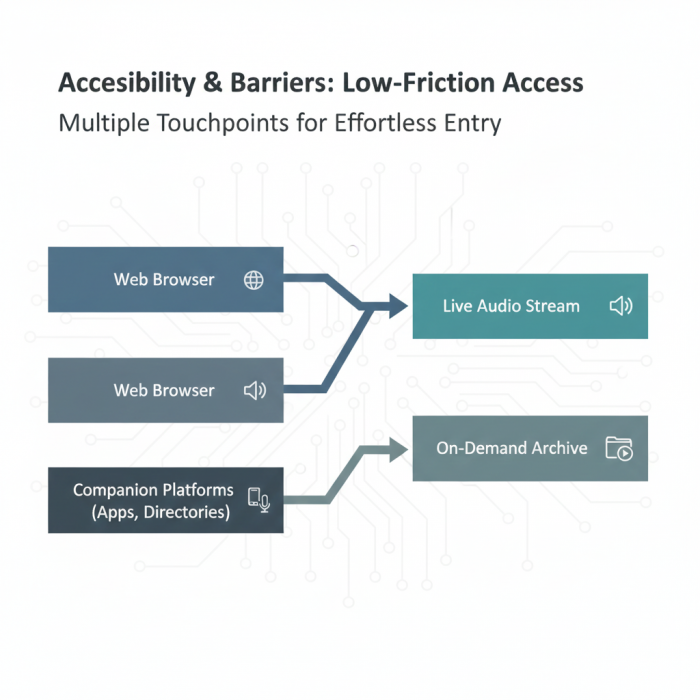
Access to Geekzilla Radio is relatively open:
- No mandatory subscription for listening
- Live and archived formats available
- Multiple entry points across web and companion platforms
This low barrier encourages experimentation but also means listener commitment is fluid rather than fixed.
Limitations and Constraints
Observed limitations include:
- Niche appeal outside tech-oriented audiences
- Variable quality across shows depending on hosts
- Reliance on discussion rather than original reporting
- Limited value for listeners seeking concise or headline-driven updates
The platform favors conversation and continuity over efficiency.
Overall Assessment
Geekzilla Radio represents a community-centered digital audio model rather than a commercial broadcast or personality-driven podcast. Its relevance lies in sustained engagement and format flexibility, not scale or influence.
It is best understood as an ongoing discussion space for technology-aligned audiences, useful for context, perspective, and shared discourse, but not a substitute for primary reporting or specialized research.
In broader terms, Geekzilla Radio reflects how niche audiences increasingly consume audio: not as isolated episodes, but as a persistent, ambient layer of information and conversation.
Comments