

Most people treat cold outreach and social media like they live in separate universes. Sales sends the cold emails. Marketing posts the content. The two teams nod at each other in the hallway and go back to their own dashboards.
That separation is quietly costing you replies.
Here's what actually happens when you send a cold email to someone who doesn't know you: if they're even a little interested, they don't just reply. First, they check you out. They click your name, glance at your profile, maybe search your brand. In about ten seconds, they decide whether you're a real person worth answering or a faceless pitch to ignore. What they find on your social profiles in those ten seconds often matters more than the email itself.
So the smartest operators stopped treating these as two channels. They treat them as one motion: outreach that opens the door, and a social presence that makes people want to walk through it. Let's break down how they feed each other - and how to actually run the play.
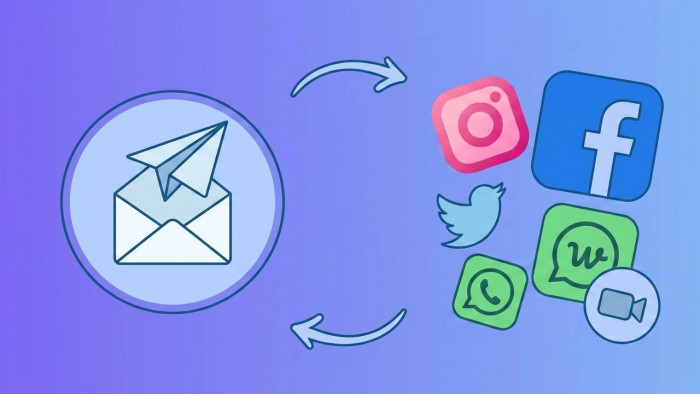
Why Prospects Check Your Feed Before They Reply
Put yourself on the receiving end. A message lands from someone you've never met. Before you invest any energy replying, your brain runs a quick trust check: Is this legit? Who is this? Are they credible?
The fastest way to answer that is to look you up. And when they do, one of three things happens:
● Nothing. Empty profile, last post from two years ago. You read as a bot or a fly-by-night operation. Delete.
● A red flag. Off-brand, inconsistent, or sloppy. Now they're second-guessing whether you're worth the risk.
● Quiet credibility. An active feed, a clear point of view, content that shows you actually know your space. Suddenly the cold email feels a lot warmer - and worth a reply.
That third outcome is the entire game. Your social presence is the reference check your prospect runs before they ever respond. A strong one turns "who is this?" into "oh, these people know what they're doing."
How Social Presence Warms Up Cold Outreach
A consistent feed does three things for your outbound that no email copy can do on its own.
It builds credibility on demand. When a prospect lands on your profile and sees you regularly sharing useful, on-topic content, you've passed the trust check without saying a word. You look like an authority in your space, not a stranger with a pitch.
It creates familiarity. In the best case, the person you're emailing has already seen your content float by in their feed. That flicker of "wait, I know these people" dramatically lowers their guard. Cold stops feeling cold.
It reinforces your message. If your outreach says you help brands grow and your feed is full of exactly that kind of value, the story is consistent. Consistency reads as trustworthiness. Mismatch reads as risk.
This is why the social side is worth real effort, not an afterthought. Your profile, your bio, your hooks, and the first few posts a prospect sees are all doing sales work. Getting that content sharp - scroll-stopping hooks, a bio that instantly signals what you do, captions that show expertise - is exactly the kind of thing a tool like SmartPostly is built to speed up, so the presence backing your outreach looks intentional instead of neglected.
How Cold Outreach Amplifies Your Social
The relationship runs both ways. Social content is largely a waiting game - you post and hope the right people find it. Cold outreach flips that. Instead of waiting to be discovered, you go directly to the exact people you want to reach and start a one-to-one conversation content alone could never start.
Even better, outreach drives targeted traffic back to your profile. Every prospect who gets curious and clicks through is a highly relevant visitor - someone in your ideal audience, now looking at your best work. Do that consistently and your outreach doesn't just book meetings; it grows the very audience that makes your next round of outreach easier.
Content builds the reputation. Outreach puts it to work. Together they compound.
Making the Play Work: Get Both Halves Right
The strategy is simple. Execution is where it falls apart. Here's what each half actually requires.
The social half: show up like you mean it. Pick the one or two platforms where your prospects actually spend time and post consistently there. Lead with value, keep your visual identity and message coherent, and make sure your bio does its job in a single glance. The goal isn't going viral - it's that anyone who lands on your profile immediately understands who you help and why you're worth trusting.
The outreach half: make sure the email actually lands. This is the part almost everyone underestimates. You can write the sharpest cold email in the world, but none of it matters if the message never reaches the inbox. Cold email has a technical layer most people ignore until their reply rates quietly crater.
Sending outreach from your main business domain, or from a brand-new mailbox with no authentication configured, is the fastest way to land in the spam folder — or worse, to torch the reputation of the domain you use for everything else. Serious cold outreach runs on separate sending infrastructure: dedicated domains kept apart from your primary one, mailboxes that are properly authenticated (SPF, DKIM, DMARC) and warmed up, and enough sender reputation that inbox providers actually trust you.
Setting all of that up by hand is genuinely tedious, which is why dedicated tools exist for it. A platform like Maildoso, for instance, provides ready-to-send mailboxes and domains built specifically for cold outreach, with the authentication and deliverability side handled for you - so your carefully written emails land where people will actually see them instead of in a spam folder nobody checks. It's the unglamorous plumbing underneath outreach, but it's the difference between a campaign that gets replies and one that vanishes.
The alignment half: tell one story. Your outreach message and your social presence should say the same thing. If your email promises one thing and your feed is about something else, the prospect's trust check fails. Match the tone, match the value proposition, and make the handoff from inbox to profile feel seamless.
A Simple Way to Run It
You don't need a complicated system. A basic loop works:
1. Build the presence first. Get your profile, bio, and a steady stream of on-topic content in place so there's something credible waiting when prospects look you up.
2. Set up outreach properly. Separate sending infrastructure, authenticated and warmed-up mailboxes, and a clean, personalized message. Get deliverability right before you scale.
3. Send, then let them look. Expect prospects to check your profile — and make sure what they find reinforces your pitch.
4. Feed replies back into content. Turn the questions and objections you hear in outreach into your next posts. Now your content answers the exact things your audience cares about.
Round and round. Each channel makes the other stronger.
The Takeaway
Cold outreach opens the conversation. Social media decides whether it continues. Treated separately, each one leaves results on the table — a great email undone by a dead profile, or great content that never reaches the specific people who'd buy.
Treated as one motion, they compound: outreach that lands in the inbox, backed by a presence that earns the reply. Get the plumbing right so your emails arrive, get the content right so your profile closes the trust gap, and tell one consistent story across both. That's the one-two punch - and it beats doing either one alone, every time.
Comments