

You press play, the chorus hits, and something in the lyrics punches straight through your chest but if someone asks, “So what’s this song about?” you mumble something vague and change the topic. Songtell was built for that awkward moment.
Instead of giving you another wall of text lyrics, Songtell tries to read between the lines, decode the metaphors, and hand you a story: what the track is probably about, what the singer might be feeling, what the recurring images could mean, and why the whole thing feels like it was written about your last breakup.
Meet Songtell: The AI That Reads Between the Lines
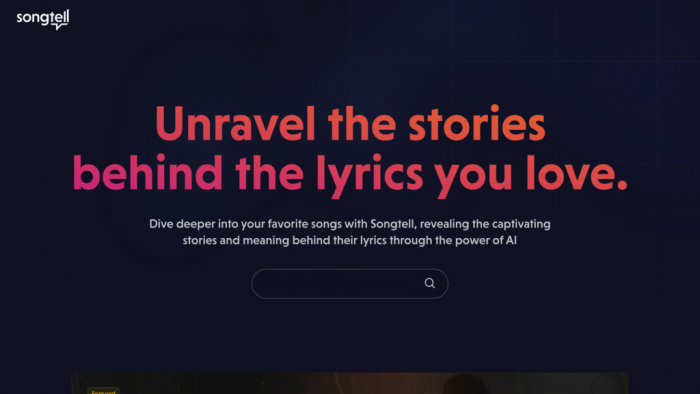
If you strip the branding and buzzwords away, Songtell is basically an AI literature teacher for your Spotify queue. You feed it a song title or a lyric; it feeds you back a narrative who’s hurt, who’s healing, who’s running away, and who’s pretending they’re fine.
At its core, Songtell is an AI‑powered song meaning platform that:
● Digests lyrics as raw text.
● Looks for themes, character dynamics, symbols, and emotional arcs.
● Rebuilds that into a clear explanation anyone can follow, even if they’ve never studied poetry.
It doesn’t claim to channel the artist’s diary or deliver “official meaning.” Instead, it behaves like a smart, well‑read listener: informed, quick, occasionally brilliant, and sometimes just a little too confident.
Behind the Curtain: What Actually Happens After You Type a Song Name
The entire Songtell experience starts with a single action: typing a song title, an artist name, or a stray line that’s been stuck in your head for three days.
Here’s the invisible choreography that follows:
1. Lyric retrieval – Songtell goes and fetches the lyrics from its underlying database or partnered sources.
2. Text dissection – An AI model parses the song like a story: spotting recurring images, tone shifts, changes in perspective, and emotional spikes.
3. Interpretation drafting – The model then generates an explanation in plain language: “This song explores…”, “The narrator seems to…”, “The repeated reference to X suggests…”.
4. Caching for speed – Once that interpretation exists, the next listener gets it instantly instead of waiting for a fresh run.
No registration forms, no long onboarding, no tutorial overlays; just search → click → meaning. It’s the opposite of how most modern apps behave, and that’s part of why it feels refreshing.
The Songtell Toolbox: Everything Hiding Behind That Simple Search Bar
For something that looks like “just a search box and a paragraph,” Songtell quietly bundles a handful of useful capabilities that make it more than a gimmick.
AI‑Generated Song Meanings
The main act is the interpretation itself. Songtell doesn’t just rephrase the lyrics; it tries to answer, “What is happening here emotionally and narratively?”
Expect breakdowns that talk about:
● Big themes like heartbreak, self‑discovery, regret, addiction, nostalgia, or rebellion.
● The emotional trajectory - does the song spiral, heal, rage, or accept?
● Symbolism and metaphor (“the house” as a broken relationship, “the road” as a life transition, etc.).
For many mainstream tracks, it’s uncannily good at summarizing the “vibe” you’ve always felt but never quite put into words.
A Growing Memory Palace of Songs
Songtell isn’t a one‑off toy that knows five demo tracks; it’s more of an ever‑growing library. Over time, it’s accumulated interpretations for tens of thousands of songs across pop, rock, hip‑hop, indie, and more, with new entries added continuously.
That scale matters: it means you’re not just using it for one or two “deep” songs—you can live with it as a side companion for your daily listening.
Search, Browse, and Follow Your Curiosity
You’re free to roam in whatever way your brain works that day:
● Type in a song title you half‑remember from a reel.
● Search by artist and fall down a rabbit hole of meanings across albums.
● Drop in a lyric fragment when Shazam failed you and all you have is one line.
Trending songs and curated groupings help when you’re in the mood to explore rather than chase something specific.
Verse‑Level Insight (When Available)
For some songs, Songtell doesn’t just drop one big overview—it zooms in on particular verses or lines. This is where it behaves most like a literature teacher, pausing on a tricky couplet and saying, “Okay, here’s what might be going on here.”
For complex or heavily metaphorical songs, that verse‑by‑verse commentary can be the difference between “nice words” and “oh… that’s what this meant.”
Click, Search, Decode: What Living with Songtell Feels Like
In everyday use, Songtell is the opposite of intimidating. No dashboards, no charts, no “workspace” language. You simply:
1. Open the site.
2. Type a song.
3. Read.
On desktop, the layout is mostly a big search bar, the resulting song card, and then the meaning page usually just one scrollable view with the explanation front and center. On mobile, the same experience shrinks nicely into a clean, thumb‑scrollable page that you can read while the track plays in your music app of choice.
The only thing that occasionally breaks the trance: ads. On the free tier, they show up enough that you notice them. They won’t ruin the tool, but if you’re planning a long reading session, say, dissecting an entire album your eyes will eventually start wishing they weren’t there.
Genius or Guesswork? How Close Songtell Comes to the Truth
Let’s be honest: any tool that claims to tell you what a song “means” is marching into controversial territory. Sometimes there is no single answer; sometimes the artist refuses to give one. So the question isn’t “Is Songtell infallible?” but rather, “Is it consistently insightful enough to be worth your time?”
Most hands‑on testing paints a familiar picture:
● On straightforward narrative songs, Songtell is usually spot‑on. It understands who’s hurt, who’s leaving, and what’s being confessed.
● On emotionally heavy tracks, it frequently nails the tone and central conflict, which is what most listeners care about anyway.
● On cryptic or experimental lyrics, it can slip into vague academic‑sounding guesses—readable, but not always satisfying.
It’s at its best when it behaves like an intelligent fan who has read widely and thinks hard. It’s at its worst when it leans into generic, essay‑like language that could apply to half the catalog.
If you come in expecting a thoughtful starting point rather than gospel truth, you’ll usually walk away impressed. If you expect divine revelation on every obscure line, you’ll occasionally roll your eyes.
Free Toy or Daily Tool? What Songtell Costs and Who Should Pay
The good news: you can meet Songtell for free. The less‑good but understandable news: the free version comes with ads and the usual trade‑offs.
The Free Way to Use It
On the free tier you typically get:
● Access to a large chunk of the interpretation library.
● Ability to search and read without making an account.
● An ad‑supported reading experience.
If your pattern is, “Once in a while I look up a song that’s haunting me,” the free version is plenty.
When Opening Your Wallet Makes Sense
Paid offerings (which can include ad‑free reading and sometimes extra features or more flexibility) are aimed at people who treat Songtell as a regular tool, not a once‑a‑month curiosity. Think:
● Students who keep cross‑referencing songs for class.
● Journalists or bloggers who regularly write about music.
● Songwriters studying narrative patterns and metaphors.
Songtell pricing overview
| Plan / Range | Indicative price |
| Free plan | $0 |
| Micro pack | $0.99 for 10 song analyses |
| Premium subscription | ~$5–$10 per month (varies by region) |
| Annual subscription | ~$50–$90 per year (estimated) |
| General price range | $0.99–$9.99 |
| Directory listing | “Free” and “Contact sales” (Siteefy card) |
The pricing sits in the small‑ticket, accessible zone, nothing like full SaaS subscription levels so as soon as you realize you’re visiting multiple times a week, going paid starts to feel less like a luxury and more like common sense.
Where Songtell Shines and Where It Trips Over Its Own Metaphors
To decide whether it belongs in your own toolbox, it helps to see its personality on both good and bad days.
Why You Might Fall in Love with It
● It gives you deep, readable interpretations in seconds, without forcing you into Reddit rabbit holes.
● The catalog is broad, spanning popular and classic tracks across many genres.
● It’s frictionless: no sign‑up, no tutorial, just search and read.
● It works for multiple roles—the casual listener, the lyric nerd, the student, the blogger, the songwriter.
● It embodies a modern approach: instead of crowdsourced comments, you get a consistent, AI‑generated voice that can feel reassuringly coherent.
Why It Might Annoy You
● Every interpretation is, ultimately, an educated guess, not an artist‑approved explanation.
● On some songs, it drifts into generic school‑essay territory—technically correct, emotionally bland.
● Ads on the free tier do occasionally break immersion.
● Niche genres and ultra‑recent releases can feel under‑served or missing.
● There’s often no built‑in community annotation layer, so if you disagree, you can’t debate or correct it right there.
Who Songtell Was Secretly Built For
Songtell pretends to serve “everyone,” but in practice certain types of users get disproportionate value.
● The lyric‑obsessed fan – You already dive into comment sections and interviews; Songtell becomes your faster, always‑awake co‑analyst.
● The student or teacher – It’s a quick way to generate a first reading of a song for class discussion, then challenge or refine it.
● The songwriter or producer – You can reverse‑engineer how themes and emotional arcs are constructed in other people’s hits.
● The critic, blogger, or content creator – It offers a first interpretive pass, which you can then cross‑check, expand, or deliberately argue against.
If you rarely think about meaning at all and just want something to sing in the car, it’s fun but not essential. If you do care about what lyrics are doing under the surface, it quickly feels less like a novelty and more like a daily instrument.
How Songtell Stacks Up Against the Old Guard of Lyric Platforms
The easiest way to understand Songtell is to put it next to the tools you probably already know:
Songtell doesn’t compete on text access or community. It competes on interpretation. Its pitch is simple: “While they give you the words, we try to explain the story.”
That means you’ll often use them together: Musixmatch or your music app to see the lines, Genius for some human annotations, and Songtell to get a clean, coherent, AI‑written reading of what the whole thing might be about.
Is It Safe to Let an AI Explain Your Taste in Music?
From a classic safety standpoint, Songtell is fairly tame. It’s analyzing text you already listen to; it’s not generating explicit new material out of nowhere. The bigger questions are softer:
● Bias and interpretation – Any model trained on text carries cultural and stylistic bias. That means some readings will reflect mainstream interpretations more than niche or marginalized ones.
● Privacy and data – In normal use you’re mostly submitting song queries, not personal secrets. Standard analytics apply, but for most users, the privacy footprint is similar to using any other lyrics website.
The real “safety” rule of thumb is intellectual: treat its explanations as commentary, not commandments. If it clashes with your own reading, that doesn’t make you wrong, it just means you’ve found a great starting point for a deeper argument, with yourself or your friends.
Love Letters and Eye Rolls: What Real Listeners Say
Spend a little time watching how people talk about Songtell and you’ll see two recurring reactions.
On the positive side, several reviewers note that Songtell can genuinely deepen how you experience familiar tracks, saying its interpretations are “surprisingly insightful” and often capture the emotional core of a song in a way casual listeners might miss. One reviewer even describes it as feeling like a “built‑in music critic” that quickly surfaces themes and narratives without forcing you to dig through long forum threads.

Critics, however, point out that some outputs slip into what one reviewer calls “AI word salad,” especially on more abstract songs, and compare a few interpretations to essays written “to impress your high school English teacher rather than to clarify the song.” Others highlight the lack of a comment or annotation layer, noting that users currently cannot correct or refine interpretations directly on the platform.

The pattern is clear: when Songtell is in sync with a listener’s intuition, it feels magical; when it’s off, it reminds you that this is still a machine, guessing.
Final Chorus: Where Songtell Fits in a Music Lover’s Life
Songtell is what happens when someone asks, “What if we built a Genius‑style tool, but the annotator is an AI that never sleeps and actually loves unpacking lyrics?” It won’t replace human critics, fan theories, or artist interviews—but it doesn’t try to.
Instead, it offers a fast, thoughtful, imperfect yet often insightful way to deepen your relationship with the songs you already love. For lyric nerds, students, writers, and anyone who’s ever whispered “I feel this, but I can’t explain it,” Songtell is absolutely worth bookmarking and, if you use it heavily, probably worth paying for.
Comments