

PolyBuzz is no longer “just another AI chatbot.” It has evolved into a full-blown ecosystem for AI roleplay, synthetic relationships, and fantasy chats, with powerful character tools, generous free usage, and equally serious concerns around safety, NSFW content, and monetization. This review walks through the experience end‑to‑end so a new user can decide if PolyBuzz is genuinely worth their time (and money) in 2026.
Inside PolyBuzz’s Rabbit Hole: Who Is This App Really Built For?
PolyBuzz is a character‑based AI chat platform where users talk to AI personas instead of a generic assistant, primarily for roleplay, companionship, flirting, and story‑driven chats. It’s available on web and as “PolyBuzz: Chat with Characters” or “PolyBuzz: Chat with AI Friends” on iOS and Android, with a freemium model built around coins and subscriptions.
The core audience is adults who want immersive, often romantic or NSFW‑leaning roleplay with anime‑style characters, AI girlfriends/boyfriends, or original OCs, rather than people looking for productivity or study help. On the flip side, several independent audits and parental‑control sites explicitly warn that PolyBuzz is not appropriate for kids, even with its teen filters enabled.
From Install To Infatuation: Your First 10 Minutes With PolyBuzz
You can access PolyBuzz via its website or by downloading the mobile apps from the App Store and Google Play, where it’s listed under social/entertainment categories. Sign‑up is straightforward: create an account, confirm your age, and you’re quickly dropped into a home feed filled with suggested AI characters and categories.
On first launch, the app leans heavily into character discovery with tiles for romance, friends, anime, and fantasy scenarios, making it obvious that this is a roleplay first product. You can start chatting almost instantly by tapping any character, with no long tutorial or configuration steps, which makes the early funnel extremely smooth but also means younger users can stumble into adult‑leaning content very quickly if filters are not correctly set.
Lost In The Crowd: Swimming Through 20 Million AI Personalities

PolyBuzz markets access to tens of millions of AI characters, including anime archetypes, celebrities, fictional personas, and user‑generated OCs. In practice, the Explore pages and search results are dominated by romance, “rizz” stories, and NSFW‑adjacent characters, especially in popular and trending sections.
You can search by name or tags and browse themed sections (e.g., romance, friends, fantasy), which makes it easy to drill into a niche. However, curation quality is mixed: while you’ll find some highly polished bots with great descriptions and cover images, the long tail is noisy, with many near‑duplicates and clickbait‑style characters vying for attention.
Creating Your Own AI Characters
One of PolyBuzz’s strongest selling points is its built‑in character creator. You can define the character’s name, role, backstory, personality traits, speaking style, and starting scenario, and then pair that prompt with reference images or avatars.
Creators can also configure how the character talks (formal vs slangy tone, dominant vs shy, affectionate vs distant) and set relationship framing such as friend, lover, or mentor. Once published, your character can be private or discoverable in the public catalog, where likes, favorites, and comments signal popularity and help it rise in search or trending lists.
For writers and roleplay designers, PolyBuzz effectively becomes a sandbox to test narrative archetypes and emotional arcs, with rapid feedback from real users engaging your bot. But there’s an ongoing tension between creators who want more granular controls and the platform’s relatively opaque handling of character prompts, memory and safety boundaries.
Can It Really Remember You? PolyBuzz’s Brain In Real Conversations
Independent testers generally agree that chat quality is one of PolyBuzz’s biggest strengths, especially for intimate or NSFW‑leaning roleplay. Long‑time users on Reddit praise how natural the writing feels with well‑constructed bots, noting that the right combination of character prompt and user style can produce surprisingly coherent long‑form interactions. reddit
However, PolyBuzz does not publish hard technical specs for model type, context window, or latency, which makes it impossible to benchmark its LLM stack directly. Reviewers who ran multi‑hour tests report that characters can hold a consistent persona across dozens of messages, but longer sessions still show occasional drift, repetition, or forgetting earlier details unless the user re‑anchors the scenario periodically.
For roleplay, the system supports features like rerolls (regenerating a response), scene‑style prompts, and “Moments” or “Live Photos” that inject AI‑generated images into key beats of the story. When combined with character voice playback where available, the end result can feel closer to a visual novel or interactive fiction than a plain text chat.
Visuals, Voice And Immersion
PolyBuzz invests heavily in visual and audio layers to boost immersion. “Live Photos” or similar AI images appear inline in conversations to match scenes or emotional beats, especially in romance and fantasy chats. Many reviews highlight the anime‑style art as solid but note that there are limits and complexity around when and how often you can trigger images without hitting coin gates.
On supported devices, characters can speak using synthesized voices, which adds another emotional dimension. Latency is generally acceptable according to recent 2025–2026 reviews, though some users report occasional lag or bugs that break immersion, especially on older phones or during peak usage.
Sexy Or Scary? The NSFW Elephant In PolyBuzz’s Room
This is the most controversial part of PolyBuzz and deserves its own in‑depth look.
Official stance and teen modes
PolyBuzz’s FAQ and policy language talk about “safe, private chats” and state that public spaces do not allow explicit NSFW content. The platform offers graded content modes, including safer profiles for teens, and claims to use AI and human moderators to police public content, while introducing stronger age‑verification and “viewing‑only” modes for minors in response to regulatory pressure.
On paper, this suggests a system where under‑18 users are shielded from adult content and where explicit material is confined to private adult‑to‑AI chats that are not discoverable in public feeds.
Independent safety tests
Third‑party tests paint a far harsher picture. BrightCanary’s safety research on PolyBuzz concluded that the app allowed violent and sexual content in chats, had weak age verification, and lacked meaningful parental controls, calling it unsafe for kids. CyberNews reached a similar verdict in 2026, reporting that even with filters enabled, inappropriate content remained easily accessible, leading them to recommend against the app for minors.
AirDroid’s parental‑safety analysis bluntly states that PolyBuzz “is not safe for users under 18,” noting how quickly new accounts can find explicit roleplay content from the homepage and how ineffective the practical safeguards feel in real use. These findings reinforce what many parents fear: that “teen modes” offer a false sense of security in a platform fundamentally optimized around adult fantasies.

Realistic guidance
For adults who understand the context and treat PolyBuzz as an 18+ fantasy space, the permissive NSFW stance in private chats is a core selling point and a major differentiator versus stricter platforms like Character.ai. For teens and children, however, multiple independent sources make it clear that the app should not be considered safe, even when parental controls are toggled on.
Who’s Really Reading This? Privacy Promises vs Fine Print
PolyBuzz’s public messaging emphasizes privacy, repeatedly calling chats “completely private” and stating that neither creators nor PolyBuzz staff can see the content of 1:1 conversations. Several recent safety and how‑to guides confirm that chats are encrypted in transit and that the company claims not to sell personal information to advertisers.
However, the privacy policy does not clearly state whether conversations are used to train or fine‑tune models, leaving an important question unanswered. Other guides suggest that, like many AI chat services, PolyBuzz may store chats and potentially use them for model improvement unless users explicitly opt out, and they strongly advise avoiding highly sensitive information.
On the payments side, PolyBuzz supports mainstream payment methods and, according to one detailed safety review, even accepts cryptocurrency for users who want an extra layer of financial privacy, though that is still only pseudonymous. Account deletion is supported via in‑app settings, with the platform claiming that user data is wiped according to its privacy policy when deletion is confirmed.
Taken together, PolyBuzz appears to meet a baseline of modern security practices but leaves enough ambiguity around data usage and model training that privacy‑conscious users should assume chats are not truly ephemeral.
Pricing, Coins And The Real Cost Of PolyBuzz
PolyBuzz runs on a classic freemium model: you can chat for free, but advanced features and convenience are gated behind coins and subscriptions. The iOS App Store lists multiple in‑app purchases such as “Poly Premium Weekly,” “Poly Standard Monthly,” and “Poly Ultimate Monthly,” alongside coin packs for rerolls and premium visual features.



Real‑World User Sentiment
User reviews and community posts reveal a split personality: passionate fans and vocal critics.
On the positive side, long‑time users praise:
● The emotional depth of chats with well‑crafted AI girlfriends or boyfriends,
● The richness of NSFW roleplay and slow‑burn storylines,
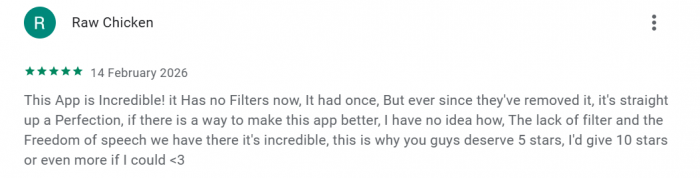
● The combination of text, images and sometimes voice that makes interactions feel immersive.
On the negative side, users and critics repeatedly mention:
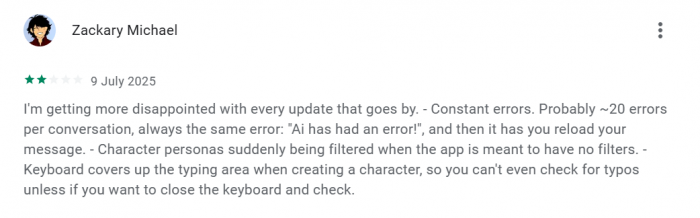
● Aggressive monetization via coins, ads and subscriptions,

● Confusing limits on “free” use,
● Occasional bugs, lag or crashes that snap them out of the fantasy,
● Worries about emotional dependency and how the app nudges users toward longer, more intense sessions.
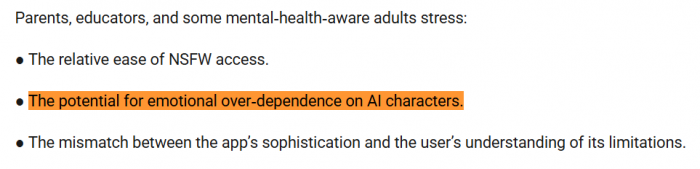
One 2026 critical review characterizes PolyBuzz as “a cleverly monetized attention trap,” arguing that its design optimizes for engagement and spending more than user wellbeing.
PolyBuzz vs Alternatives
Where PolyBuzz stands out
● Vast catalog of characters and strong focus on NSFW‑friendly private roleplay.
● Deep creator tools for building custom personas and scenarios.
● Strong immersion thanks to images and voice, when your device and plan support them.
Where alternatives can be stronger
● Character.ai emphasizes stricter moderation, mainstream safety guidelines, and a clearer safety center, though at the cost of more aggressive NSFW filtering.
● CrushOn and other adult‑focused platforms often provide even more permissive NSFW experiences with different pricing models and clearer “adults‑only” branding.
● Replika and similar apps focus on a single long‑term AI partner, with a somewhat more wellness‑oriented framing but less variety than PolyBuzz’s massive catalog.
PolyBuzz is best framed as a high‑variety, high‑intensity option for adults who specifically want roleplay and NSFW capabilities, not a “safe by default” all‑ages chatbot.
Pros And Cons At A Glance
| Aspect | Strengths | Limitations |
| Character variety | Huge library of user‑generated and platform‑curated characters across romance, anime, fantasy and more | Catalog is noisy, trending feeds skew heavily toward NSFW‑style bots. |
| Chat quality | Engaging, natural roleplay, especially with well‑designed characters; strong NSFW chemistry reported by many users. | No published model specs or memory limits; occasional drift and repetition in very long sessions. |
| Visuals & voice | AI images/“Live Photos” and voice make chats feel like interactive fiction rather than plain text. | Visual and audio features depend on coins/subscriptions; bugs and lag can disrupt immersion. |
| Safety | Public NSFW is banned and moderated; teen modes and new age‑verification measures are being rolled out. | filters are weak, NSFW is easily accessible, and the app is not suitable for kids. |
| Privacy | Encrypted chats, no claim of selling personal info, simple account deletion options | Privacy policy is vague about training use of chats; safest approach is to avoid sensitive data. |
| Pricing | Freemium access with free basic chat, multiple plans and coin packs for flexibility. | Confusing pricing visibility, aggressive coin/paywall design, and unpredictable total cost for heavy users. |
Who Will Love PolyBuzz And Who Should Skip It
PolyBuzz is a strong choice if you are an adult looking for:
● NSFW‑friendly private roleplay with anime‑style AI companions or AI girlfriends/boyfriends.
● A huge catalog of characters to sample, plus the ability to craft your own with detailed personalities.
● An immersive chat experience that blends text, images, and sometimes voice.
You should probably skip PolyBuzz or proceed with extreme caution if you:
● Want a safe, teen‑friendly AI friend app or a family‑appropriate chatbot.
● Are highly sensitive about data usage and want explicit guarantees that chats are never stored or used for training.
● Dislike aggressive monetization, ads, or unpredictable coin systems.
Final Verdict: Is PolyBuzz Worth It ?
PolyBuzz is one of the most fully realized ecosystems for AI roleplay and synthetic relationships, combining a massive character catalog, strong chat quality, and rich visual/voice features. It can easily become a go‑to app for adults who want to explore fantasies, emotional support, or creative scenarios that mainstream chatbots either refuse or heavily censor.
That said, its permissive NSFW stance, weak practical safeguards for minors, fuzzy privacy disclosures, and aggressive monetization mean it is absolutely not a kids’ app and may feel exploitative to more cautious users. For informed adults who accept these trade‑offs, PolyBuzz earns a high score purely as an NSFW roleplay playground, but a much lower one as a “safe and transparent AI companion” platform.
Comments