
I’ve been testing Promptchan AI long enough now that it doesn’t feel like “a tool” anymore; it feels like a place I go when I want to build fantasies I can’t easily create anywhere else. This review is my experience using it as an actual user, not just reading the marketing page.
Why I Tried Promptchan AI in the First Place
I didn’t come to Promptchan looking for a generic AI art generator. I already use Midjourney and DALL·E for brand-safe visuals, so I know what a polished, locked-down system looks like. What I wanted here was different: an uncensored space where I could push NSFW, anime, and more experimental adult ideas without constantly hitting safety filters or vague “policy violation” warnings.
Promptchan is very honest about what it is. This is an 18+ NSFW-first platform built around adult fantasies, anime aesthetics, and virtual companions, not a productivity app or a design suite. The moment you land on the site, that becomes clear. There’s no attempt to hide behind corporate language; you’re in an adult AI playground from the first screen.
First Login: It Feels Like Entering an 18+ District
The first time I signed up, the difference from mainstream AI tools hit me instantly.
The signup itself is simple: email, password, and you’re in. No software to install, everything runs in the browser. But the home screen looks nothing like a typical “clean” SaaS UI. The main input box is front and center, and it’s surrounded by a stream of user-generated NSFW images—anime girls, realistic pin-ups, fantasy characters, and more explicit stuff that normal tools would block.
As a new user, I immediately got a small pool of free “gems” (credits). With those, I could test the generator: type a prompt, choose a style, and click generate. Within seconds, the first images started appearing. Even in this free mode, they were surprisingly detailed: good anatomy most of the time, dramatic lighting, and very on-point with what I had described, especially when I was specific.
The vibe was clear: this isn’t a neutral art sandbox; it’s an AI-powered red-light district with surprisingly serious technical chops behind it.
The Interface: More Director’s Desk Than Design Tool
Once I started exploring, the interface layout made sense from a creator’s perspective.
On the left or top (depending on the layout), there’s the prompt field and settings. Promptchan pushes you towards structured prompts rather than vague sentences. You can:
● Pick base styles like anime, hyper-anime, realistic, 3D, or cinematic.
● Choose or refine poses, body types, facial expressions, and angles.
● Apply filters for color mood, lighting, or specific genre vibes.
● Use negative prompts to explicitly exclude things you don’t want.
The right or central area is where your generated images appear, and below or around that you get access to the public gallery: other users’ creations, often with prompts and settings you can clone.
From a user perspective, the best part is that I don’t have to write a novel in the prompt box to get specific results. I can build the scene piece by piece: style, pose, body, expression, outfit, environment. It feels more like directing a model and less like wrestling with a chatbot.
The downside is that there are a lot of toggles. On day one, the interface can feel dense if you’re used to ultra-minimal tools. But once I realized each control mapped to something visual (a pose, a style, a mood), it became intuitive over a few sessions.
Image Generation Quality: Prompt Obedience Is the Real Hook
The real test for me was: does this thing actually listen?
In day-to-day use, Promptchan’s image engine is the main reason I kept using it. When I wrote clear prompts and used the tag-style structure it prefers, it followed my instructions far better than many “safe” tools. If I said: “pale-skinned fantasy sorceress, intricate tattoos, candlelit stone chamber, intense eye contact, cinematic lighting,” I usually got exactly that, not a random mash-up.
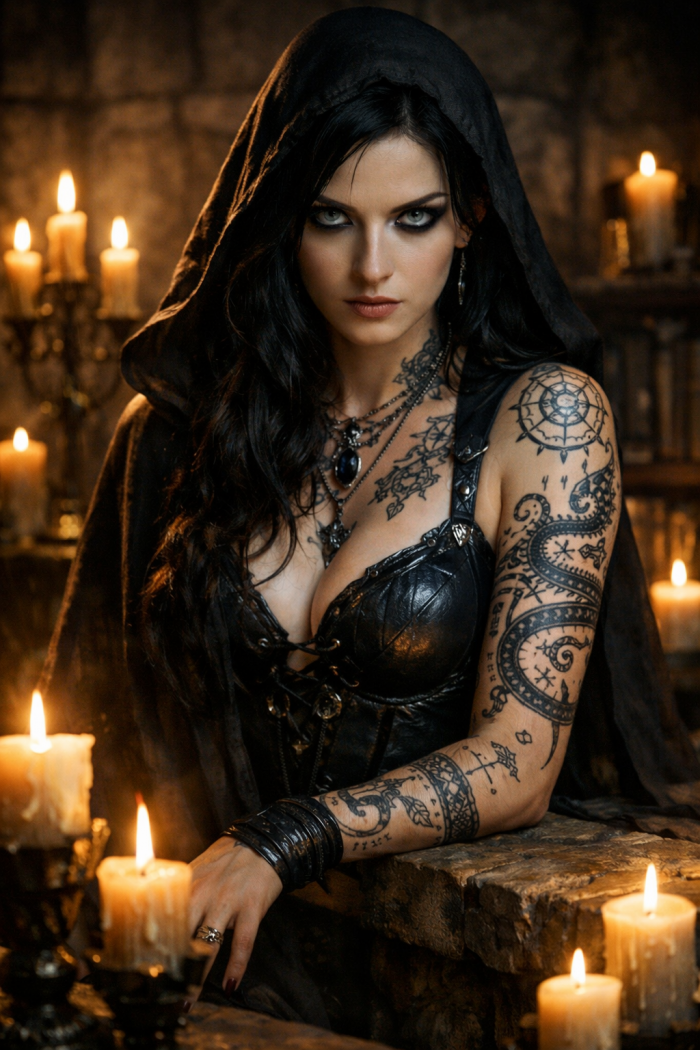
Promptchan clearly likes structured tags and weights. The more I leaned into that prioritizing certain traits, suppressing others, the closer it got to what I imagined. Once I dialed in a character, I could save and reuse that prompt to create a consistent persona across many images: different outfits, settings, or moods, but essentially the same “person.”
For NSFW work, that consistency matters. It felt like having a virtual model that I could call back on demand instead of re-lucky-dipping every time.
Not every output is perfect. Sometimes hands go weird, sometimes faces soften too much, and sometimes complex scenes with multiple characters confuse the model. But compared to many uncensored generators, the overall quality and reliability felt high. When something was off, it was usually because my prompt was messy, not because the system was incapable.
From Static to Motion: Playing With Video
Once I had characters I liked, I wanted to see them move. That’s where Promptchan’s video feature came in.
Video is not part of the free playground. To access it, I had to upgrade to a higher tier. Once I did, I could take a prompt (or an existing character configuration) and generate short clips. These ranged from a couple of seconds to slightly longer, with camera movement, head turns, body motion, and environmental effects.
From a user perspective, two things stood out:
1. Video eats credits fast. A single short clip can cost as much as many still images. This forces you to be deliberate. I couldn’t just spam dozens of videos; I had to plan the scenario, refine it with still frames, then commit to a few carefully chosen clips.
2. Face and identity consistency improved the experience. When I reused my established character prompts, the person in the videos actually looked like the same “AI model” from my images. It wasn’t flawless, but it was good enough that I felt continuity.
The video engine is not going to replace professional film tools. But as a way to add motion and cinematic feel to my existing fantasy worlds, it was impressive, especially given how easy it was to go from idea to clip.
The AI Girlfriend Side: Where It Starts To Feel Personal
Images and videos are one thing; AI companions are another. Promptchan blends these together in a way that can be surprisingly intense.
When I created an “AI girlfriend” or companion, I could define:
● Name and basic identity.
● Personality traits, kinks, boundaries, temperament.
● Preferred style of conversation and scenarios.
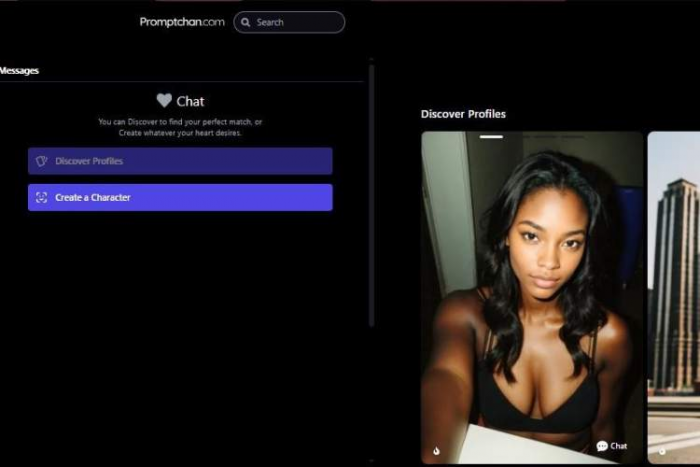
Then, inside the chat interface, I could talk to this persona, and the tone was much closer to roleplay than to a generic assistant. The system remembered ongoing threads reasonably well, and when a chat reached an interesting scenario point, I could jump into the image generator, create a visual for that moment, and feed it back into the chat.
As a user, that loop—chat → image → chat → maybe video—made the experience feel much more like a living narrative than a series of isolated images. It’s easy to see how someone could spend hours building a “relationship” like this.
At the same time, I felt the psychological weight. It’s one thing to generate images; it’s another to create a character that calls you by name, remembers your preferences, and “responds” emotionally. You have to be honest with yourself about why you’re using it and how much emotional energy you’re investing.
Pricing and Gems: What It Really Costs to Use Promptchan
Promptchan uses a freemium subscription model with gems as the currency that controls what you can do.
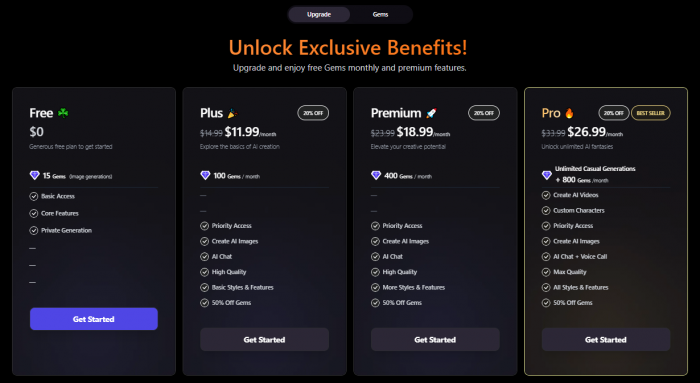
Here’s what it felt like in practice:
● Free tier: Enough daily gems to play with basic images, test styles, and get a feel for the engine. Great for experimenting, not enough for serious ongoing projects.
● Paid tiers: Several options, starting in the roughly ten-dollar-a-month range and going up into the 20+ dollar bracket depending on how many gems and features you want. Higher tiers include more credits, faster generation, HD images, and video access.
On my account, the economics were straightforward: Simple test images used a small number of gems, High-res, stylistically complex images used more and Video or large batches used a lot.
If you generate occasionally say, a few sessions a week, the lower tier can be enough. But if you are a daily user or an NSFW creator who needs lots of assets, you’ll feel the gem meter constantly. It made me more careful, which is good for quality, but it also meant I was always mentally calculating: “Is this variation worth the cost?”
Compared to “unlimited” tools, Promptchan feels more premium and controlled. You trade volume for quality and precision. Whether that’s a good deal depends on whether you’re monetizing your content or just exploring for fun.
Where Promptchan Works Best (And Where It Doesn’t)
Using Promptchan regularly made its “ideal user” profile very obvious.
It shines when:
● You are an adult creator (OnlyFans, private sites, NSFW comics) who needs consistent characters and high-detail images or clips for content.
● You’re a hentai/anime or fantasy artist using AI as a visual sketchpad and reference generator.
● You enjoy story-driven or roleplay-style experiences and want visuals integrated into that.
It does not fit well when:
● You want family-friendly or corporate-safe visuals. This is absolutely not the right environment.
● You’re under 18. Everything about the platform is designed around adult themes.
● You’re in a professional context where visiting an NSFW site could cause serious trouble.
● You aren’t comfortable with the idea that an external service is involved in your most private fantasies, even if they claim to be discreet.
As a user, I realized I needed my own boundaries. For me, that meant never using real faces (mine or anyone else’s), keeping characters clearly fictional, and never opening Promptchan on devices tied to work or shared spaces.
Privacy, Consent, and the Ethical Gut Check
The longer I used Promptchan, the more I thought about what I was trusting it with.
On paper, it markets itself as privacy-aware, and the whole adult branding suggests they know users care about discretion. But no matter what a site says, the basic reality remains: prompts, images, and chats are processed and stored somewhere. That’s unavoidable.
So I asked myself:
● Would I be okay if someone else saw my prompt history?
● Would I be okay if some of my outputs resurfaced in a leaked dataset?
● Am I staying away from using real people as inspiration?
If the answer to any of those felt like “no,” I adjusted how I used the tool. I treated Promptchan like any other sensitive platform: strong password, no real identities, no personally identifying content, and a habit of not generating anything I would be devastated to see out of context.
The biggest ethical issue is consent and deepfakes. With the level of realism available, it would be easy to slide into creating characters that strongly resemble real people, even if you never explicitly name them. Promptchan’s rules say no minors and no illegal content, but they can’t police what’s in your head. As a user, you have to decide that line for yourself and stick to it.
For me, the only safe way to use a tool like this is to keep everything clearly fictional and never treat it as a playground for real-world revenge, harassment, or non-consensual fantasies.
Performance and Community: How It Feels to Use Every Day
Day-to-day performance is one of the reasons I didn’t abandon Promptchan after the novelty wore off.
Image generation is fast, usually a few seconds per image, even with detailed prompts. On paid tiers, the speed and reliability are consistently good, and even the free experience is usable if you accept the limits. I did hit occasional hiccups: a queue spike, a slower period during busy hours, the odd failure. But overall, it felt robust enough for regular creative work.
The community side is both a learning tool and a content firehose. The public gallery is full of user-generated images. For each one, you can often:
● Inspect prompts and tags.
● Clone the configuration.
● Tweak and regenerate your own version.
As a user, this is like having thousands of free tutorials. If I saw a style I loved, I could borrow its “recipe” and make it my own. The trade-off is that the gallery is not curated for taste. You’ll see everything: beautiful, artistic work and very explicit or niche content. You need to be ready for that.
The gallery also reminds you how powerful Promptchan is. There were countless moments where I thought, “I didn’t even realize the engine could do that,” just by seeing what others had made.
Comparing It to “Safe” AI Tools
Because I also use Midjourney and DALL·E, I naturally compared the experiences.
● Midjourney and DALL·E are excellent for general art, illustration, and brand-safe content, but they hard-block explicit NSFW. They’re great for most creative use-cases, terrible for adult ones.
● Promptchan is the exact opposite: it’s built for adult content first, with anime and realistic styles that mainstream tools won’t touch. It’s not meant for corporate design work at all.
For me, Promptchan is not a replacement; it’s a complement. I wouldn’t use it for anything professional outside explicit content, and I wouldn’t expect it to integrate nicely into standard business workflows. But in the NSFW niche, it felt much more capable and flexible than trying to “work around” mainstream filters.
What Other Users Say on Trustpilot
Before committing to Promptchan long term, I checked its Trustpilot reviews to see what other users thought. The feedback is mixed but helpful. Many users leave short, positive reviews like “great AI software,” “good generator,” and “easy to use with good art.” They often praise the image quality, strong anatomy in NSFW generations, and the simple interface that makes it possible to get good results without being an AI expert.
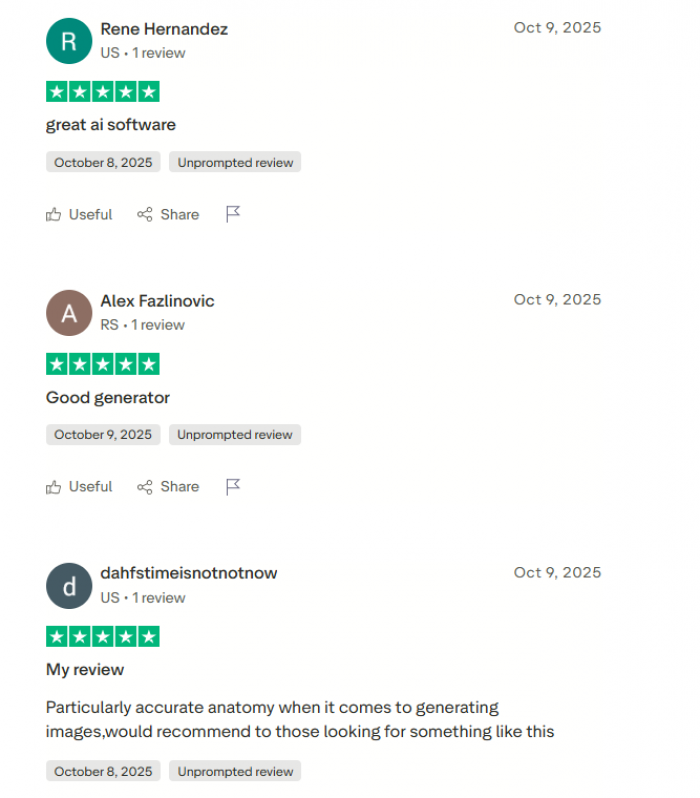
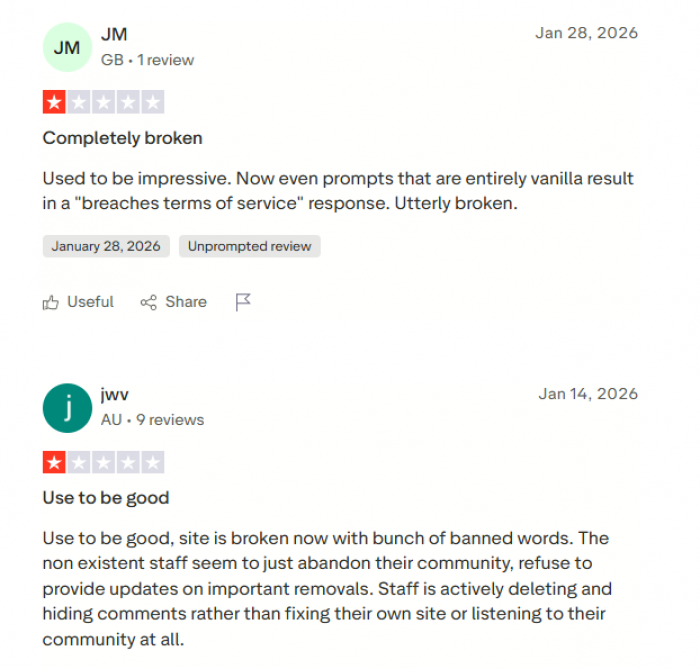
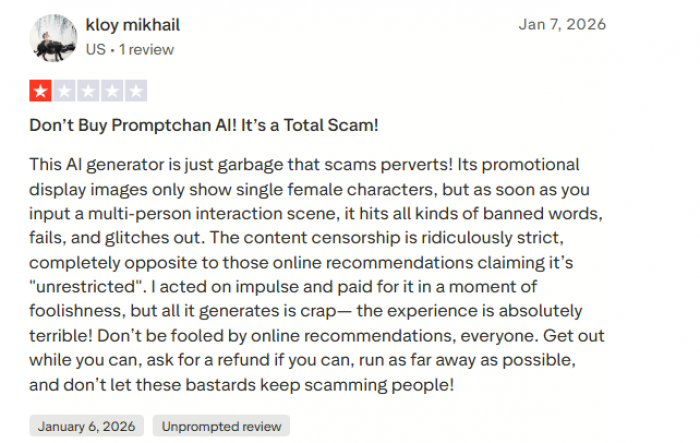
However, not all feedback is positive. Some users say the platform has become unreliable, mentioning bugs, banned prompt words, and poor communication from support. Others complain that even higher-tier plans have tight limits, especially for video generation, and that the Pro subscription doesn’t add enough value compared to the free version. Overall, the reviews suggest that Promptchan can be powerful and enjoyable if you understand how its gem system works, but it can feel frustrating if you expect unlimited use, strong support, or consistent performance.
My Honest Verdict After Using Promptchan AI
From my experience, Promptchan AI is one of the more powerful and focused NSFW tools available. It offers a high-control image engine that responds closely to prompts, supports styles ranging from anime to hyper-realistic visuals, and includes tools for short videos and stories that can turn static images into narrative experiences. It also features AI companions that make interactions feel more personal, along with a community gallery where users can learn techniques simply by browsing others’ work.
However, using the platform comes with trade-offs. It operates on a gem-based payment model that can become expensive if used heavily, and it requires users to handle sensitive content responsibly. Clear boundaries around privacy, consent, and emotional engagement with AI-driven fantasies are important. For adult creators or artists with a clear purpose, Promptchan can be a useful tool, but for underage users, people in sensitive work environments, or those uncomfortable with the ethical and privacy considerations, it’s not something to explore casually. Overall, it can be impressive and practical for certain projects, while still raising understandable concerns about the nature of uncensored AI fantasy platforms.
Comments