

For the past decade, the business-to-business (B2B) landscape was dominated by formal, hyper-professional corporate jargon. Today, generative AI has mastered this exact tone. With a single prompt, any company can generate thousands of perfectly polite, grammatically flawless, and profoundly boring corporate emails, whitepapers, and landing pages.
By making professional writing infinitely scalable, AI has inadvertently killed its value. We are now experiencing a crisis of "Apathy at Scale." When every brand sounds like an overly polite algorithm, how do you convince a client that you actually care about their specific problem?
The answer lies in abandoning B2B communication entirely and embracing the H2H (Human-to-Human) framework.
The "Corporate Bot" Trap
The problem with raw LLM output in marketing is its innate desire to be inoffensive and average. Generative AI lacks the capacity for vulnerability, shared frustration, or industry-specific humor. It writes like a lawyer trying not to get sued, rather than a passionate founder trying to solve a problem.
When a potential client reads an email that begins with "I hope this email finds you well in these unprecedented times," their brain immediately categorizes it as automated noise. They don't feel seen; they feel processed. To break through this modern spam filter, your content must possess "emotional friction"—the subtle imperfections, colloquialisms, and rhythmic shifts that signal a real human is behind the screen.
Operationalizing Empathy
Transitioning to an H2H strategy doesn't mean abandoning the efficiency of AI. It means changing where the AI's job ends and where yours begins. Smart marketing teams are now using language models for data synthesis and structural drafting, but they never publish the raw output.
Instead, they route their drafts through a dedicated refinement layer. For startups and independent creators looking to pivot their strategy without breaking the budget, finding the best humanize AI text free solution has become a critical operational goal. The objective is to strip away the sterile "bot-speak" and reintroduce the conversational cadence that builds instant rapport.
The Role of the Empathy Engine
This is exactly where platform acting not just as editing software, but as empathy engines for your brand. Instead of merely swapping synonyms to bypass detectors, this technology structurally recalibrates the text to mimic the natural, unpredictable flow of human conversation.
By utilizing such tools, marketers can transform a stiff, AI-generated value proposition into a compelling, conversational pitch. It ensures that the efficiency of your content supply chain doesn't come at the cost of your brand's soul.
Step 1: Paste your AI-generated draft into the interface.
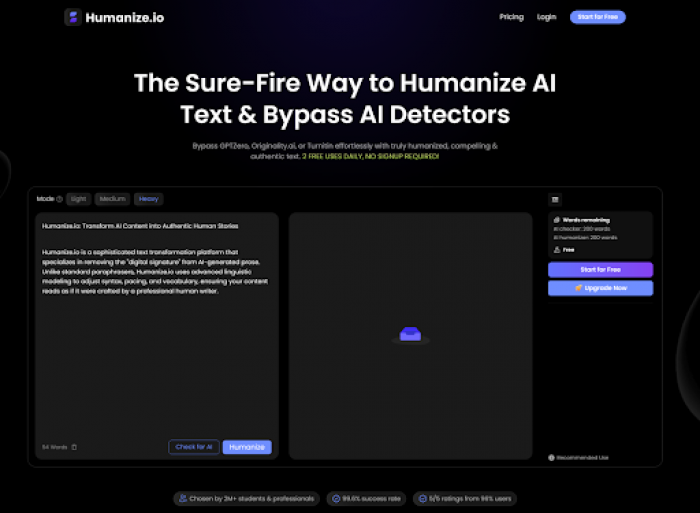
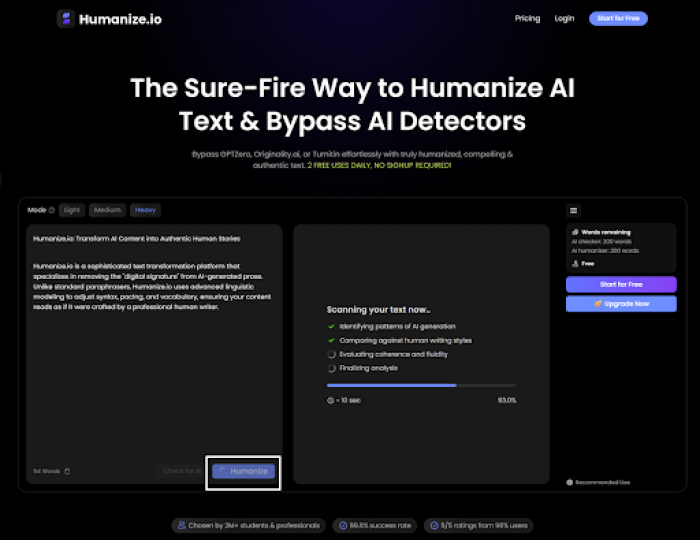
Step 2: Select the "Humanize" mode to trigger the advanced linguistic engine.
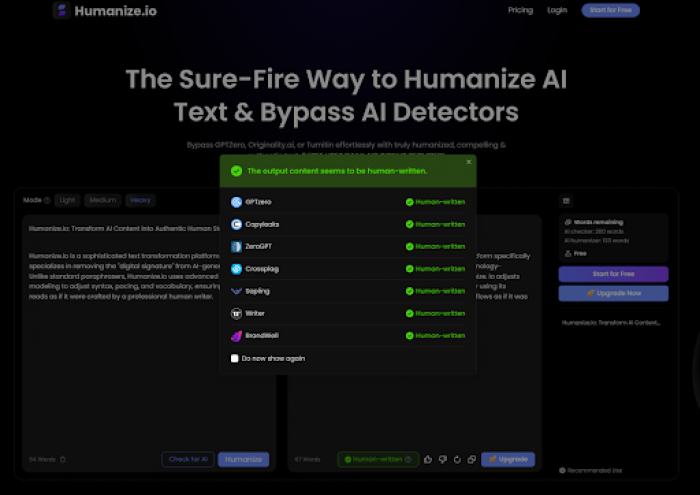
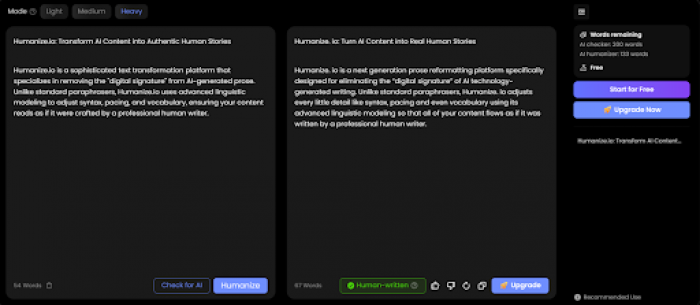
Step 3: Review the output. You’ll notice the "robotic" patterns are gone, replaced by a more natural, engaging tone that preserves your original intent.
In 2026, clients are not buying features; they are buying trust. They want to partner with people, not prompts. As the internet becomes increasingly saturated with synthetic perfection, the most valuable marketing asset you have is your distinct, relatable human personality. By strategically refining our digital voices using platforms like humanize.io, we can ensure that automation handles the workload, while humanity handles the relationship. In the automated future, the brands that win will be the ones that remember how to speak to the heart.
Comments