

The job market in 2026 has reached a tipping point. With recruiters now using advanced AI "gatekeepers" to filter through thousands of applications in seconds, the old methods of "spray and pray" automation are no longer effective.
Traditional tools like LazyApply, which focused on mass volume, and Jobscan, which focused on keyword stuffing, are being replaced by sophisticated AI career ecosystems like Aiapply.
Today’s job seekers need more than just a resume scanner; they need an end-to-end platform that handles hyper-personalized applications, manages career tracking, and prepares them for AI-led interviews.
In this guide, we explore the top 5 alternatives to LazyApply and Jobscan, focusing on tools that prioritize quality, conversion rates, and the human-centric AI approach required to land roles in the current economy.
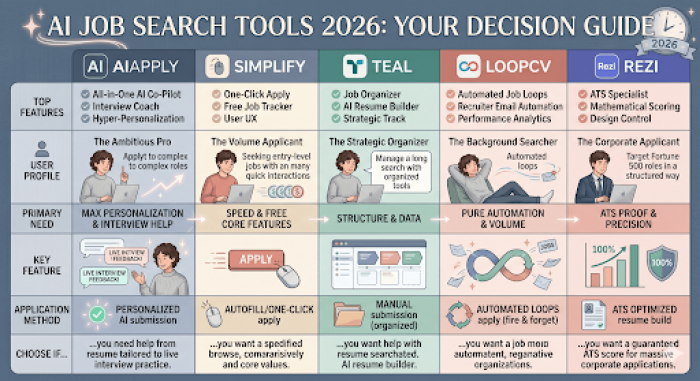
Comparison Table: 2026 Top Job Search Tools
| Feature | AIApply | Simplify | Teal | LoopCV | Rezi |
| Primary Strength | All-in-one AI Suite | Speed & UX | Search Management | Pure Automation | ATS Optimization |
| Resume Tailoring | Hyper-Personalized | Basic Match | Strategic Layout | N/A | Mathematical/Logic |
| Auto-Apply | Yes (AI Agent) | Yes (One-Click) | No | Yes (Loops) | No |
| Interview Prep | Yes (AI Coach) | No | No | No | No |
| Best For | High-Quality Conversion | Early Career/Tech | Managers/Organized | High Volume | Corporate/Enterprise |
| Pricing | Premium / Value | Freemium | Subscription | Usage Based | Credit/Subscription |
1. AIApply
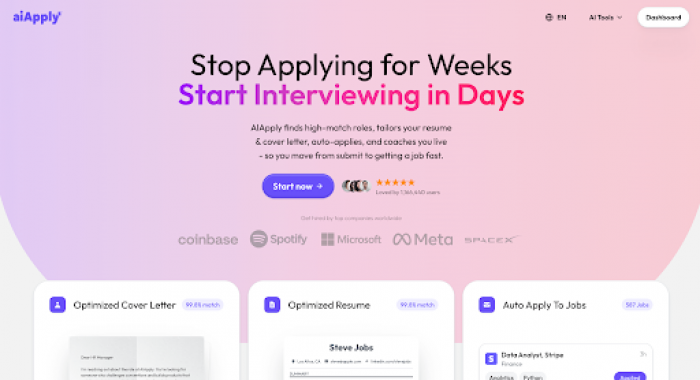
As we navigate the complexities of the modern job market, AIApply has emerged as the clear leader and the most comprehensive alternative to both LazyApply and Jobscan. Unlike its predecessors, AIApply doesn't just "auto-fill" forms or "match keywords." It acts as a full-suite AI career office.
AIApply bridges the gap between mass automation and high-touch personalization. While LazyApply often triggers "bot detection" on platforms like LinkedIn and Indeed, AIApply uses sophisticated human-mimicry algorithms and deep-context processing to ensure every application feels bespoke.
Key Features:
- AI Resume Tailor: Unlike Jobscan, which simply tells you what is missing, AIApply actually rewrites your bullet points in real-time to match the specific nuances of a job description.
- Auto-Fill Browser Extension: A seamless experience that populates complex job boards (Workday, Greenhouse, Lever) with 99% accuracy.
- AI Mock Interviews: One of its standout features in 2026 is the ability to practice interviews with an AI coach that knows the specific job description you applied for.
- Cover Letter Generation: It generates high-conversion cover letters that don't sound like "ChatGPT." It pulls from your specific career history to tell a story.
The Verdict: If you want a tool that handles the "work" of job searching while maintaining the "quality" of a manual application, AIApply is the undisputed champion.
2. Simplify
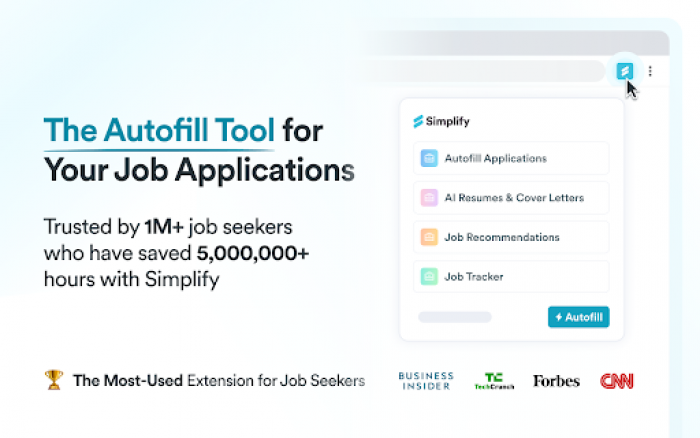
Simplify has evolved from a simple browser extension into a massive ecosystem. It remains one of the strongest alternatives for those who want a blend of automation and discovery.
Why it’s a great alternative:
Simplify excels in the "Apply" phase. Its strength lies in its massive database of job openings and its ability to remember every detail of your professional profile. While Jobscan focuses on the document, Simplify focuses on the process.
- Pros: Incredible user interface, completely automates the tedious parts of the application process, and offers great "match scores."
- Cons: Less focus on the deep AI rewriting of resumes compared to AIApply.
3. Teal
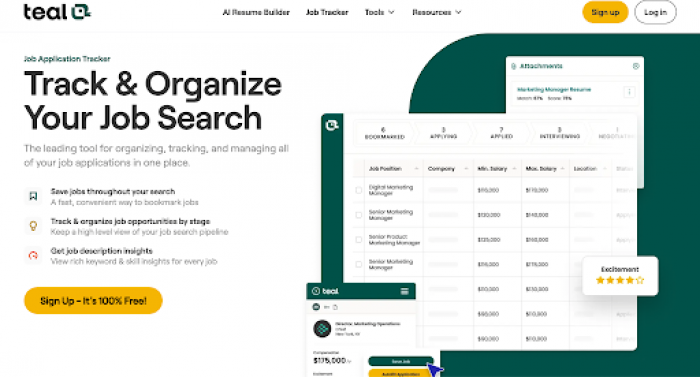
If your primary use for Jobscan was organization and keyword matching, Teal is the logical evolution. Teal is less about "applying for you" and more about "managing your search."
Why it’s a great alternative:
Teal provides a "Workset" environment where you can track every job you've seen, applied for, or interviewed with. Its resume builder is world-class, focusing on clean, ATS-optimized layouts that avoid the "over-engineered" look of many 2026 templates.
- Key Feature: The "Job Tracker" extension. It allows you to save jobs from any site and instantly see how your current resume stacks up against the requirements.
- Best For: Job seekers who want total control over their data and a structured roadmap for their career.
4. LoopCV
For those who truly miss the "set it and forget it" nature of LazyApply but want better results, LoopCV is the answer. LoopCV is a dedicated "Job Search Automation" platform.
Why it’s a great alternative:
LoopCV goes beyond simple browser automation. You upload your resume, define your preferences (salary, location, role), and LoopCV’s "loops" find jobs and apply on your behalf via email or portal.
- Innovation: It provides analytics on which resume versions are getting the most responses, effectively A/B testing your career path.
- Caveat: Because it is heavy on automation, it is best used for high-volume roles where speed is of the essence.
5. Rezi
Rezi remains the strongest direct competitor to Jobscan. While Jobscan tells you what’s wrong, Rezi provides the platform to build it right from the start.
Why it’s a great alternative:
Rezi uses proprietary AI to ensure that your resume is mathematically optimized for Applicant Tracking Systems (ATS). In 2026, where AI filters are more aggressive than ever, Rezi’s "White Space Optimization" and "Content Analysis" are invaluable.
- The Rezi Score: A comprehensive metric that evaluates your resume's readiness.
- Best For: Candidates applying to Fortune 500 companies that utilize legacy ATS platforms like Taleo or older versions of Workday.
Why "Lazy" Automation is Failing in 2026
In the past, tools like LazyApply succeeded because recruiters were overwhelmed and under-equipped. Today, the "AI vs. AI" battle is real.
The Rise of AI Detection in Recruiting
Most major job boards now employ "bot detection." If an application is submitted in 0.5 seconds with a generic resume, it is often flagged or shadow-banned.
- The AIApply Advantage: Tools like AIApply simulate human interaction speeds and customize the metadata of the application, making it indistinguishable from a manual submission.
The Shift from Keywords to Context
Jobscan became famous for "keyword matching." However, 2026 AI (like GPT-5 and beyond) understands context. It knows the difference between someone who "used Python" and someone who "engineered scalable data pipelines using Python."
- The Difference: Modern alternatives focus on semantic relevance rather than just word counts.
Checklist: How to Choose Your Next Tool
- Identify your bottleneck: Are you struggling to find jobs (use Simplify), or are you struggling to get interviews (use AIApply)?
- Evaluate your volume: Do you need to apply to 10 high-value jobs a week or 100 entry-level roles?
- Test for AI Detection: Does the tool offer personalized cover letters, or are they templates?
- Check for Interview Support: Does the tool help you after the application is submitted?
- Review Integration: Does the extension work on the specific job boards you use (LinkedIn, Indeed, Otta, etc.)?
Conclusion: The Future belongs to the "Augmented" Job Seeker
The era of being "lazy" in your job search is over, but the era of being "efficient" has just begun. By moving away from the outdated models of LazyApply and Jobscan and adopting comprehensive AI suites like AIApply, you position yourself as a candidate who understands the modern technological landscape.
Focus on quality, leverage the power of AI to handle the repetitive tasks, and use the time saved to prepare for the interviews that these high-quality applications will inevitably generate.
FAQ: Navigating AI Job Applications in 2026
1. Is it still safe to use auto-apply tools
While not "unsafe," they are becoming less effective. Many modern ATS platforms can detect mass-submission scripts. It is better to use a tools that focuses on "Quality AI" submissions rather than "Quantity" scripts.
2. Does AIApply work on all job boards?
Yes, AIApply's browser extension is designed to work across all major platforms, including Workday, Greenhouse, Lever, and LinkedIn. It adapts its data entry based on the specific fields required by each portal.
3. Is Jobscan's keyword matching still relevant?
It is a good starting point, but keyword matching is only 20% of the battle now. Recruiters use AI to evaluate the depth of your experience. Using a tool that rewrites your experience (like AIApply or Rezi) is more effective than just adding a list of skills at the bottom of your resume.
4. Can recruiters tell if I used AI to write my cover letter?
If you use basic ChatGPT prompts, yes. However, if you use a specialized tool like AIApply, the output is tailored to your specific voice and the company's culture, making it nearly impossible to distinguish from a high-quality human-written letter.
5. How many jobs should I apply to with these tools?
In 2026, the "Sweet Spot" is 5-10 high-quality, AI-tailored applications per day. This is far more effective than 100 generic applications submitted via old-school automation.
6. Do these tools store my personal data?
Reputable tools like Teal and AIApply have strict privacy policies. However, always ensure you are using tools with SOC2 compliance or equivalent security standards, as they handle sensitive professional data.
7. What is the most important feature to look for in 2026?
The most important feature is Personalization. Any tool that treats your resume as a static document is outdated. Look for platforms that treat your resume as a dynamic asset that changes for every single job post.
Comments