

The Launch & What It Could Do
Just weeks after OpenAI had sent shockwaves through the industry with the Sora announcement, Haiper AI stepped out of stealth. The timing was deliberate. The AI video space was hot, investor eyes were everywhere, and Haiper's founders were betting that pedigree plus a freely accessible product would carve out a meaningful position. They were right, at least initially.
The launch immediately attracted press. TechCrunch covered it. The community responded. Within months, Haiper had amassed 4.5 million users, an extraordinary number for a team of roughly 18 people operating out of King's Cross, London. The product was accessed entirely through a browser, no downloads, no installs. Sign in with Google or Discord, and you were generating videos in under two minutes.
"Our end goal is to build an AGI with full perceptual abilities, which has boundless potential to assist with creativity and enhance human storytelling."
— Yishu Miao, CEO, at launch
What distinguished Haiper from the outset was its foundation model. Rather than licensing someone else's architecture, the team built their own, training it not just on visual data but on physics: how rain splashes, how wind moves hair, how light falls across surfaces. The result was a generator that, at its best, produced motion that felt grounded rather than ghostly. The uncanny valley that plagued every other free tool was, if not eliminated, at least significantly narrowed.
Features, Models & Evolution
Haiper was not a static product. It shipped meaningful updates across its eleven months of public life, each iteration closing the gap between "interesting demo" and "genuinely useful creative tool." Here is what the platform offered, and how it changed.
Core Feature Suite
1. Text-to-Video — Type a description and the model generates a short animated clip. The more specific the prompt, the more coherent the result. Vague prompts reliably produced vague videos; detailed, cinematographic language produced genuinely impressive clips.
2. Image-to-Video (Animate Your Image) — Upload a still photo and Haiper brings it to life. Landscapes got moving clouds, portraits got subtle head movement, product shots got slow rotation. This feature worked particularly well with images that had clear depth.
3. Video Repainting — Upload an existing video clip and change its textures, colours, style, and elements. It was Haiper's most unique offering — essentially a style-transfer tool for motion.
4. Keyframe Conditioning — Set specific reference images at defined points in the timeline and let the model interpolate between them. This was a more advanced feature that allowed creators to maintain visual continuity across a scene.
5. Camera Controls — Dolly, pan, tilt, and orbit controls that gave users directorial agency over how the virtual camera moved through the generated scene.
6. Community Gallery — A public feed of other users' generations. Useful for inspiration, though it also raised privacy concerns for users on free plans whose work was visible by default.
7. VEED Integration (December 2024) — A partnership with the video editing platform VEED that extended Haiper's output into a fuller editing environment.
8. API Access — Available to developers on higher plans, allowing programmatic video generation for third-party applications.
The Model Progression
● March 2024 — Launch
Haiper 1.0 (Beta) : First public release. Text-to-video up to 2 seconds in HD, 4 seconds in lower quality. Image-to-video and basic repainting. Physics-aware motion that beat most free alternatives at the time.
● October 2024
Haiper 1.5 : Maximum clip length doubled to 8 seconds, the most requested feature. Built-in upscaling to 1080p. Noticeably improved texture rendering on organic subjects (skin, water, fabric). This release expanded Haiper's practical usefulness dramatically for content creators.
● Late 2024
Haiper 2.0 / 2.1 : The most substantial upgrade. Motion physics improved objects accelerate and decelerate naturally instead of gliding at constant speed. Character consistency across frames improved significantly. Prompt parsing became smarter: the model could now distinguish "a cat on a table" from "a cat jumping off a table." Resolution at 1080p. Creators in the community were producing short films using this version.
● December 2024
Haiper 2.5 + VEED Integration : The final major public release. API access improved, VEED partnership enabled post-generation editing. Two months later, the platform went dark.
Pricing Through the Ages
Haiper's pricing strategy evolved considerably. At launch, Miao explicitly said it was "too early" to build a subscription product. The platform was entirely free. That quickly changed as compute costs mounted and the company sought revenue.
| Plan | Price | Daily / Monthly Credits | Watermark | Commercial Use | Privacy |
| Free (Beta) | $0 | 10 creations/day · 300 non-expiring credits | Yes | No | Public gallery |
| Explorer (Beta) | $8/month (billed yearly) | Unlimited basic · 1,500 monthly credits | Yes | Not included | Limited |
| Pro (Beta) | $24/month (billed yearly) | Unlimited basic · 5,000 monthly credits | No | Included | Private |
| Enterprise API | Custom (usage-based per second) | API access · Custom volume | No | Included | Full |
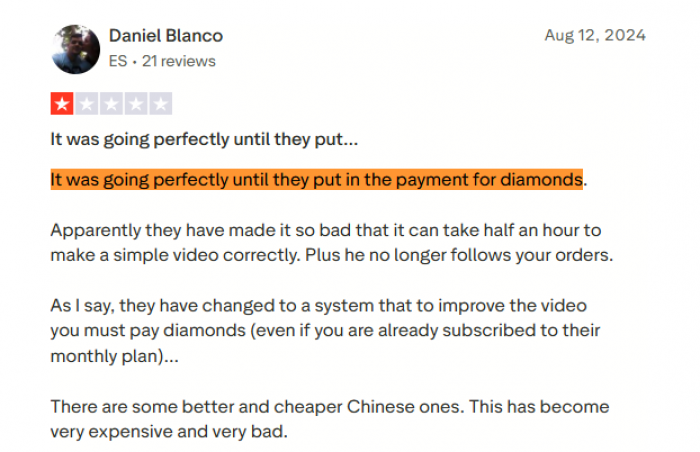
The credit system became a significant user grievance late in Haiper's life. The introduction of "diamonds" , a secondary premium currency required even for subscribers to access higher-quality generations, drew sharp criticism in reviews. Users who had paid for yearly subscriptions found themselves being charged again for features they felt should be included. This dual-currency monetisation was frequently cited as the point where Haiper lost user goodwill.
"It was going perfectly until they put in the payment for diamonds. Even if you are already subscribed to their monthly plan, you must pay diamonds to improve the video. This has become very expensive and very bad."
— Verified user, Trustpilot, late 2024
What Real Users Said
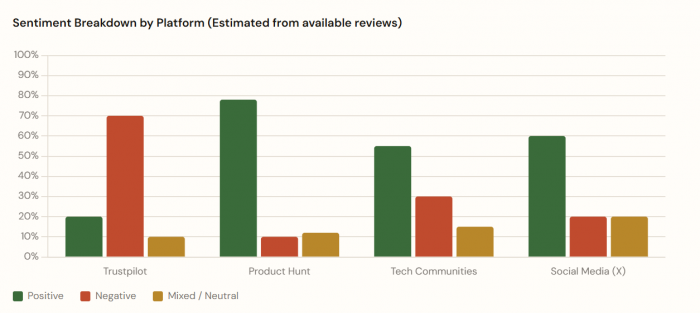
Haiper's user reception was consistently split along a clear fault line: the technology impressed, while the monetisation and customer support frustrated. Here is a consolidated view across platforms.
The Praise
ElementaryTeacher_AI
Product Hunt
★★★★★
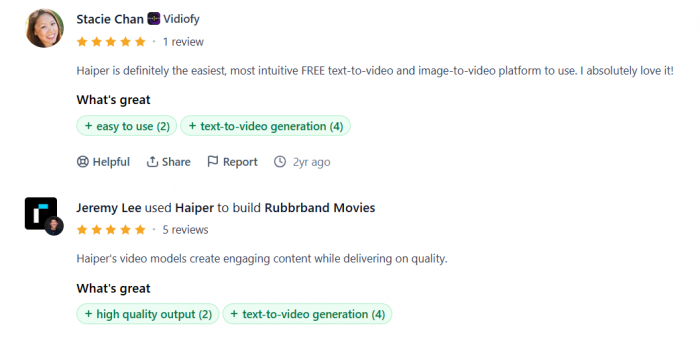
“Haiper is definitely the easiest, most intuitive FREE text-to-video and image-to-video platform to use. I absolutely love it! I have done a couple of short films using only Haiper and people like them.”
AI Creator
Product Hunt
★★★★★
“I am the most satisfied with Haiper and love it the most out of all the AI generators I've tried. The generations are always amazing. Very powerful tools for text-to-video and image-to-video. Easy to use and versatile.”
Content Creator
Lummi / Tech Community
★★★★☆
“What we appreciated most about Haiper AI is its flexibility and how user-friendly it was. Up to 10 creations per day on the free plan is genuinely generous for a no-cost option. Solid tool overall.”
The Criticism
Stefano M.
Trustpilot
★☆☆☆☆
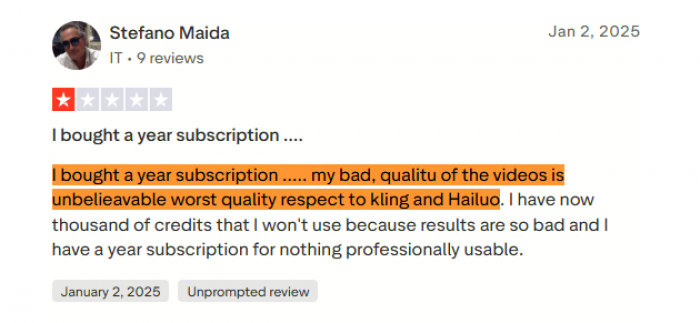
“I bought a yearly subscription. Quality of the videos is unbelievably worse than Kling and Hailuo. I now have thousands of credits I won't use because results are so bad and I have a year subscription for nothing professionally usable.”
Don
Trustpilot
★★☆☆☆
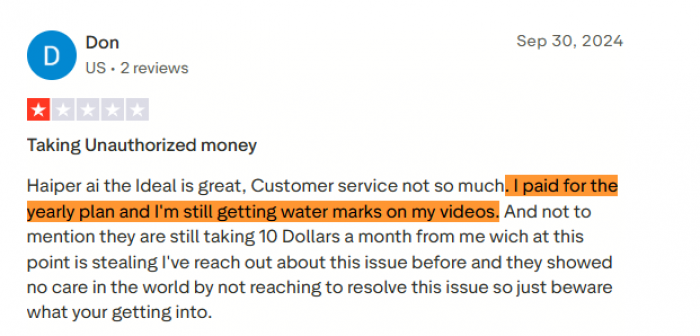
“I paid for the yearly plan and I'm still getting watermarks on my videos. They are still taking $10 a month from me which at this point is stealing. I've reached out about this issue before and they showed no care in the world by not responding.”
Frustrated Creator
Trustpilot
★★☆☆☆
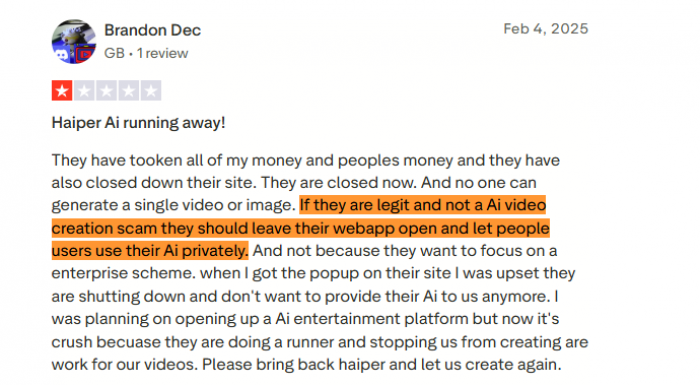
“If they are legit they should leave their webapp open and let users use their AI privately. I was planning on opening an AI entertainment platform but now it's crushed because they're doing a runner and stopping us from creating our work.”
Key User Experience Themes — Consolidated
| Theme | User Verdict | Representative Rating |
| Ease of use / onboarding | Excellent — praised universally | 4.6/5 |
| Output quality (mid-2024) | Strong — above free-tool average | 4.0/5 |
| Output quality (late 2024) | Mixed — lagged behind Kling, Hailuo | 3.0/5 |
| Free plan generosity | Very generous — 10 generations/day | 4.4/5 |
| Credit / Diamond system | Poor — confusing, felt predatory | 1.4/5 |
| Customer support | Poor — billing issues went unresolved | 1.2/5 |
| Video duration | Short — 8s max felt limiting | 2.2/5 |
| Shutdown handling | Very poor — no warning, no data export | 0.4/5 |
How It Stacked Up Against Rivals
Haiper occupied a specific niche: affordable, accessible, and genuinely capable — but not the best at any single thing. It was the sensible middle option in a market that was rapidly bifurcating between expensive professional tools and low-quality free ones.
| Platform | Price (entry) | Max Clip Length | Strength | Weakness | Target User |
| Haiper | Free / $8/mo | 8 seconds | Ease of use | Short clips, limited editing | Casual creators, social media |
| Runway Gen-4 | $12/mo | 16 seconds | Professional-grade | Steep learning curve | Filmmakers, agencies |
| Pika 2.0 | $8/mo | 10 seconds | Stylized, punchy | Less realism | Social media content |
| Kling AI 3.0 | $7/mo | 2 minutes | Price-to-quality leader | Chinese-market origin | Broad — best value overall |
| OpenAI Sora | $20+/mo | 20 seconds | Highest realism | Expensive, limited access | Premium users |
The competitive picture tells Haiper's story clearly. When it launched in early 2024, it was one of the most accessible quality generators on the market. By late 2024, Kling AI had emerged offering 2-minute clips at $7/month better quality, longer output, lower price. Haiper never found a defensible position to retreat to. The middle of the market is the most dangerous place to occupy in tech, and Haiper sat squarely in it.
The Shutdown: What Really Happened
“Users who logged in found 404 errors where their projects used to be. No warning. No migration path. No 'we are shutting down' email. The tools just disappeared.”
In February 2025, Haiper's consumer web app went offline. There was no farewell email, no grace period for users to export their work, no transition path. The homepage returned 404 errors. Projects that users had stored on the platform sometimes months of creative work were gone permanently. The company had not provided data export options or any wind-down runway for individual users.
Then in March 2025, the picture became clearer. Both co-founders, Yishu Miao and Ziyu Wang, joined Microsoft AI as members of technical staff. Top ML researcher Edward Hayes followed. This was not a traditional acquisition. Microsoft did not buy Haiper the company. They hired the key people and let the product collapse behind them. The industry sometimes calls this an "acqui-hire," but even that term is generous. It was closer to a talent raid on a company that had run out of runway.
Why Did It Collapse?
Contributing Factors
● Funding gap: $32.6M total against Runway's $200M+ and Pika's $80M — compute infrastructure is brutally expensive at scale, and Haiper was operating on a fraction of competitors' resources.
● Talent exodus: When the co-founders left for Microsoft, Haiper lost the people who understood the model architecture most deeply. The remaining ~16-person team could not sustain the roadmap.
● Market compression: Kling AI emerged with dramatically longer clips at a lower price point, eliminating Haiper's cost-accessibility advantage.
● Monetisation misfires: The "diamonds" dual-currency system eroded user trust and likely slowed paid conversions precisely when the company needed revenue most.
● No enterprise moat: The pivot to B2B came too late. Without an established enterprise client base or a differentiated enterprise product, there was nothing to sustain the company through the consumer shutdown.
Timeline of the End
● December 2024
Haiper 2.5 ships — the last major release
VEED integration, improved API. No public indication of what was coming.
● February 2025
Consumer web app goes dark
Platform returns 404 errors. No email sent to users. All stored projects become permanently inaccessible. Annual subscribers who had paid ahead received no refunds.
● March 2025
Co-founders join Microsoft AI
Yishu Miao, Ziyu Wang, and Edward Hayes join Microsoft AI as technical staff. Their work likely contributes to Microsoft's video generation efforts via the OpenAI partnership.
● June 2025
NetMind.AI acquires the model
NetMind.AI, a London-based decentralised AI compute platform, acquires Haiper's video generation model for an undisclosed sum. Plans integration into B2B enterprise infrastructure. The technology lives on, but the consumer product does not.
After the Lights Went Out
The community reaction was swift and emotional. On X (formerly Twitter), longtime users posted tributes. On Trustpilot, angry subscribers documented billing issues. On Reddit and creator forums, people scrambled for alternatives. The sentiment split cleanly between two camps: those who mourned a genuinely useful, democratising tool, and those who felt the company had left paying subscribers without recourse.
"I'm truly saddened to hear about Haiper shutting down their web app. Thank you, Haiper AI, for the memories and the innovation. Here's to new beginnings."
— @zeng_wt on X, February 2025
The shutdown also demonstrated a risk that creators increasingly face: building workflows around cloud-based AI tools that can disappear without warning. Users who had not downloaded their generations locally lost everything. The lesson is to export your work continuously and never treat a cloud AI tool as a permanent archive is one the broader creator community learned the hard way through Haiper's closure.
Where the Technology Went
NetMind.AI, the acquirer of Haiper's models, is a decentralised AI compute platform based in London. Their plan is to integrate Haiper's video generation capability into B2B and enterprise solutions rather than rebuilding the consumer product. The co-founders, now at Microsoft, likely contribute to video generation infrastructure connected to OpenAI's Sora through Microsoft's partnership. In other words, the intellectual work that powered Haiper is still running it just no longer belongs to creators.
Best Alternatives for Former Haiper Users (2026)
| Platform | Best For | Starting Price | Haiper Similarity |
| Kling AI 3.0 | Best overall value | $7/month | High — and exceeds it |
| Pika 2.0 | Social media content | $8/month | Strong |
| Runway Gen-4 | Professional work | $12/month | Different tier entirely |
| Pollo AI | Direct Haiper replacement | Free tier available | Very close workflow |
| Canva Magic Studio | Non-technical creators | Free tier | Simpler but accessible |
What Haiper Was, and What It Proved : The Honest Assessment
Haiper was not a scam. It was not vaporware. It was a real product built by exceptional Oxford-trained DeepMind alumni, backed by the actual godfather of deep learning and it worked. 4.5 million users is not a rounding error. The technology was genuinely innovative, the model was architecturally sound, and for a brief window in mid-2024, Haiper was arguably the most accessible quality video generator available to independent creators.
But the AI video market is one of the most capital-intensive sectors that has ever existed. Every second of generated video represents billions of computations. Sustaining a consumer product at that cost, with $32.6M against rivals holding $200M, while Kling was simultaneously offering longer clips at lower prices the arithmetic was always brutal. Haiper ran it as long as it could.
What the shutdown proved, more than anything, is that a great founding team, impressive pedigree, and a genuinely loved product are not enough to survive if the unit economics do not work. The AI video generation market is consolidating rapidly around a handful of well-capitalised players. Haiper was not one of them not for lack of talent, but for lack of runway.
For the creators who relied on it, the loss was real. For the founders, a new chapter at Microsoft awaits. For the technology, it lives on in NetMind's infrastructure, invisible to the people who made Haiper what it was. That is perhaps the most fitting, and most melancholy, coda to the story: the work continues, but the community it was built for is gone.
"Haiper filled the gap between free garbage tools and expensive professional suites. The problem: 'good enough and cheap' is not a defensible position when larger competitors can match your price while offering better quality."
— Plisio.net analysis, April 2026
Comments