

Lovable AI made “vibe coding” mainstream, but it isn’t perfect for every founder, PM, or developer. Limits around customization, integrations, and cost at scale mean many teams now look for tools that give them more control, better pricing, or deeper production readiness. The good news: a new wave of AI app builders and dev platforms can match or beat Lovable on speed while offering cleaner code, stronger hosting, or better fit for specific use cases.
Below are seven of the best Lovable AI alternatives worth serious consideration in 2026. Before comparing the alternatives, it may help to read the Lovable AI review for a clearer look at its features, pricing, strengths, and limitations.
1. Bolt.new : Faster Full‑Stack Vibe Coding in the Browser
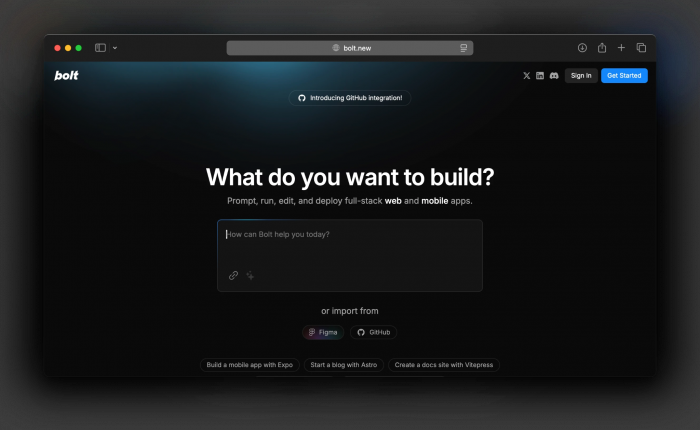
Bolt.new is a browser‑based AI IDE that turns prompts into full‑stack applications, not just front‑end demos. It runs on WebContainers and Node.js, can set up backend logic and databases, and gives you live previews plus one‑click deployment, so you stay in the browser from idea to working app. The AI agent can refactor, debug, and extend your code as you iterate, which makes it well suited for shipping MVPs quickly rather than stopping at toy projects.
Where Bolt.new beats Lovable : Where Bolt.new pulls ahead of Lovable is in depth of stack and token‑based flexibility. It is less tied to a single “vibe coded” experience and more to a full coding environment with better control over backend and infrastructure, while still giving very fast iteration from prompts.
Bolt.new at a glance
| Aspect | Details |
| Main strength | Browser-based full‑stack app generation with live preview and deploy |
| Limitation | Generated code still needs developer oversight on complex projects |
| Best for | Builders who want fast MVPs with real backend and database in the loop |
| Pricing | Free tier with daily tokens; paid from about 25 USD/month, with large daily token allowances included |
2. V0 by Vercel : Polished React UI for Next.js Teams
V0 by Vercel focuses on generating high‑quality React UI with Tailwind and shadcn/ui components, targeting teams already living in the Vercel ecosystem. You describe screens, flows, or entire CRUD dashboards in natural language, and V0 outputs production‑ready components designed to drop into a Next.js app. It acts like an AI design–dev partner, emphasizing pixel‑clean front ends over generic prototypes.
Where VO eats Lovable : Compared with Lovable, V0 wins on UI quality and ecosystem integration. Lovable does a decent job scaffolding full apps, but V0 is tuned for polished React interfaces, with smoother deployment to Vercel and a tighter fit for teams maintaining serious Next.js codebases.
V0 by Vercel in brief
| Aspect | Details |
| Main strength | High-quality React/Next.js UI with Tailwind and shadcn‑style components |
| Limitation | Best if you are already using Vercel and Next.js |
| Best for | Product teams and devs who want design‑level UI quality with real code |
| Pricing | Free tier with limited usage; paid plans typically start around 20 USD/user/month |
3. Replit AI : Cloud IDE with Serious AI Pair‑Programming
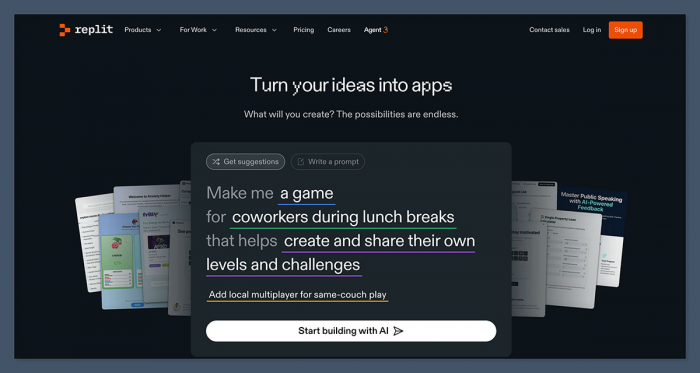
Replit AI turns the well‑known cloud IDE into a powerful AI‑assisted development environment where you can build full web apps, backends, and scripts in many languages. Its AI agent suggests code, fixes bugs, and can even generate starter projects, but you still work in a familiar editor with file trees, logs, and terminals. This makes it good for both learning and shipping, not just generating one‑off prototypes.
Where Replit beats Lovable : Replit differs from Lovable in philosophy: instead of hiding code behind a chat interface, it keeps you close to the code while making you significantly faster. That means fewer mysterious bugs, better long‑term maintainability, and more control over architecture once your app grows beyond a simple MVP.
Replit AI snapshot
| Aspect | Details |
| Main strength | Full cloud IDE with multi-language support and strong AI assistance |
| Limitation | Steeper learning curve than pure no‑code; complex apps still need dev skill |
| Best for | Developers and technical founders who want AI inside a real coding workflow |
| Pricing | Free tier; paid plans typically start around 25 USD/user/month with more compute and AI usage |
4. Cursor : AI‑Native Code Editor for Large Codebases

Cursor is an AI‑powered code editor that embeds multiple leading models (OpenAI, Anthropic, Gemini) and gives you long‑context, project‑aware assistance as you build. It can understand and refactor large repositories, add new features in context, and even run agentic workflows like multi‑file edits or automated debugging. With up to a million‑token context window reported by independent analysis, it can reason about entire codebases rather than single files.
Where Cursor beats Lovable : Where Cursor beats Lovable is in serious, ongoing development. Lovable shines at initial scaffolding; Cursor shines at evolving complex apps over time, improving code quality, and keeping architecture coherent. It is closer to a long‑term engineering tool than a one‑shot app generator.
Cursor overview
| Aspect | Details |
| Main strength | Deep AI assistance on real projects with huge context windows |
| Limitation | Requires comfort with coding; not a no‑code solution |
| Best for | Engineers and power users maintaining or refactoring serious codebases |
| Pricing | Free “hobby” tier; paid plans commonly start around 20 USD/user/month |
5. Trickle : Natural‑Language Apps for Non‑Technical Teams
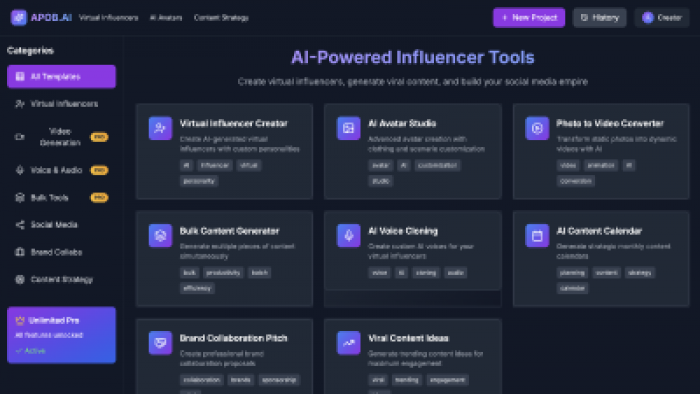
Trickle positions itself as a natural‑language app builder where you describe workflows and internal tools in plain English and get functional web apps with built‑in database and analytics. It handles hosting, data schema, and basic logic for you, letting PMs or ops leads ship working tools without managing servers or complex configurations.
Where Trickle beats Lovable : Compared to Lovable, Trickle is more approachable for non‑developers and more opinionated about packaging: it leans into “internal tools that just work,” with dashboards and data views that feel ready for business users. Lovable still presumes a bit more dev involvement once you get past the initial “wow” prompt.
Trickle in a nutshell
| Aspect | Details |
| Main strength | Natural-language app building with built‑in data, hosting, and analytics |
| Limitation | Less flexible for very custom architectures or edge‑case workflows |
| Best for | Non‑technical teams and PMs shipping internal tools and simple SaaS‑style apps |
| Pricing | Free tier with limited usage; paid plans around 17–20 USD/month to start |
6. Meku : Ownable React Apps for Production
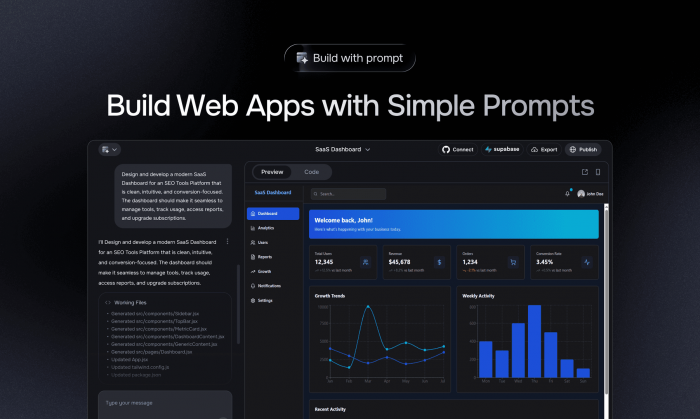
Meku is an AI app builder focused on generating production‑ready React and Tailwind code that you fully own and can host anywhere. It supports common SaaS patterns—dashboards, auth, CRUD, admin panels—and emphasizes clean structure so developers can take over after initial generation. You can iterate through prompts but always end up with real, inspectable code in a modern stack.
Where Meku beats Lovable : Meku improves on Lovable when code ownership and long‑term maintainability matter. Instead of keeping you inside a closed environment, it encourages exporting, version control, and integration into your existing toolchain, making it a stronger candidate once your MVP starts to grow up.
Meku quick view
| Aspect | Details |
| Main strength | Production‑oriented React/Tailwind output with clear code ownership |
| Limitation | Focused on modern web stack; not ideal if you want multi‑language backend variety |
| Best for | Founders and devs who want AI to scaffold React apps they can own and extend |
| Pricing | Free plan; paid tiers typically start near 10–15 USD/month and scale with usage |
7. UI Bakery : Internal Tools and Dashboards with AI Help
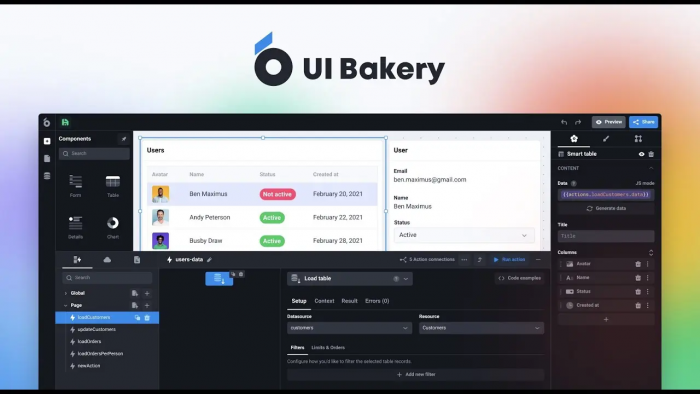
UI Bakery is an internal tools platform that mixes visual building with AI assistance to connect data sources and assemble dashboards, admin panels, and business apps. You can hook up databases and APIs, create complex views with role‑based access control, and let AI help generate queries and UI pieces to speed things up. It is designed from day one for internal tooling rather than public marketing sites or consumer apps.
Where UI Bakery beats Lovable : Versus Lovable, UI Bakery is more opinionated about the problem space—internal tools—and offers richer integrations and permissions out of the box. If your primary use case is secure dashboards and back‑office interfaces, it will usually be a better long‑term fit than a generic prompt‑to‑app generator.
UI Bakery summary
| Aspect | Details |
| Main strength | Robust internal tool builder with data integrations and role management |
| Limitation | Less suited for consumer‑facing, pixel‑perfect marketing sites |
| Best for | Teams building dashboards, admin panels, and internal business tools |
| Pricing | Free or trial option; paid plans often start around 30–40 USD/month depending on seats and features |
Verdict : How to Choose the Best Lovable Alternative
All these tools improve on Lovable in at least one dimension: full‑stack depth (Bolt.new), UI polish in the Vercel ecosystem (V0), long‑term code quality (Cursor, Replit), or business-ready internal apps (Trickle, UI Bakery, Meku). The key is to match the tool to your next 12–18 months, not just your first weekend prototype: choose a developer‑centric platform if you expect complex logic and a large codebase, or a higher‑level builder if your priority is letting PMs and ops teams ship internal tools quickly.
Comments