

Lovable AI is one of the most talked-about “prompt-to-app” builders because it does something genuinely useful: it turns plain-language instructions into working web apps, websites, dashboards, internal tools, and MVPs. The appeal is simple. Instead of starting with code, hosting, database setup, authentication, and frontend design, users describe what they want and Lovable generates a usable first version.
That speed is real. But the bigger question is not whether Lovable can build something quickly. It can. The real question is whether it can build something reliable, scalable, secure, and affordable enough for serious use. That is where the answer becomes more layered.
Lovable AI At a Glance
| Category | Details |
| Product type | AI app builder and website creator |
| Best for | MVPs, SaaS prototypes, internal tools, landing pages, dashboards, simple web apps |
| Core workflow | Describe the app, generate it, refine through chat, connect backend, deploy |
| Code access | Supports code export and GitHub sync on supported plans |
| Backend support | Lovable Cloud and Supabase-style backend workflows |
| Mobile apps | Available on iOS and Android |
| Pricing model | Subscription plus credits |
| Main risk | Credit unpredictability, debugging loops, security review, production readiness |
| Best user | Founder, indie builder, freelancer, product manager, technical marketer |
| Not ideal for | Highly regulated apps, complex enterprise systems, mission-critical production software without developer review |
What Lovable AI Actually Does
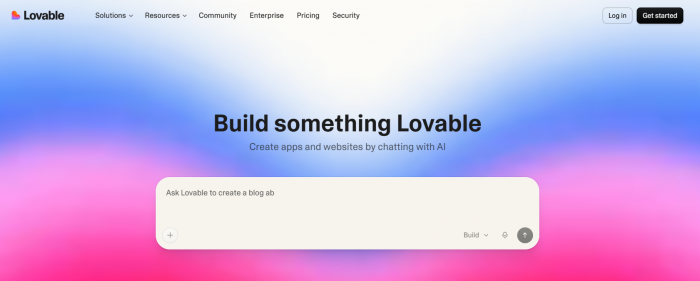
Lovable is not just a website mockup generator. It sits closer to the new class of AI app builders that try to generate real software from natural language. A user can ask it to build a CRM, booking system, customer dashboard, SaaS landing page, marketplace, AI workflow, or admin panel, then continue refining the result with follow-up prompts.
Its main strength is speeding up the early stage of development. Instead of manually setting up layouts, forms, routes, authentication, and databases, users can generate a polished working prototype in minutes. Lovable also supports backend workflows through integrations like Supabase, including databases, authentication, file storage, and serverless functions.
However, it still needs human review. Permissions, security, payments, data handling, business rules, and edge cases must be checked carefully before using it in production.
How Lovable AI Works
Lovable follows a simple build loop that starts with a prompt and improves through step-by-step refinement.
Step 1: Write a clear prompt. The user begins by describing the app they want to build. A broad prompt like “build a CRM” may produce a basic version, while a more detailed prompt gives Lovable better direction. For example, asking for a CRM for a real estate agency with lead status, property interests, follow-up reminders, agent assignment, email capture, and an admin dashboard will create a more useful starting point.
Step 2: Generate the first version. Lovable then creates the first working version of the app. This usually includes the main pages, layout, navigation, forms, styling, and some basic logic. The result is often polished enough to review, test, and improve.
Step 3: Refine through chat. After the first version is created, the user can continue giving follow-up instructions. They can ask Lovable to add new pages, change the design, connect forms, create user roles, add dashboard charts, or improve specific features.
Step 4: Edit visually. Lovable also supports visual editing, so users can select elements on the page and request changes to text, colors, layout, functionality, or design. This makes the process easier for users who do not want to edit code directly.
Step 5: Sync with GitHub. For more serious projects, Lovable can connect with GitHub. This helps users back up code, collaborate with developers, manage branches and pull requests, work in a local IDE, deploy externally, and keep a copy of the project outside Lovable.
Key Features of Lovable AI
| Feature | What It Means in Real Use | Practical Value |
| Prompt-based app creation | Build apps by describing them in plain English | Fast first draft for MVPs and demos |
| Visual editing | Select and adjust elements directly | Useful for non-coders and designers |
| Backend support | Database, auth, storage, server logic through connected infrastructure | Helps build real app workflows |
| GitHub sync | Export and sync code to GitHub | Important for ownership and developer handoff |
| Custom domains | Publish apps under your own domain | Useful for public-facing products |
| User roles and permissions | Manage access across users and teams | Important for team projects |
| App deployment | Launch and share built apps | Reduces setup friction |
| AI feature support | Add chatbots, summaries, document Q&A, image generation, semantic search | Useful for AI-native tools |
| Mobile app access | Build and edit from mobile | Good for quick changes, not full engineering control |
| Team workspace | Business-oriented collaboration features | Useful for agencies and departments |
Lovable also supports AI features inside apps, including chatbots, summaries, document Q&A, image generation, and semantic search. Its documentation notes that app-level AI usage is tracked separately under Cloud and AI balance, which matters because AI-powered features can add usage-based costs beyond normal build credits.
Pricing: Simple Plans, Less Simple Usage
Lovable’s pricing is credit-based. Pro costs $25/month and covers core features like credits, custom domains, badge removal, and top-ups. Business costs $50/month and adds team, security, SSO, and workspace features. Enterprise is custom-priced for larger teams that need more credits, dedicated support, advanced controls, and integrations.
| Plan | Price | Credits / Usage | Best For |
| Free | $0 | Limited free usage | Testing the platform |
| Pro | $25/month | 100 monthly credits plus daily credits | Solo builders and MVPs |
| Business | $50/month | 100 credits/month plus business controls | Teams and growing departments |
| Enterprise | Custom | Volume-based credit pricing | Larger organizations |
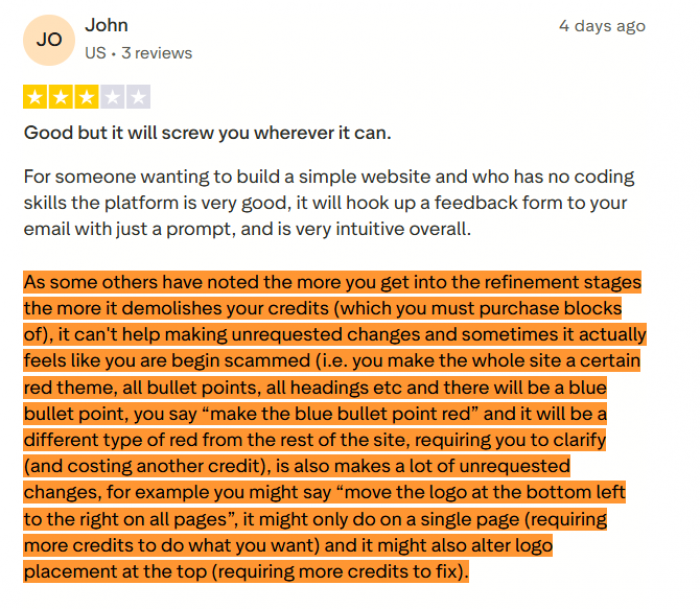
The pricing issue is not the monthly fee itself. The issue is predictability. Every serious app build involves revisions. A user may ask for a dashboard, then fix layout issues, then adjust database fields, then improve user roles, then debug forms, then clean mobile responsiveness. Each step can use credits. If the AI makes an unnecessary change or misunderstands a small instruction, the user may spend more credits correcting the correction.
That explains why user sentiment around pricing is more mixed than the plan table suggests. Lovable can be cheap compared with hiring a developer for an early prototype. But for active product development, the cost can feel slippery because the user is paying for the build loop, not just the finished app.
Review Ratings and Real User Sentiment
The review picture is unusually split. Professional software review platforms show strong satisfaction, while open community discussions and consumer review platforms reveal sharper frustration around credits, support, and reliability.
| Review Platform | Current Public Signal | What It Suggests |
| G2 | 4.6/5 from 272 reviews | Strong positive signal from verified business/software users |
| Capterra | 5.0/5 from 1 review | Too little volume to treat as a strong benchmark |
| Trustpilot | 1,161 total reviews, with 64% five-star and 18% one-star | Highly polarized consumer sentiment |
| Apple App Store | 4.6/5 from 188 ratings | Strong early mobile app reception |
| Google Play | 100K+ downloads, rating not visible in fetched public page | Adoption signal, but rating was not publicly retrievable from the accessed page |
| Reddit/community threads | Mixed to skeptical | More complaints about credits, support, control, and production reliability |
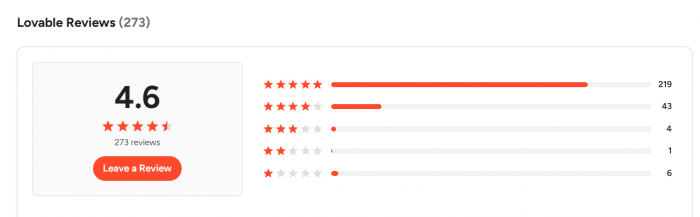
G2 shows the strongest structured review signal, with Lovable rated 4.6 out of 5 from 272 reviews. The distribution is heavily positive, with 80 percent five-star ratings and 15 percent four-star ratings in the accessed listing. Recent reviewers praise speed, ease of use, and the ability to build without deep coding knowledge.
Trustpilot is more complicated. The public page shows 1,161 total reviews, with 64 percent five-star, 12 percent four-star, 2 percent three-star, 4 percent two-star, and 18 percent one-star reviews. It also displays a notice that a number of fake reviews have been removed for the company, which makes the distribution worth reading carefully rather than blindly.

The App Store signal is strong but still early. The iOS listing shows 4.6 out of 5 from 188 ratings, with reviews praising speed, productivity, and the ability to move from idea to working product quickly.
What Users Like Most
The most consistent praise is not “AI magic.” It is speed. Users repeatedly say Lovable helps them build a portfolio, landing page, internal tool, prototype, or app idea much faster than traditional development. The best reviews are usually from people who had a clear idea but did not want to wait for developers, agencies, or long no-code setup.
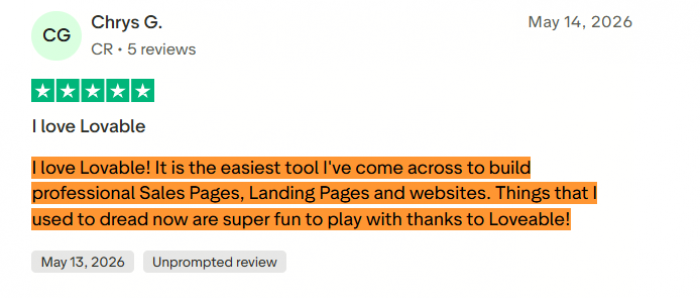
The second strong theme is accessibility. Lovable gives non-technical users a way to participate in software creation without first learning React, backend setup, deployment, or database configuration. That does not make them engineers, but it gives them a working product language. They can test an idea, show a demo, and clarify what they actually need.
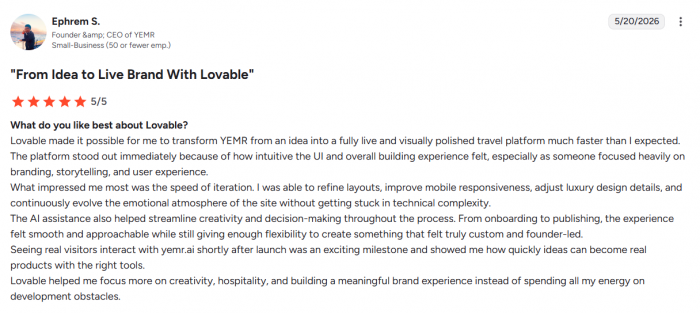
The third positive signal is design quality. Many AI coding tools produce functional but ugly interfaces. Lovable’s out-of-the-box UI is often stronger than basic code-generation tools, which matters for founders, marketers, and product teams who need something demo-ready.
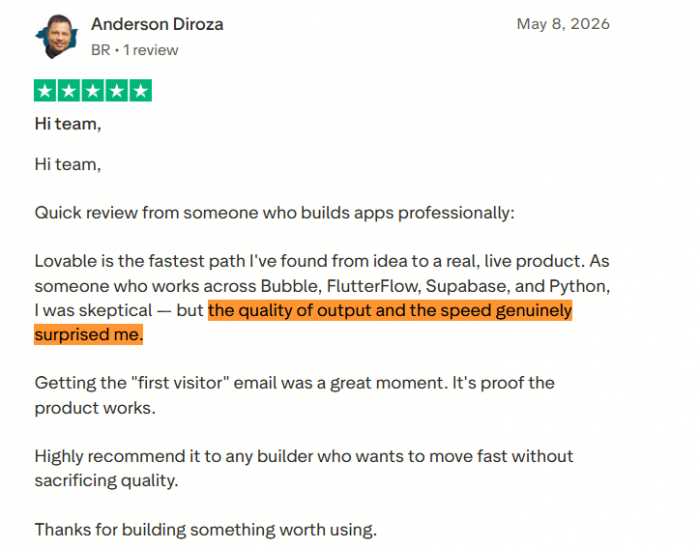
Key positives users repeatedly highlight:
● Fast first version creation
● Clean interface and pleasant workflow
● Good for MVPs, portfolio sites, dashboards, and landing pages
● Helpful for non-coders who can explain product logic clearly
● Strong visual output compared with basic code assistants
● Useful GitHub path for users who want developer handoff later
What Users Complain About
The biggest negative theme is credits. Users do not only complain that Lovable costs money. They complain that the development process can become hard to budget. If the AI introduces unwanted changes, fixes only part of a request, or requires repeated clarification, the user burns credits while trying to reach a stable result.
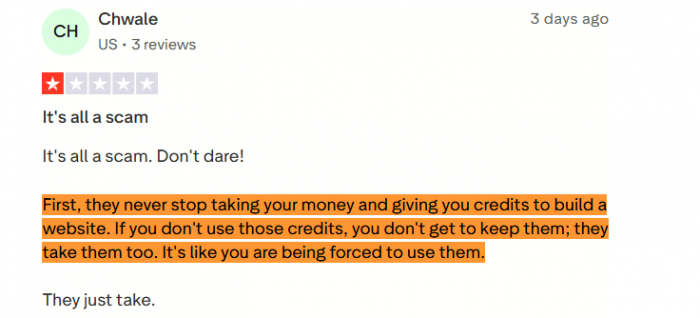
Trustpilot reviews show this clearly. Some recent users praise the tool heavily, but others complain that token or credit limits feel restrictive, that support is hard to reach, or that refinement consumes more usage than expected. One recent mixed review described the platform as intuitive for simple websites but frustrating when small refinements create more changes and more credit use.
Reddit and community feedback is harsher. Some users say Lovable is useful for prototypes but immature for complex commercial apps. Others complain about refunds, unrequested code changes, and professional-use reliability. Community feedback is not always balanced, but it is valuable because it often comes from users pushing the platform beyond simple demos. reddit
The main complaints are:
● Credits can disappear quickly during refinement
● Debugging through prompts can become repetitive
● AI may change unrelated parts of the app
● Complex backend logic can need developer cleanup
● Support and refund complaints appear in lower-rated reviews
● Production readiness depends heavily on user review and technical validation
The Security Question
Lovable’s convenience also creates risk: users can build and publish apps before fully understanding security, privacy, database permissions, or access controls. This does not make Lovable uniquely unsafe, but careful review is important.
In April 2026, Lovable acknowledged that some public project chat history and source code may have been accessible to authenticated users with a project link between February 3 and April 20, 2026. The company said private projects and Lovable Cloud were not affected, and a fix was shipped quickly. lovable
There have also been reports of Lovable-generated URLs being used in phishing and fraud campaigns. This shows why AI-built apps still need security checks, abuse controls, and human review before they are trusted.
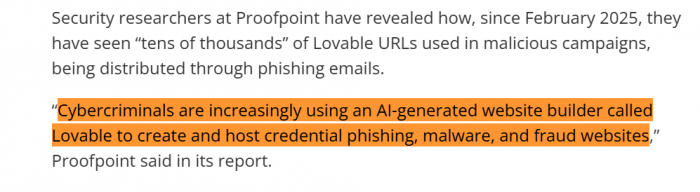
For users, the practical takeaway is simple: do not put sensitive customer data, payment logic, private API keys, or regulated workflows into a Lovable-built app without a security review.
Where Lovable Works Best
Lovable is strongest when the goal is speed, clarity, and proof of concept. If a founder needs to show a working version of an idea to investors, customers, or a developer, Lovable can be extremely useful. If a marketer needs a campaign microsite, dashboard, lead capture flow, or internal content tool, it can save days.
It is also good for agencies that need to visualize client ideas before committing engineering resources. Instead of pitching with static slides, teams can show a working flow. That changes the conversation from “imagine this” to “click through this.”
| Use Case | Lovable Fit | Why |
| MVP prototype | Strong | Fast first version and working demo |
| Landing page | Strong | Good UI generation and quick edits |
| Internal dashboard | Strong | Forms, tables, charts, auth, backend logic |
| SaaS demo | Good | Useful for validation before engineering |
| Client mockup | Good | Better than static wireframes |
| AI mini-tool | Good | Built-in support for AI app features |
| Complex enterprise app | Weak to moderate | Needs architecture, testing, and security review |
| Regulated product | Weak | Requires compliance and engineering oversight |
| High-scale production app | Weak without developers | Performance, security, and maintainability need review |
Where Lovable Struggles
Lovable’s weak point is not the first version. It is the tenth revision. Simple prompts often work well. But as the project grows, instructions become more dependent on existing code, database rules, component structure, and hidden dependencies. At that stage, AI can make changes that solve one problem and create another.
This is where Lovable begins to feel less like a no-code builder and more like a junior developer working very quickly. That is still valuable, but it needs supervision. The user must know how to test, inspect, and validate the result.
The biggest limitation is that non-technical users may not know what is broken. A page can look polished while database permissions are weak, error handling is incomplete, mobile behavior is inconsistent, or payment logic is fragile. Lovable lowers the barrier to building, but it does not remove the need for product judgment.
Review Sentiment Chart
| Area | Overall Score | Overall Read |
| Speed | 9.0/10 | Excellent |
| Ease of use | 8.5/10 | Strong |
| UI quality | 8.0/10 | Strong |
| MVP creation | 9.0/10 | Excellent |
| Backend reliability | 6.5/10 | Mixed |
| Credit value | 5.5/10 | Risky |
| Support experience | 6.0/10 | Mixed |
| Security confidence | 6.0/10 | Needs caution |
| Production readiness | 5.5/10 | Needs review |
Who Should Use Lovable AI?
Lovable is a good fit for users who need speed more than perfect architecture on day one. It is especially useful for founders, solo builders, agencies, product managers, technical marketers, designers, and business teams that want to turn ideas into working demos.
It is not the right tool for users who expect a finished, enterprise-grade app without testing. If the app handles payments, private customer data, health records, financial data, user accounts, or business-critical workflows, Lovable should be treated as the first build layer, not the final engineering authority.
A practical approach is to use Lovable for version one, then move the project into a developer-reviewed workflow through GitHub. That keeps the speed advantage without pretending that prompt-generated software does not need inspection.
Final Verdict: Lovable Is Powerful, But Not Effortless
Lovable AI deserves attention because it solves a real problem. It helps people move from idea to working product faster than traditional development, and its strongest reviews are not hard to understand. For MVPs, demos, dashboards, landing pages, and early SaaS ideas, it can feel dramatically faster than hiring a developer or wiring together a traditional no-code stack.
But Lovable is not a magic production engine. The credit system can become expensive during refinement. Complex apps can drift into debugging loops. Support complaints show up clearly in negative reviews. Security needs careful handling, especially when projects involve public visibility, user data, or backend logic.
The fairest conclusion is this: Lovable is one of the strongest AI app builders for fast product creation, but it should be used with a builder’s mindset, not blind trust. Use it to move quickly, validate ideas, and create a working foundation. For anything serious, review the code, test the backend, check permissions, watch credit usage, and bring in technical oversight before calling the app production-ready.
Comments