

In the digital dating era, conversations often begin long before genuine connections do. A single message can determine whether a conversation flourishes or fades into silence. For many users, especially those navigating dating apps for the first time or communicating in a second language, crafting the “right” reply can feel unnecessarily stressful. This is where tools like Rizz AI position themselves not as replacements for personality, but as supportive assistants designed to ease conversational friction.
Rizz AI represents a growing category of AI-powered tools that focus on social confidence, messaging clarity, and conversational tone rather than productivity or automation. Its purpose is simple on the surface, yet nuanced in practice: helping users respond more smoothly, confidently, and engagingly in digital conversations, particularly in dating contexts.
Understanding What Rizz AI Is and What It Is Not
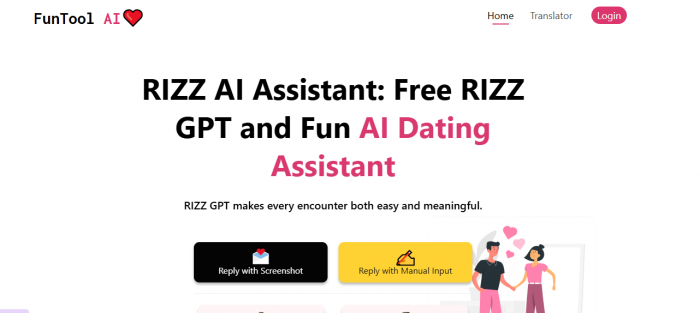
At its core, Rizz AI is an artificial intelligence–driven conversation assistant that generates suggested replies based on user input. Typically, a user pastes a message they have received or uploads a screenshot of a conversation, and the tool responds with multiple suggested replies. These suggestions are shaped by tone, context, and intent, allowing users to choose whether they want to sound playful, confident, humorous, or polite.
It is important to clarify what Rizz AI does not aim to do. It is not a matchmaking service, nor does it promise romantic success. Instead, it functions as a creative aid, an idea generator that helps users overcome hesitation and respond thoughtfully rather than impulsively or awkwardly.
How Rizz AI Works in Practice: Step-by-Step Breakdown
Step 1: Accessing the Platform and Understanding the Intent
The process begins when a user opens Rizz AI through its website or supported app interface. At this stage, the tool assumes a very specific user intent: the user already has a conversation in progress (or wants to start one) and needs help framing a response that feels natural, confident, and socially appropriate.
Unlike traditional chatbots that initiate conversations, Rizz AI positions itself as a reactive assistant. Its purpose is to respond to real messages written by real people, which makes context the foundation of everything that follows.
Step 2: Inputting the Conversation Context
Once inside the interface, the user provides context by either pasting a received message or, in some cases, uploading a screenshot of the chat. This input is crucial because the quality of the AI’s response depends heavily on how accurately the original message reflects the conversation tone.
At this stage, Rizz AI does not assume intent blindly. It evaluates the structure of the message, punctuation, wording, emotional cues, and conversational signals such as curiosity, flirtation, sarcasm, or uncertainty. Even short messages can carry subtle signals, and the AI’s role is to interpret them before suggesting replies.
Step 3: Contextual and Tone Analysis by the AI
After receiving the input, the AI begins contextual processing. This involves identifying what kind of reply would be socially appropriate rather than merely grammatically correct. The system assesses whether the conversation is in an early stage, mid-flow, or nearing a more personal exchange.
Simultaneously, tone analysis plays a key role. Rizz AI distinguishes between situations that call for humor, light flirting, confidence, politeness, or restraint. This step ensures that the replies it generates do not feel out of place or exaggerated for the situation.
This is where Rizz AI differs from generic text generators it focuses less on information and more on social nuance.
Step 4: Reply Style Selection and Personalization
In many cases, users are given the option to choose or adjust the style of the response. Rather than producing a single rigid reply, Rizz AI often offers variations that reflect different conversational energies. For example, one reply may sound playful, while another feels more calm or confident.
This step gives users control. Instead of blindly trusting one output, they can select a reply that aligns more closely with their personality or edit it further. The AI acts as a creative starting point rather than a final authority.
Step 5: Generation of Context-Aware Reply Suggestions
Once analysis and tone alignment are complete, Rizz AI generates response suggestions. These replies are designed to sound conversational, not robotic, and are typically short enough to feel realistic within a dating or social chat.
The suggestions are intentionally crafted to keep conversations moving forward. Rather than closing dialogue, they often include light curiosity, humor, or emotional openness elements that naturally encourage a reply from the other person.
At this stage, speed matters. Replies are generated almost instantly, which is essential for maintaining conversational flow in real-time messaging environments.
Step 6: User Review, Editing, and Decision-Making
Before sending anything, the user reviews the generated responses. This step is critical because Rizz AI is designed to assist, not impersonate. Users are encouraged implicitly or explicitly to tweak the wording, adjust tone, or merge ideas from multiple suggestions.
This human-in-the-loop approach ensures that the final message still feels authentic. The most effective users treat Rizz AI as a brainstorming partner rather than a scriptwriter.
Step 7: Learning Through Repeated Use
Over time, many users notice an indirect benefit: improved conversational confidence. By repeatedly seeing how messages can be framed more smoothly, users begin to internalize patterns related to humor, pacing, and phrasing.
While Rizz AI does not formally teach communication skills, it functions as an informal learning aid. Gradually, some users rely less on the tool as their comfort with digital conversation improves.
Step 8: Responsible and Situational Use
In practice, successful use of Rizz AI also depends on knowing when not to use it. Deep emotional discussions, conflict resolution, or sensitive personal disclosures require genuine human judgment. The tool works best in casual, early-stage, or light conversational contexts where confidence and tone matter most.
Using it selectively ensures that conversations remain sincere rather than automated.
Core Capabilities and Their Real-World Value
● Context-Aware Reply Generation
Rizz AI analyzes incoming messages rather than generating random responses. This allows it to suggest replies that align with the tone, intent, and stage of the conversation, helping users avoid replies that feel awkward or out of place.
● Tone and Style Adaptability
The platform allows users to explore different conversational tones, such as playful, confident, or polite. In real-world use, this helps users match their responses to the situation instead of relying on a one-size-fits-all approach.
● Icebreaker and Conversation Starter Support
For users struggling to initiate conversations, Rizz AI provides opening message ideas that reduce hesitation. This is particularly useful on dating platforms where first impressions often determine whether a conversation continues.
● Real-Time Response Assistance
Replies are generated almost instantly, which helps users maintain natural conversation flow. This is valuable in live chat scenarios where delayed responses can disrupt engagement or signal disinterest.
● Confidence Reinforcement for Hesitant Users
By offering structured suggestions, Rizz AI reduces overthinking and message anxiety. Users gain reassurance that their replies are socially appropriate, which often leads to more relaxed and confident interactions.
● Support for Non-Native English Speakers
The tool helps refine phrasing and tone, making messages sound more natural and fluent. This allows users to focus on the conversation itself rather than worrying about language accuracy.
● Creative Inspiration Without Forced Automation
Rather than pushing a single “perfect” response, Rizz AI provides ideas that users can adapt. This encourages personalization while still offering guidance, preserving authenticity in communication.
● Learning Through Repeated Exposure
Over time, users often internalize conversational patterns suggested by the AI. This gradual learning effect improves messaging skills even outside the platform.
● Reduced Risk of Social Missteps
By helping users evaluate how a message might be perceived, Rizz AI lowers the likelihood of replies that come across as too aggressive, uninterested, or unclear.
● Lightweight and Accessible Usage Model
The platform does not require technical knowledge or complex setup. Its simplicity ensures that users can benefit from AI assistance without disrupting their normal communication habits.
User Experience and Interface Design
When evaluating how users feel while interacting with Rizz AI–like tools, UX research shows that these platforms are generally designed with simplicity, clarity, and conversational support in mind. The core goal of their interface isn’t just functional, it's psychological: reducing anxiety, making users feel supported, and allowing them to act quickly within social messaging contexts.
Clean, Intuitive Layout
The interface of Rizz-style tools is typically described as minimalist and easy to navigate, with a strong focus on readability and clarity. Essential features like input fields for pasting messages, uploading screenshots, or selecting tone options are prominently displayed and spaced to avoid clutter. This makes it approachable for users regardless of their technical experience.
On many official versions of Rizz AI platforms, this simplicity is intentional: designers prioritize a single-minded experience that quickly moves users from stuck-on-a-message to message sent.
Smooth Flow from Context to Replies
A typical user journey begins with one of two actions entering text manually or uploading a chat screenshot. Both options are designed to feel natural:
● Screenshot upload works because it eliminates the additional step of copying and pasting text.
● Manual text input allows users who want to experiment or test scenarios without a real chat.
Once the text is provided, the interface moves users seamlessly into analysis, then to suggested replies often without too many intermediary steps. This flow reduces decision resistance, which is critical for users experiencing anxiety or hesitation.
Tone and Context Selection Made Easy
Many tools cleverly embed tone and style controls such as playful, sincere, or confident modes directly into the main interface. Instead of hiding these settings within menus, they’re right next to the generated replies or embedded in a single dropdown. This helps users adapt responses to their personality or the situation without learning a complex new UI.
Visual Feedback and Interaction Cues
In some implementations, designers have added interactive elements that make the experience more engaging. For example, gestures like a long-press to regenerate reply styles (e.g., witty or romantic) provide an intuitive method for exploration without cluttering screens with buttons.
This kind of interaction design is not only functional but also psychologically rewarding; it gives users a sense of control and experimentation rather than being told exactly what to say.
Progress and Gamification Elements
Some versions of Rizz-style tools include gamified feedback elements like conversation health scores or compatibility gauges. These playful elements help users feel like they’re improving or progressing, even if they’re just refining text replies. It adds a subtle layer of engagement beyond simple text suggestions.
Seamlessness Across Platforms
While many of these tools are web-based, similar apps like Rizzify show that the UX principles carry over into mobile design as well. The iOS version of a Rizz AI tool, for instance, draws users in with a clear call-to-action to upload screenshots and emphasizes fast generation of messages, a pattern similar to the web experience but optimized for touch interaction.
Performance and Responsiveness
User reviews often highlight that speed matters: suggestions need to appear fast so users don’t lose momentum in a chat. Smooth transitions between input → analysis → reply generation contribute significantly to user satisfaction. For many users, this responsiveness is what shifts the experience from frustrating to useful.
Areas for Improvement in UX
Even though the interface design is generally praised for simplicity, some reviews and feedback from users suggest areas where experience could be smoother:
● Occasional mismatches between the AI’s tone and actual conversational nuance can make responses feel out of place.
● Some users feel the feedback loop (e.g., explanation of why a particular reply works) could be deeper for educational value.
● Mobile layouts sometimes emphasize subscription upsells early in the onboarding, which can feel intrusive if not balanced well.
These insights show that while the interface design successfully focuses on ease of use, it also faces the common UX tradeoff between simplicity and deeper functionality.
Strengths and Limitations
| Aspect | Strengths (Practical Value) | Limitations (Realistic Expectations) |
| Conversational Assistance | Provides context-aware reply suggestions, reducing hesitation and writer’s block in chats. Helps maintain flow and keeps conversations moving. | AI replies may feel generic or formulaic if overused. It cannot fully replace human intuition, especially in nuanced conversations. |
| Tone & Style Flexibility | Allows users to select playful, confident, romantic, or polite tones, helping match personality to context. | Tone suggestions may occasionally misinterpret subtle emotional cues, leading to replies that feel off or mismatched. |
| Time Efficiency | Generates replies almost instantly, saving time for users who struggle to respond quickly. | Overreliance can reduce natural conversational spontaneity; users may become dependent on the tool. |
| Confidence Support | Reduces social anxiety by providing structured suggestions, helping users feel more assured when messaging. | Cannot fully address deep emotional concerns or complex interpersonal issues; primarily suited for casual or early-stage interactions. |
| Learning Opportunity | Users gradually learn conversational patterns and phrasing styles through repeated exposure. | Learning is passive; users still need to actively apply insights. AI does not teach reasoning or deeper social skills. |
| Accessibility for Non-Native Speakers | Helps refine language, phrasing, and tone, making messages more natural and clear. | May occasionally suggest wording that sounds unnatural in certain cultural or regional contexts. |
| Ease of Use | Minimal learning curve; intuitive interface allows users to generate replies with few steps. | Some advanced features may require paid subscription, which could limit full functionality for casual users. |
| Practical Safety | Offers an option to review AI-generated replies before sending, allowing users to maintain authenticity and privacy. | AI cannot guarantee context-appropriate responses in sensitive situations; user discretion is essential. |
Pricing and Accessibility Considerations
In the world of consumer software, pricing models play a crucial role in determining who adopts a product and how they use it. For AI-assisted conversation tools like Rizz AI, pricing is intrinsically tied to usability, frequency of use, and the value users derive from the service. Unlike utility apps that are used in a single sitting, conversation assistants often need to be used repeatedly for maximum benefit making pricing and access even more critical.
Freemium Models: An Entry Point
Most AI conversation tools, including Rizz AI–style platforms, adopt a freemium model. This means that basic functionality is available at no cost, but advanced features require subscription payments or credits.
The freemium model helps lower the barrier to entry, which is especially useful for casual users who are unsure whether they will use the tool regularly. In practice, users can typically:
● Generate a limited number of replies per day without paying
● Test different tone modes
● See how the AI interprets context
● Access basic interface features
This free access allows new users to experience the core value of the AI helping with conversational replies without financial commitment. For many, this initial experience determines whether they choose to continue using the platform.
Subscription Tiers and Premium Plans
Beyond free usage, Rizz AI–style tools usually offer tiered subscription plans. While exact pricing varies by platform and region, the structure tends to be similar:
● Basic Paid Tier: A modest monthly fee that expands usage limits beyond the free tier
● Standard or Pro Tier: Increased daily limits, access to more tone/style options, and faster generation
● Premium or Unlimited Tier: Highest usage caps, exclusive features (e.g., priority response, advanced styles), and sometimes bonus perks like support or personalization
These subscription tiers are designed to appeal to different user segments:
● Occasional Users: Those who want help sporadically may find the free tier sufficient.
● Regular Users: People who consistently use the tool such as frequent dating app users often upgrade to mid-tier plans.
● Power Users: Individuals who rely on the tool heavily (for example, social communicators or content creators) might choose premium plans to remove usage caps entirely.
Credit-Based Systems
In some implementations, pricing is tied to a credit system. Instead of paying for time or access, users purchase credits that are consumed as they generate replies.
This model can feel fairer to occasional users, because they are paying only for what they use rather than a recurring flat fee. However, it may also lead to hesitation if users are unsure how quickly credits are consumed or how many replies they need.
Accessibility Through Pricing Transparency
A common complaint among users of AI tools including Rizz AI–style platforms is lack of transparency around pricing. Some users find that:
● Pricing details are only visible after account creation
● Tiers and credit cost are unclear upfront
● Dynamic pricing varies by region without clear explanation
Transparent pricing contributes significantly to user comfort and trust. Tools that openly display features included in each tier and explain cost structure tend to perform better in long-term user satisfaction.
Financial Accessibility and User Diversity
Pricing not only affects individual decisions but also determines who can realistically use these tools. Affordable pricing ensures that students, young professionals, and people in regions with lower income levels can access AI assistance without financial strain. Conversely, high subscription costs may limit adoption to a narrower demographic.
For tools like Rizz AI, striking this balance is essential: the AI must be robust enough to justify paid tiers, yet affordable enough to be genuinely accessible.
Free Trials and Onboarding Incentives
Many platforms offer free trials of their premium tiers, allowing users to test advanced features before committing financially. A trial period typically lasting a few days lets users:
● Generate more replies than the free tier allows
● Explore advanced or exclusive features
● Evaluate tone and style variations
● Test practical value in real conversations
Free trials serve two purposes: they demonstrate confidence in the product, and they reduce psychological resistance to subscribing.
Accessibility From a UX Perspective
Pricing matters not just in cost, but in how it integrates with the user experience (UX). Tools that:
● Clearly display remaining usage credits
● Inform users when they are near limits
● Offer smooth in-app upgrades
tend to feel more trustworthy and less disruptive. Poor design around pricing such as aggressive upsells or unexpected paywalls can degrade user experience, even if the underlying AI is effective.
Value Perception and Long-Term Use
Ultimately, users weigh pricing relative to perceived value. For many, the transformative feeling of improved communication or reduced messaging anxiety can make subscription costs worthwhile. Others may view the tool as a novelty and opt for free tiers or minimal spending.
Value perception is influenced by:
● Accuracy and usefulness of AI replies
● Number of usable suggestions per input
● Ease of editing and personalization
● Integration with user workflows (mobile or web)
Tools that continually refine performance and adapt to user feedback tend to justify their pricing more effectively.
Final Thought on Pricing and Accessibility
Pricing structures especially in AI assistant tools reflect a delicate balance. They must enable:
● Entry-level accessibility
● Scalable usage for committed users
● Clear communication about costs and features
When priced well and presented transparently, tools like Rizz AI become not just assistants, but accessible companions that help users communicate more confidently.
Rizz AI Within the Broader AI Dating Landscape
| Dimension | Rizz AI (Conversation Assistant) | AI Matchmaking Algorithms (e.g., Dating App Match Engines) | AI Dating Coaches (e.g., Persona Coaching Tools) | Profile Optimization AI Tools |
| Primary Purpose | Helps with real‑time conversation replies and writing better messages. | Matches users to potential partners based on preferences and behavior. | Provides personalized coaching on dating skills, strategy, and communication. | Optimizes profile text, photos, and impressions. |
| Core Functionality | Generates context‑aware replies with tone customization. | Recommends compatible users to engage with. | Offers tailored guidance, feedback, and improvement plans. | Analyzes profile elements and suggests improvements. |
| User Focus | People who struggle during chats or want help with wording. | Users who want better matches to message. | Users seeking deep advice and long‑term improvement. | Users wanting to enhance their first impression. |
| Interaction Stage | Mid‑conversation or reply drafting stage. | Pre‑conversation (before matching). | Throughout the dating journey (pre‑ and post‑match). | Pre‑conversation (before messaging). |
| Tone & Personality Support | High focuses explicitly on tone, style, and emotional nuance. | Low emphasis is on matching logic, not conversation tone. | High personalized advice on tone, behavior, and confidence. | Medium helps shape the impression but not the live conversation tone. |
| Real‑World Value | Helps remedy awkwardness, improves clarity, and increases confidence in chats. | Helps users broaden options and increase potential connections. | Helps users refine social skills and dating mindset beyond specific replies. | Improves initial attraction and engagement potential. |
| User Dependency | Medium useful for ongoing interactions but requires user review/editing. | Low algorithm outputs are passive recommendations. | High coaching often involves ongoing engagement and reflection. | Medium applied before active messaging but may require user changes. |
| Complex Emotional Situations | Limited best for light or early‑stage chats. | Not designed for emotional support. | Strong focuses on comprehensive interpersonal skills. | Limited only improves static elements. |
| AI Sophistication Focus | Natural language generation (NLG) and tone contextualization. | Matching algorithms using preferences, behavior, and machine learning. | Hybrid may combine AI with expert coaching frameworks. | Profile analysis using image & text AI scoring. |
| Best Used When | Responding to messages, overcoming reply hesitation, refining tone. | Browsing potential matches and expanding options. | Wanting personalized advice, mindset coaching, or deep communication insight. | Polishing profile to attract better matches and stand out. |
| Limitations Compared to Others | Not responsible for finding matches or long‑term guidance. | Does not help with message writing or tone nuances. | Time intensive and often not instant. | Doesn’t support conversation skills directly. |
| Complementary Nature | Works best with matchmaking and profile tools; enhances messaging. | Feeds initial pool of connections that can then be improved with messaging tools. | Provides overarching growth strategic and emotional depth. | Enhances first impression before messaging begins. |
| Example Tools in Each Category | Rizz AI and similar reply assistants. | Main dating app match engines (e.g., Tinder, Bumble, Hinge) | AI dating and confidence coaches (e.g., virtual consultations, guided training programs) | AI profile analyzers (e.g., photo/Text scoring services) |
| Typical Cost Structure | Freemium with subscription or credit model. | Often free with premium match enhancements. | Usually paid with coaching plans or subscriptions. | Maybe freemium or pay‑per‑report. |
| Ideal User Persona | Users who feel nervous or stuck crafting the perfect reply. | Users looking to discover more compatible partners. | Users seeking comprehensive improvement in dating skills. | Users focused on standing out at first glance. |
Final Thoughts: Is Rizz AI Worth Exploring?
Rizz AI is best understood as a conversational companion rather than a shortcut to connection. When used thoughtfully, it can boost confidence, reduce hesitation, and make digital interactions feel more fluid. Its true value lies not in replacing human expression, but in helping users express themselves more comfortably.
For those navigating the fast-paced, message-driven world of modern dating, Rizz AI offers a practical and approachable tool one that works best when paired with authenticity, self-awareness, and genuine intent.
Comments