

All content creators are online. Every video, post, and livestream is linked back to a real name, face, and often an actual address. Creators are easy targets for cybercriminals hoping to steal a username, take over an account, or drain a bank account. A forgotten password can destroy your channel, brand, or years of built trust with your audience.
Why Creators are Attractive Targets
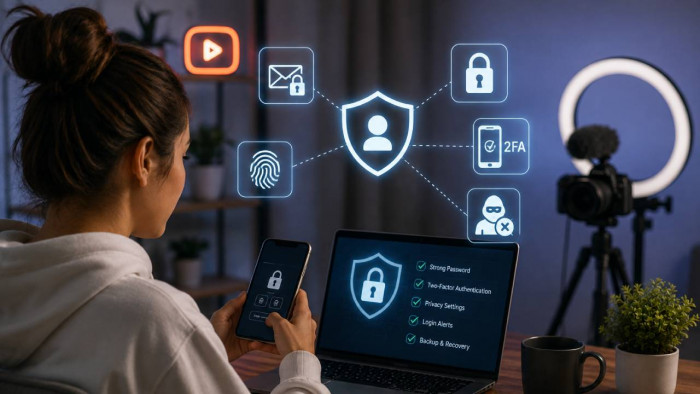
Creators share small details about themselves online without a second thought. Scammers can use those details to guess passwords, answer security questions, or trick support teams into handing over an account.
The reports indicate why this is a problem. The FTC’s Consumer Sentinel Network reported that over 1.1 million identity theft reports were filed in 2024, up 9.5% from the previous year. Javelin Strategy and Research reported that identity fraud losses in 2025 totaled $27.3 billion and affected 18 million people.
Social platforms add more risk. Gitnux said 70% of YouTube creators have faced phishing attempts aimed at their channel, and accounts without two-factor protection are much easier to hack. A stolen channel can mean lost money, lost sponsors, and a page that scammers use to trick followers.
How the Attacks Actually Happen
Cybernews has reported on huge collections of stolen login details, including one leak with 16 billion records from malware and old breaches mixed. Experts said this gave attackers a ready-made list they could test on email, streaming, and social accounts.
Account takeovers often begin with a fake email, not a loud attack. Cybernews also reported on an FBI warning about scammers pretending to be bank staff, sending people to fake login pages, then changing the password and locking out the real owner.
Gartner said AI agents could speed up account hacks by 50% by 2027. That is why passwordless, phishing-resistant authentication matters.
Practical Steps Creators Can Take
Turn on two-factor authentication everywhere. Email, banking, and every platform account should require a second step to log in, ideally an authenticator app rather than a text message.
Use a password manager. Reused passwords are one of the most common reasons a single breach turns into several. A password manager generates a unique password for every account and removes the temptation to reuse one.
Limit what's visible on camera. Mail on a counter, a street sign through a window, a child's school uniform — small details add up. A quick scan of any video before posting can catch what a background check might miss.
Watch for lookalike login pages. Before typing a password anywhere, check the URL carefully. Attackers build near-identical copies of login pages for YouTube, Instagram, and banking sites.
Monitor for breaches. Services that scan the dark web for exposed credentials can flag a compromised email address before it's used against other accounts.
Consider dedicated identity theft protection. Because a creator's identity is tied to income, not just a bank account, extra monitoring is worth the cost. Bitdefender's protection against identity theft covers this ground directly, tracking exposed personal data and alerting users before a stolen identity turns into a drained account or a hijacked channel.
If an Account is Compromised
Speed matters. Change the password on the affected account immediately, and on any other account using the same or a similar password. Contact the platform's support team and report the takeover, since most have a dedicated process for creators. File a report with the FTC. This helps make a recovery plan. It also gives you papers you can show to banks or platforms if they ask for proof.
Then check every account linked to the stolen one. Look at payment apps, email, and any forwarding rules. Scammers may set up quiet forwarding so they can keep reading your mail even after you change the password back.
Conclusion
A creator’s identity is part of the product, so it needs the same care as the content itself. Two-step login, a password manager, and account monitoring help close the weak spots that criminals often use.
The other choice is much worse. Rebuilding a channel, an audience, or a credit record from zero can take far more time and money than locking everything down now.
Comments