

Someone lands on your profile from a reel they half-watched. Before they follow, they read one thing: your bio. Whatever happens in those next few seconds, keep scrolling, or close the app is decided by a block of text shorter than this paragraph.
Most advice treats the bio as a fill-in-the-blank exercise. It isn't. It's the smallest piece of copywriting you'll ever do and one of the highest-stakes, because it's the one line that runs on every impression you'll ever earn. This guide is about doing it deliberately.
What “Bio Style” Actually Means
People use “bio style” to mean two different things at once, and confusing them is why so many bios feel off. There's content, the actual information, who you are and what you offer. And there's style in how that information looks, sounds, and carries your personality.
You can have perfect content in a lifeless style, or a beautiful style wrapped around nothing worth reading. The good ones get both right at the same time. Throughout this piece, “style” refers to four things working together: your voice (the tone of the words), your visual rhythm (spacing, symbols, line breaks), your personality (what makes it unmistakably yours), and your clarity (whether a stranger instantly gets it).
The Anatomy of an Instagram Bio
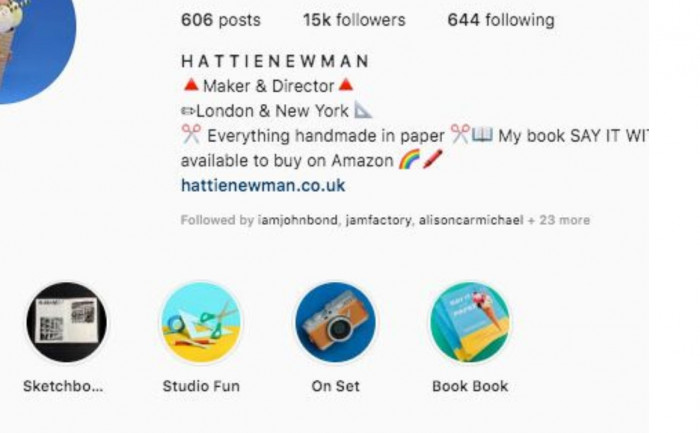
The bio isn't just the paragraph under your username. It's a small system of fields, and most people ignore half of them. Knowing what each one does changes how you write.
| Element | What most people miss about it |
| Name field | It's separate from your username and it's searchable. This is where a keyword belongs, not your legal name repeated. |
| Username (@handle) | Also indexed by search. Short and clean beats clever and cluttered with underscores. |
| Category label | Available on professional accounts. A one-tap way to say “Photographer” or “Bakery” without spending bio characters. |
| Bio text | Your 150 characters. This is where voice and value proposition live. |
| Link | One clickable slot. Underused by people who paste a raw URL with no reason to tap it. |
| Story Highlights | The extension of your bio. They answer the follow-up questions the bio raised. |
The single most overlooked piece here is the Name field. Because Instagram indexes it for search, writing “Aisha | Wedding Photographer” instead of just “Aisha” means you can surface when someone searches for a wedding photographer. That's free discoverability most people leave on the table. The username matters for a different reason: it often appears in comments, search results, mentions, and shared posts before anyone reaches the profile itself. That makes the relationship between a username and personal branding worth thinking about separately, especially for creators or businesses trying to stay recognizable across platforms.
The Psychology of a Scroll-Stopping Bio
A visitor to your profile is running a fast, mostly unconscious filter: Is this for me, and is it worth my attention? They're not reading your bio like a paragraph in a book. They're scanning it for a reason to stay.
This is why specificity beats decoration every time. “Passionate creative spreading positivity” tells a stranger nothing they can act on. “I teach nervous home cooks how to make bread that doesn't suck” tells them exactly who it's for and whether that's them. Vague adjectives feel safe to write and mean nothing to read.
A few principles worth internalizing before you write a single word:
• Clarity outperforms cleverness for strangers. A witty bio can delight people who already know you, but a first-time visitor needs to understand you before they can enjoy you. If they have to decode it, most won't bother.
• The first line does the heavy lifting. Attention drops off fast, so whatever matters most your hook or your value should sit at the very top, not buried after two lines of emojis.
• People follow a feeling of relevance, not a list of facts. Three job titles stacked together read as noise. One sentence that makes someone think “oh, that's me” reads as a reason to tap follow.
Bio Style Archetypes
Most bios fall into one of a handful of recognizable styles. Knowing them helps you pick one on purpose instead of drifting into a default. None is “best” the right one depends on who you are and who you're talking to.
| Style | Feels like | Works best for |
| Minimalist | Three clean lines, lots of breathing room | Designers, brands, feed-led accounts |
| Aesthetic / symbolic | Soft language, tasteful symbols, a mood | Lifestyle, travel, art, poetry |
| Professional / authority | Credentials, results, clear positioning | Coaches, consultants, services |
| Witty / personality | A joke, a sharp line, a distinct voice | Creators whose whole draw is them |
| Storytelling | A single human line hinting at a bigger arc | Personal brands, writers, founders |
| Brand / business | What you sell, who it's for, where to buy | Shops, products, local businesses |
AUTHORITY STYLE, ANNOTATED Helping burnt-out managers lead without losing their weekends 📩 Free 5-day reset below Leads with a specific pain, names the audience, and the second line gives a reason to tap the link. No wasted characters on “passionate about leadership.” |
Formatting and Visual Style
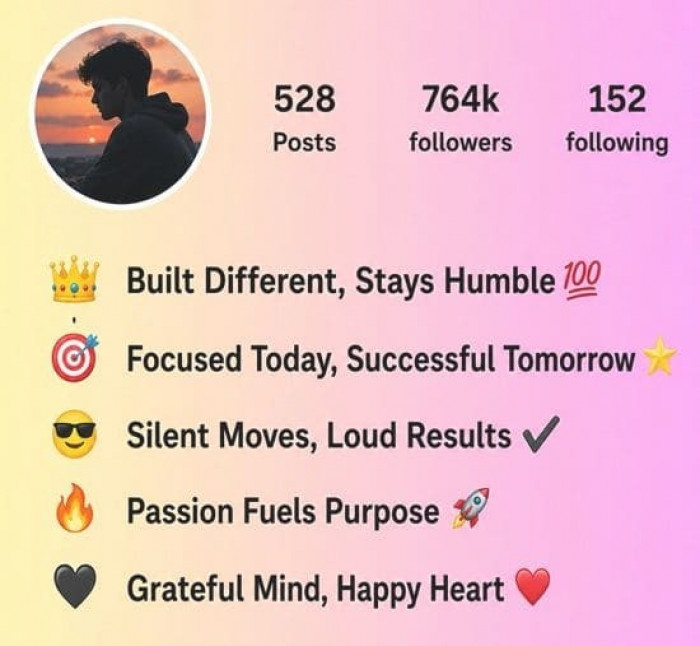
How a bio looks matters almost as much as what it says, because people scan before they read. The visual shape of your bio either invites the eye or repels it.
The most common frustration is line breaks. Instagram's bio field often strips your carefully placed line breaks when you edit inside the app. The reliable fix is to write and format the bio in your phone's Notes app first, then paste it in the breaks usually hold. Some people also use a single symbol at the start of a line to force the spacing.
A few formatting decisions worth making consciously rather than by habit:
• Emojis should anchor, not decorate. One emoji at the start of a line acts like a bullet point and guides the eye down the bio. Five in a row just add visual noise and slow the reader down.
• Custom Unicode fonts have a real cost. Those fancy cursive and bold fonts aren't actual text, they're symbols. Screen readers can't read them aloud, which locks out visually impaired visitors, and search may not recognize them either. Use them sparingly, if at all, and never for your most important line.
• White space is a design choice. A bio with room to breathe reads as confident and considered. A wall of text, symbols, and dividers reads as anxious. When in doubt, cut a line rather than add one.
Finding Your Voice and Hook
Voice is the part people find hardest, because it's the part that can't be copied off a template. The shortcut is to write the bio the way you'd actually introduce yourself to an interesting stranger at a party, not the stiff, corporate version, the real one.
If you want a structure to hang that voice on, this four-beat framework covers what a bio needs without making it formulaic:
| Beat | Question it answers | Example fragment |
| Who you are | What's your role or identity? | “Illustrator” |
| Who you help / make | What's the point of following you? | “drawing tiny comics about big feelings” |
| Why it matters | What's the payoff or personality? | “for anyone who overthinks everything” |
| What to do next | Where do they go from here? | “prints in the link 👇” |
You don't need all four beats in every bio; a minimalist account might use only the first two. The framework is a checklist for what you could include, not a script you must follow line by line.
Keywords, Search and Discoverability
This is the section most style guides skip entirely, and it's where real value hides. Instagram search reads your Name field and username not the body of your bio. That means a keyword placed in the right spot can make you findable to people who don't yet know you exist.
The move is simple: put your niche or role into the Name field alongside your name. Someone searching “ceramics” or “vegan recipes” or “Austin realtor” can surface an account whose Name field contains those words, even with zero mutual follows.
NAME FIELD, BEFORE AND AFTER Before: Maria Lopez After: Maria | Ceramics & Pottery Same person, but the second version can appear when someone searches for ceramics. The username can carry a keyword too, but the Name field is the flexible one. |
Don't overstuff it. Two or three natural words tied to what you actually do is the sweet spot. “Maria | Ceramics Pottery Handmade Clay Art Mugs” reads like spam and helps no one.
The Link and Call-to-Action
The link is the only part of your profile that leads somewhere, and it's shocking how often it's wasted a bare URL with no reason attached, or a link that points somewhere unrelated to why people came.
Two decisions matter here. First, single link versus a link-in-bio hub. If you only ever send people to one place, a single direct link is cleaner and faster. If you're constantly juggling a new drop, a newsletter, a video, and a shop, a link-in-bio tool that holds several destinations saves you from rewriting your bio every week.
Second, and more important, the link needs a reason to be tapped. A URL sitting there does nothing. A line above it that frames the click “Grab the free packing checklist” or “New episode just dropped 👇” turns a passive link into a small, specific promise. The click-through difference between “link below” and a framed reason is not small.
Bio Styles by Use Case
The same rules bend differently depending on what kind of account you're running. The balance between personality and clarity shifts based on who's reading and what they need from you.
| Account type | What to lead with | What to protect against |
| Personal | Personality and a hint of what you post | Being so private it says nothing |
| Creator / influencer | Your niche and your voice, in that order | Listing every platform, losing the thread |
| Small business | What you sell, who it's for, location | Sounding corporate, forgetting the human |
| Artist | Medium and mood; let the work breathe | Over-explaining art that speaks for itself |
| Coach / consultant | The transformation you deliver, specifically | Vague inspiration with no concrete promise |
| Public figure | Clear identity and one primary destination | Clutter that dilutes a known name |
The through-line: the more someone already knows you (a public figure), the less your bio has to explain and the more it can simply direct. The less they know you (a new small business), the harder your bio has to work to establish who you are and why you're worth a follow.
Common Mistakes That Quietly Cost Followers
Most bad bios aren't badly written, they're just fixable in ways the owner never noticed. These are the errors that leak followers without ever announcing themselves.
• Leaning on buzzwords. “Passionate,” “creative,” “entrepreneur,” “living my best life” these words are so overused they've stopped carrying meaning. Replace each with something concrete that only you could say.
• Burying the point under decoration. When the first thing a visitor sees is a row of sparkle emojis and a divider, the actual message gets pushed down where attention has already dropped. Put substance first, ornament second.
• Ignoring the Name field. Treating it as a place to repeat your username wastes the one searchable, flexible field you have. This is the most common miss and the easiest fix.
• A dead or mismatched link. A broken link, or one that sends people somewhere unrelated to why they came, quietly kills the one action your bio was built to drive. Check it exists and check it matches.
• Trying to be everything. A bio that claims five roles and three passions gives a stranger nothing to hold onto. One sharp identity beats a scattered résumé every time.
Tools, Generators and Templates
There's a whole ecosystem of bio generators, font converters, symbol libraries, and link-in-bio platforms. They range from genuinely useful to actively counterproductive, and it's worth knowing which is which.
Font and symbol tools are handy for previewing a look, but remember the accessibility cost of Unicode fonts before you commit. Link-in-bio platforms earn their place the moment you have more than one destination to send people to. AI bio generators are the ones to handle with care.
An AI generator is a fine way to break a blank-page stall and get three or four rough directions on the table. It is a terrible way to get a finished bio, because it produces the exact generic phrasing that makes bios blur together. Use it as a spark, then rewrite every line in your own voice until it sounds like a person and not a template. The generator's draft is the starting point, never the answer.
Templates You Can Adapt
Finished examples are easy to copy and hard to make your own. Fill-in-the-blank templates are the opposite; they force you to insert the specifics that make a bio yours. Here are a few, with the thinking behind each.
THE CLEAR SERVICE TEMPLATE I help [specific audience] [achieve specific outcome] without [common frustration] [emoji] [reason to tap] below Works because “without [frustration]” signals you understand the reader's real problem, not just the goal. |
THE PERSONALITY-FIRST TEMPLATE [What you make/do], probably [self-aware human detail] [what you post about] The self-aware aside is what makes it feel human. “Probably overcaffeinated” beats another adjective. |
THE MINIMALIST BRAND TEMPLATE [What you sell] · [one differentiator] [location or shipping note] [link with a nudge] The middle dot keeps it tight and readable. Every word is load-bearing; nothing decorative. |
Whatever template you start from, the rule is the same: strip the brackets, resist the urge to sound impressive, and read the result out loud. If it sounds like something you'd never actually say, keep editing.
Testing, Refreshing and Iterating
The biggest mindset shift is treating your bio as a living copy instead of a one-time setup. The version you write today is a draft, not a monument.
Small, deliberate changes are worth making over time. Try a different call-to-action and see whether link activity changes. Sharpen the opening line as your niche becomes clearer, and update the bio around launches, new services, or seasonal campaigns so it reflects what the account is doing now rather than what it was doing months ago.
For professional accounts, some of this can be measured instead of guessed. Instagram Insights can provide a basic view of profile and link activity, while tagged URLs and external analytics can show what happens after someone leaves Instagram. Understanding how Instagram link clicks are tracked can help connect a bio change with actual traffic instead of judging the new version only by how it looks.
There is no need to measure every wording change individually. But if the bio is meant to generate leads, sales, sign-ups, or visits to another platform, watching profile visits, follows, and link activity over time gives a much clearer picture of whether the changes are working.
The Conclusion
A bio is a strange little piece of writing 150 characters doing the work of a homepage, an elevator pitch, and a first impression all at once. That's exactly why it's worth the disproportionate effort. Get it right and it quietly earns you followers on every impression for months. Get it lazy and it leaks them just as quietly.
Underneath all the formatting tips and archetypes, the real task is simpler and harder than it looks: saying who you are, clearly and in your own voice, in one breath. Most people never sit down and actually do that. The ones who do stand out immediately, because clarity is rare.
So open your profile right now and read your bio as a stranger would. If it doesn't tell them who you are, who you're for, and why to stay, go fix it. That's the whole job.
Comments