

You open the camera, look around, feel like nothing's worth sharing, and close it again. That specific kind of stuck is the whole reason this article exists. This is not another list of fifty ideas you'll scroll past and forget by lunch. Those lists don't work because the problem was never a shortage of ideas.
What follows is a look at why the blank-story wall keeps showing up, plus a system that stops it from coming back with plenty of concrete things to post along the way.
Why You Actually Run Out of Story Ideas
“I'm out of ideas” is almost always a cover story. The ideas are usually right in front of you; something else is quietly blocking them from counting.
When people describe hitting the wall, it tends to trace back to one of four things:
• You're waiting for something “post-worthy.” You're holding your ordinary Tuesday to a highlight-reel standard, so most of your actual day gets disqualified before you even reach for the camera. The bar is set so high that nothing normal survives it.
• Too many options is its own kind of paralysis. When literally anything could go on your story, picking one thing somehow feels harder than having a narrow prompt handed to you. Freedom without a frame just spins in place.
• You don't know what a story is even for. If you're unclear on the job a story is supposed to do, every option feels equally pointless, so you pick none. Purpose is what turns “I could post anything” into “I should post this.”
• You're comparing your quiet day to someone else's big one. Measuring your reset day against another person's launch or vacation makes your real life feel too small to share. That's a feeling, not a fact, but it's enough to stop you.
Notice that a longer list of ideas fixes none of these. They get fixed by changing how you see the ideas you already have which is where the rest of this goes.
The Mindset Shift: Document, Don't Create
Here's the single change that dissolves most of the problem: stop treating stories as little productions, and start treating them as a window into your day. You're not inventing content. You're noticing it.

“Creating” implies you owe your audience something new and impressive every single time, which is exhausting and impossible to sustain. “Documenting” just means pointing the camera at something that's already happening: the coffee, the half-built project, the drive, the thing that mildly annoyed you an hour ago.
That swap takes the pressure off being interesting and hands you a far easier job: being present. Once you're documenting instead of performing, the raw material is basically endless, because your day never stops producing it.
Lower the Bar: Why “Boring” Stories Often Win
This part is counterintuitive, so it's worth sitting with. The polished stuff frequently underperforms the throwaway stuff.
A slightly blurry photo of your messy desk with an honest caption tends to get more replies than a color-graded, perfectly staged flat-lay. The rough one feels reachable, like a text from a friend and people answer it like one. Production value signals distance; texture and honesty signal a person.
There's also a math problem hiding in perfectionism. If you wait until a story is “good enough,” you'll post a tenth as often as the person who just posts and on stories, which vanish in 24 hours, the stakes are low by design. That short shelf life is permission: nothing you post has to be a keeper.
The Purpose Framework: Four Jobs Every Story Can Do
Most people get stuck because they start from a blank “anything.” The fix is to stop thinking in topics and start thinking in jobs. When you don't know what to post, don't ask “what's interesting?” ask “what job do I want this to do?”
Nearly every story does one of four things:
| Job | What it's for | Looks like |
| Show up | Staying visible and top-of-mind, even on a slow day | A quick check-in, or what you're working on right now |
| Connect | Building personality and relatability | An honest opinion, a small win, a real struggle |
| Engage | Turning a broadcast into a two-way exchange | A poll, a question box, a “this or that” |
| Promote | Moving people toward what you offer, gently | Behind-the-scenes of the thing you sell |
Pick the job first, and the specific idea gets dramatically easier, because you've narrowed the field from everything to one of four things. Keep this framework handy it's the tool you reach for the moment the screen goes blank.
Idea Bank 1: Everyday and Behind-the-Scenes
These are pure “document” ideas, and the rule is simple: whatever you're already doing is a candidate. You're not adding a task to your day; you're just capturing a slice of it.
A few that consistently work:
• The unfinished version of whatever you're making. People are far more curious about the messy middle than the polished result a “take 4” of a project in progress invites them in rather than showing off.
• What's on your desk, screen, or plate right now, with one line about why it's there. The visual is ordinary; the caption is what makes it yours.
• A normal moment, reframed. The commute, the reset, the third coffee of the day the caption does the heavy lifting, not the shot.
• Something that just went slightly wrong, told with a bit of humour. Small, low-stakes failures are relatable in a way that wins never are.
The value here isn't the subject. It's that the subject is real and specific to you, which is exactly what a generic list can't manufacture.
Idea Bank 2: Engagement and Interaction
Stories come with interactive stickers that most people barely touch, and they do double duty. They hand you something to post, and they generate the taps and replies that signal the platform your content is worth showing to more people.

Each sticker is suited to a slightly different moment:
| Sticker | Best for | Quick example |
| Poll | Fast, one-tap participation | “Which should I do next A or B?” |
| Question box | Deeper replies you can reuse | “Ask me anything about ___” |
| Quiz | Teaching while you ask | Test a common myth in your niche |
| Emoji slider | Ultra-low-effort reactions | “How badly do you need a nap right now?” |
| Add yours | Chain participation and reach | Start a prompt others repost |
The question box is quietly the most valuable of these. The answers you collect become a week of future content, so you're not just engaging your audience, you're getting them to write your next few posts for you. When that rotation starts feeling repetitive, a broader bank of Instagram Story ideas can add fresh formats without losing the interaction-first approach.
Idea Bank 3: Value and Micro-Teaching
Stories are an underrated place to be useful in small doses. One quick tip. A two-or-three-frame mini how-to. A tool you actually use. A myth in your area that's worth correcting.
Value content is the most durable thing you can post, because it gets screenshotted, saved and forwarded to a friend which quietly extends its life well past the 24-hour window and pulls in people who don't follow you yet.
You don't need a full tutorial to qualify. The bar is “did one person learn one small thing,” not “did I produce a course,” and one genuinely useful sentence per frame clears it easily.
Idea Bank 4: Personal and Relatable
This is the layer that turns followers into people who actually care whether you post. It's also the one most accounts skip, because it feels riskier than a poll.
Reach for the things you'd happily say out loud but hesitate to post: a mild opinion or hot take, a lesson you learned the hard way, a current struggle shared plainly, a win stated without over-apologising for it. These are the posts people remember you for.
| One boundary worth keeping: relatable isn't the same as unfiltered. You can be open about “a rough week” without narrating every detail of it, sharing the feeling, not necessarily the whole story. The aim is connection, not a diary you'll wish you could delete. |
Idea Bank 5: Promotion Without Feeling Salesy
Most people dodge promotion because they only know one mode: the blunt “buy now.” There are softer, more effective ways to sell that don't make people mute you.
Show the process behind the thing you sell. Screenshot a genuine reaction from a customer. Describe the problem your product solves before you ever mention the product. Let people watch you use your own thing in an ordinary way. Selling is much easier when it looks like documenting.
The ratio matters more than the pitch. If most of your stories give you document, connect and teach the occasional ask lands as normal instead of pushy; when every third frame is a sale, people tune out. The trick isn't hiding that you sell something. It's making the sell the smallest part of an otherwise generous feed.
Turn Your Day Into Content: The “It's Already Happening” Method
The people who never seem to run dry aren't more creative than you. They've just built a habit of noticing, and noticing is a skill, not a talent.
Here's the trigger that installs it: every time you start something, a task, a meal, a project, a small frustration, ask one quick question. Could this be a frame? Most of the time the answer is no, which is completely fine; you only need a couple of yeses a day.
Do that for a week and it stops being a scramble and becomes background awareness. The blank-screen problem mostly disappears, because you're capturing moments as they happen instead of trying to manufacture them from nothing afterward.
Build a Never-Empty System: Templates, Batching and Series
Ideas are only half the job. The other half is removing friction, so posting stays quick even on a low-energy day when you can't be bothered to think.
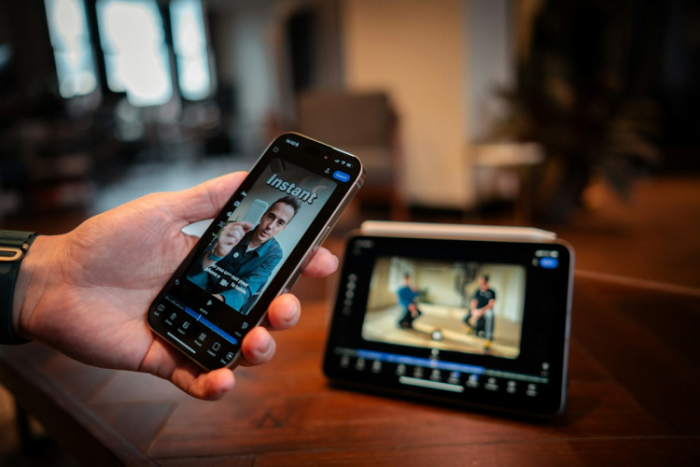
• Reusable templates. Save a few story layouts a “tip of the day” frame, a question prompt, a weekly recap in your drafts or a design tool. When the design is already done, posting takes seconds and you're never starting from a blank canvas.
• Batching. Set up several stories in one focused sitting and release them across the day or week. Your brain is much better at producing five ideas in a single creative burst than one idea on five separate occasions.
• A recurring series. This is the strongest anti-blank-page tool there is. Claim a repeating slot, a themed weekday, a regular Q&A, a “what I'm working on” check-in so that on those days the decision is already made for you, and your audience starts actively looking for it.
A system means your consistency stops depending on feeling inspired. That's the entire point, because inspiration is the least reliable thing to build any habit on. A simple content idea system makes that even easier by giving unfinished thoughts somewhere to land before they are turned into scheduled posts.
Repurpose and Recycle What You Already Have
You're sitting on far more content than you think you are. Most “new ideas” are just old content pointed at a slightly different angle.
Reshare an old feed post to your story with a fresh line on top. Resurface a story that did well months ago almost nobody remembers it, and none of your newer followers ever saw it. Turn a photo buried in your camera roll into a prompt, or push a recent post out to stories to catch the people who scrolled past it in feed.
Consistency Without Burnout
One last thing, because it's the part most advice conveniently leaves out: you do not have to post every day, and posting more is not automatically better.
A feed of low-effort filler trains people to skip you, so aim for a rhythm you can actually keep rather than a heroic streak you'll abandon in three weeks. Watch, too, for the trap of posting purely for the algorithm at the cost of your own energy; the account only outlives the burnout if you pace it.
The goal here was never maximum output. It's staying visible in a way that doesn't quietly drain your enthusiasm for the thing you're actually here to do.
Quick FAQ
1. What should I post when nothing exciting is happening?
That's the best time to document, not the worst. A slow day shown honestly beats a staged highlight, because it's relatable reach for the “show up” job with a quick check-in or a question box, and keep the bar on the floor.
2. How many stories a day is too many?
There's no magic number, but watch your view and reply drop-off. If people are tapping straight through without engaging, you've pushed past the point of interest: quality of attention matters more than the count of frames.
3. What if no one replies to my stories?
Make replying almost effortless. Swap open-ended posts for one-tap polls, sliders and quizzes, which lower the cost of responding and warm people up to answer bigger prompts later.
4. What are the best story ideas for a small account?
Interaction and personality, not polish. Small accounts grow on connection, so lean on question boxes, honest opinions and behind-the-scenes far more than on high-production or promotional content.
5. I run a business. How do I post without being boring or salesy?
Show the work, not just the product. Your process, your customers and the problem you solve are more interesting than another “buy now,” and they happen to sell better too.
The Real Takeaway
You were never actually out of ideas. You were missing two things: a lens document instead of create and a system that keeps every decision small.
Once you think in jobs instead of topics, notice moments as they happen, and lean on a few repeatable formats, the blank screen stops being a wall. It becomes a quick choice between things you already have in front of you. The point was never a perfect story. It's just showing up, in a way that sounds like you.
Comments