
The most common mistake is treating a single post as if it can serve three platforms. You write something decent on LinkedIn, feel good about it, then paste it straight into X where it runs three times too long.
From there it gets worse. The same caption goes onto a TikTok that nobody watches past the first second. One idea, three places, no traction anywhere.
The idea usually isn't the problem. A post built for one room has been shoved into two others where it doesn't belong, and audiences pick up on that mismatch instantly. The fix isn't posting less or grinding harder. It's taking one idea and rebuilding it three separate times, so each version feels like it started life on the platform it's sitting on.
One idea mined deep beats three ideas spread thin
Most people assume the hard part of posting is thinking of things to say. So they chase new ideas constantly, and burn out within a month. The approach that lasts is the opposite. Take fewer ideas and squeeze each one properly, because a single real insight has more than one angle, more than one length, and more than one way of being felt.
The math is quietly in your favor. You do the thinking once the expensive part and then you're translating, not inventing, which lands closer to one and a half times the work than three.
There's a compounding effect too. When the same idea shows up in three forms across three feeds, the people who follow you in more than one place start to see a point of view taking shape, not a stream of unrelated posts.
Find the seed before you plant it
Before an idea can move between platforms, you have to pull apart two things that usually arrive fused: the core and the packaging. The core is the transferable part the claim, the insight, or the story. The packaging is everything else: length, format, tone, whether it's read or watched.
People get stuck because they treat their LinkedIn post as the idea, when it's really just one packaging of it. Name the core plainly and it stops being trapped in that shape.
Say the thing you actually believe is this: junior designers hurt their careers by polishing work nobody asked for instead of shipping fast and learning from the reaction. That sentence is the core. It has no word count, no tone, and no video attached to it yet.
Once you can state it that cleanly, you can see it could become a reflective LinkedIn story, a blunt one-liner on X, or a fifteen-second TikTok to the camera. Same seed, three plants.
THE ONE-SENTENCE TEST If you can't say your idea in a single plain sentence, no hook, no formatting, no cleverness it isn't ready to travel yet. That sentence is what you're actually adapting. Everything else is costume. |
Three feeds, three moods
People don't open LinkedIn, X and TikTok in the same frame of mind. Each one is a different room, and people walk in wearing a different mood and hunting for a different thing.
On LinkedIn, people are thinking about their working self, their reputation, their field, where their career is headed. They scroll upright and a little guarded, half-aware of how the things they engage with reflect on them.
On X, people are restless and scanning. They're there for the live conversation and the feeling of being early to something, where wit travels fast and filler dies faster.
On TikTok, people are reclined and want to feel entertained, surprised, moved. They'll give you a second, maybe two, before the thumb decides. Three postures that are different can't be served by the same words.
What each feed actually rewards
Posture explains the reader; the reward system explains the feed. Each platform pushes the posts that produce one specific behavior, and that behavior should shape how you build.
THE NATIVE LOGIC OF EACH PLATFORM
| Platform | It rewards | Signals that matter | So the post should… |
| Perspective and credibility; slow, considered reading | Dwell, comments, saves, follows | Earn its length, invite a real reply | |
| X | Compression, timing, and conversation | Reposts, quote-tweets, replies | Say one sharp thing worth repeating |
| TikTok | Motion, a fast hook, emotional immediacy | Watch time, rewatches, shares | Grab the first second, hold to the end |
Read down that last column and the differences get concrete. LinkedIn wants you to take up space well. X wants you to take up almost none and still land. TikTok only cares whether you stopped the thumb.
One more thing worth knowing before you write a word: every feed hides most of your text behind a cutoff, and the cutoffs are ruthless. What shows before someone taps “more” is the only real estate you can count on.
HOW MUCH ACTUALLY SHOWS IN THE FEED (2026)
| Platform | Max length | Shown before the cut | Where the hook must land |
| 3,000 characters | ~140 on mobile (~210 desktop) | The first line or two | |
| X | 280 free / 25,000 Premium | First 280, then “Show more” | The first 280, always |
| TikTok | 4,000-character caption | ~100 before “…more” | The first line + first second on screen |
The pattern is the same everywhere: the visible sliver is tiny next to the maximum. Your hook has to live inside that sliver, and everything else is a reward for the people who already decided to keep reading.
Hooks don't travel
The opening is where cross-posting quietly falls apart. A hook is a promise tuned to one audience's attention, and that tuning doesn't survive the trip between platforms. Looking through different hook ideas can help here, especially when the core thought is strong but the opening still sounds as though it belongs to another feed.
The line that stops a LinkedIn scroll can feel stiff on X and disappear completely on TikTok. So the hook is the first thing you rebuild, not the last. Run the junior-designer idea through all three and the openings pull apart:
● LinkedIn opens on professional stakes. “The best junior designer I ever hired almost got passed over because her portfolio looked unfinished.” It sets up a tension a career-minded reader leans into.
● X opens on a sharp, argue-with-me claim. “Polishing work nobody asked for is the most common way juniors stall their careers.” A complete thought that invites a quote-tweet and needs no second line.
● TikTok opens on something seen or felt in the first second. You, on camera: “If you're a junior designer, stop doing this” while the screen shows a portfolio being endlessly tweaked. The promise is visual and immediate.
The underlying claim never changed. Only the door you walk people through did.
Building the LinkedIn version
LinkedIn gives you room up to 3,000 characters but the feed shows only about 140 of them on mobile before the “see more” fold (roughly 210 on desktop). Those first one or two lines carry the entire weight of whether anyone reads the rest, so make them the sharpest thing in the post.
Don't mistake the ceiling for the target. Analysis of hundreds of thousands of posts points to a sweet spot around 1,300 to 2,500 characters for engagement; very short posts under 400 characters tend to underperform, and maxing out the full 3,000 doesn't help. Length should serve the idea, not fill the box.
The shape that works is simple: a strong opening line, generous white space so it isn't a wall of text, and a payoff that rewards the scroll, a lesson, a reframe, or the point the story was building toward. Short lines with breaks consistently beat dense paragraphs on this platform.
Tone is where most people slip. LinkedIn punishes anything that sounds like a press release and rewards the sound of one competent person talking honestly to another. Write like you're explaining something to a colleague you respect, not addressing a conference.
End on a line that opens a door rather than closing it a genuine question or an unresolved tension pulls comments far better than “Thoughts?” at the bottom. And don't ignore the comments: they display in full with no fold, so a thoughtful reply of your own is extra reach you're leaving on the table if you skip it.
Building the X version
X is a compression exercise. On a free account you get 280 characters roughly 40 to 55 words, or two to three short sentences and that ceiling is the craft, not a limitation to work around.
Premium accounts can post up to 25,000 characters, but the feed still shows only the first 280 before a “Show more” link, so the hook has to live in that opening either way. Length rarely buys reach here; short posts routinely outperform long ones.
The question to ask isn't “how do I shorten this.” It's “what's the one line worth repeating?” Find that line and you've found the post. A thread is only right when the idea genuinely unfolds and when the first post works as a complete hook whether or not anyone taps to expand it.
● Write for the quote-tweet. The posts that travel are the ones people can repeat with their own reaction attached, so give them a clean, self-contained claim they'd be glad to be seen agreeing or disagreeing with.
● Cut until it almost breaks. Compression isn't only removing words; it's removing the hedges that make a take feel safe. The sharper line takes more nerve, and that nerve is what gets it shared.
● Mind what a link costs. Any URL eats a flat 23 characters of your 280 no matter its real length, so many people drop the link into a reply and keep the main post clean and quotable.
Building the TikTok version
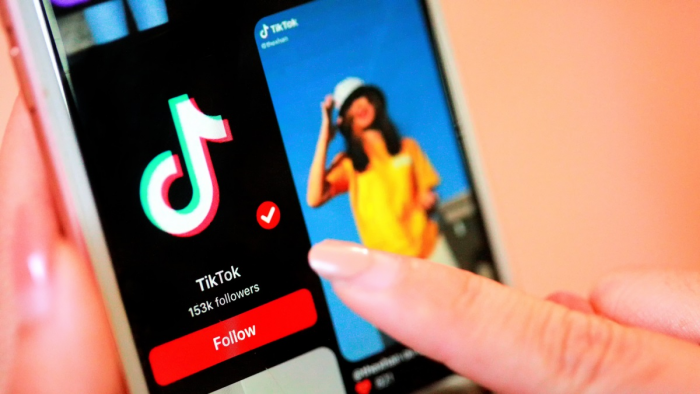
TikTok is the biggest leap, because the idea stops being read and becomes watched. That shifts the unit of work from a sentence to a moment, and the first second is non-negotiable.
You have to say or show the promise before the viewer's scroll instinct fires, which usually means leading with the payoff-tease. “Stop doing this” lands; “Hey guys, so today I wanted to talk about” is a scroll. The caption gets the same treatment; it can run to 4,000 characters, but the feed shows only about the first 100, so the first line does all the work.
Then there's how the idea is carried, and you've got a few honest options:
● Talking head. You, to camera, saying the idea with conviction. The most personal and, once you're used to it, the most repeatable a face holds attention that text can't.
● Text-on-screen over a simple visual. The idea appears as words while something plays behind it. Good if you're camera-shy, as long as the pacing is quick and the hook is on screen in the first frame.
● Slideshow (Photo Mode). A few images with text, swiped at the viewer's pace well suited to ideas that break into clear beats. Note that the text sits straight on the image with no safe zone, so keep your words clear of the caption and the buttons on the right.
Whichever you choose, the idea has to be spoken or shown, not read off a paragraph say it the way you'd say it to a friend about to make the mistake you're warning against. And ride a trending sound where it fits: on TikTok the audio is a discovery lever, not decoration, and it can carry a static post as far as a filmed one.
ONE IDEA, THREE DRAFTS LinkedIn (the opening two lines) “The best junior designer I ever hired almost got passed over. Her portfolio looked unfinished and that turned out to be exactly why she was good.” X (the whole post, ~180 characters) “Polishing work nobody asked for is the most common way junior designers stall their careers. Ship the rough thing. Learn from the reaction. Repeat.” TikTok (first three seconds) On camera: “If you're a junior designer, stop polishing.” On-screen text, frame one: “The habit that's quietly stalling your career.” |
Hold the throughline
Bend the idea far enough for each platform and you can lose the thing that made it yours. The packaging is meant to move. The center is not.
WHAT STAYS FIXED VS. WHAT FLEXES
| Stays fixed across all three | Flexes per platform |
| The core claim the thing you actually believe | Length and format |
| Your point of view and where you stand | The hook and opening line |
| Your voice the personality people recognize | Tone, from formal-ish to loose |
| The standard you hold your ideas to | Medium: read, scrolled, or watched |
If your voice and your position hold steady while the format shifts, someone who runs into you on two platforms feels like they've met the same person twice.
If the center moves too, you read as three different accounts wearing your name and that inconsistency quietly costs you the trust that makes any of this worth doing.
Know when to let an idea skip a platform
Not every idea earns a spot in all three rooms, and forcing one that doesn't is how you end up with a limp post. Some ideas are inherently one shape, and the honest move is to notice that instead of stretching them.
A nuanced, credibility-heavy argument can shine on LinkedIn and fall flat squeezed into 280 characters. A visual gag lives on TikTok and dies as text. A fast reaction to breaking news belongs on X and is stale on LinkedIn by tomorrow morning.
The test is the same one from earlier, run in reverse: if you can't find a native hook and a real reason the idea suits that room, skip it there. Three strong posts beat one strong post and two forced ones and range includes knowing when to sit a platform out.
Sequence the release
Posting all three versions at the same moment is a missed opportunity, and sometimes an own goal. Treat the three posts as a small sequence where each one can inform the next.
One approach is to lead with the platform that generates raw material. A quick take on X pulls replies and pushback within the hour, and those reactions often hand you the exact objection worth addressing in the longer LinkedIn version a day later.
The other is to space the posts so they don't compete with themselves. The same follower seeing near-identical content twice in an hour feels the repetition; the same idea a day or two apart, in a different form, reads as a theme you clearly care about.
One thing to avoid: don't just cross-post a link that says “new post on my LinkedIn 👉.” A pointer out of one feed into another rarely travels, because it asks people to leave the room they came to sit in. Rebuild the idea for the new platform instead.
A SIMPLE SEQUENCE Post the sharp take on X in the morning → read the replies → use the best objection to shape the LinkedIn post the next day → cut the strongest line into a TikTok hook later in the week. |
Let each feed teach you something
Every version comes back with information, if you read it as more than a vanity number. Each reaction is feedback about the idea, not just the post and because each platform measures a different thing, you get three readings on the same thought.
● A save on LinkedIn means someone wanted the idea for later a strong sign it has practical weight, not just momentary appeal.
● A quote-tweet on X means the idea was worth attaching their own name and reaction to, the sharpest test of whether a claim is interesting or merely agreeable.
● High completion or rewatches on TikTok tell you the idea held attention as an experience, which reveals whether it's actually felt or just intellectually tidy.
Read across all three and you learn things one platform would hide. An idea that saves well on LinkedIn but dies on TikTok might be sound but not felt useful to know before you build the next one.
Where it breaks
A few failure patterns show up again and again, and each one is avoidable once you can name it.
● Diluting the idea to fit everywhere at once. One version bland enough to work on all three platforms works on none. Commit to rebuilding it three times.
● Carrying LinkedIn length onto X. If it reads like a paragraph that lost its formatting, it's too long for the room.
● Ignoring TikTok's native shape. A slow, no-hook clip posted as a TikTok gets buried. The format has its own grammar, and the first-second hook isn't optional.
● Sounding like a brand instead of a person. The corporate register some mistake for “professional” is exactly what gets scrolled past everywhere. People follow people.
● Running dry because there's no input. If you're not reading and noticing and collecting raw thoughts, you eventually have nothing to encode. The output only works if something feeds it.
Build the habit
The difference between people who post across three platforms consistently and people who try once and quit is rarely talent. It's whether they built a small system or waited for inspiration to arrive on schedule.
Keep a running capture note where every half-formed idea, audience question, useful comment, or interesting observation goes the moment it appears. The useful raw material is often already around you, and building a reliable source of content ideas makes the system much less dependent on inspiration arriving at the right time.
Then batch the encoding. Sit with one captured idea and write all three versions in a single pass, while the core is fresh and you're already in the mode of adapting it.
And lean on the shapes you've already found: the LinkedIn structure, the X compression, the TikTok hook so each new idea drops into a form you don't have to reinvent. One idea in, three posts out, without it eating your week.
The last word: range is the real skill
It's tempting to think the person posting well across LinkedIn, X and TikTok simply has better ideas than you. Usually they don't.
What they have is the ability to take an ordinary idea and make it land in three rooms that ask for three different things. Considered on one, sharp on another, felt on the third, without losing the thread that ties them together.
The idea was never the hard part, and it was never the scarce part either. The ability to move it fluently between very different audiences is the thing worth building and once you have it, a single good thought stops being one post you hope performs and becomes three that each belong exactly where they are.
Comments