

Most social media audits are busywork dressed up as strategy. You export a spreadsheet, count followers, note that engagement is “down a little,” recommend posting more consistently, and file the whole thing away until next year. In 2026 that ritual is close to useless. Feeds don't run on follower counts anymore they run on recommendations, and a recommendation engine doesn't care that someone tapped to follow eighteen months ago.
So the question a real audit has to answer isn't “how are our accounts doing?” It's sharper than that: are we still worth showing to people who have never heard of us? Everything below is built to answer that one question, section by section and because the answer looks different on TikTok than it does on LinkedIn, we'll get platform-specific where it counts.
What a Modern Audit Actually Measures
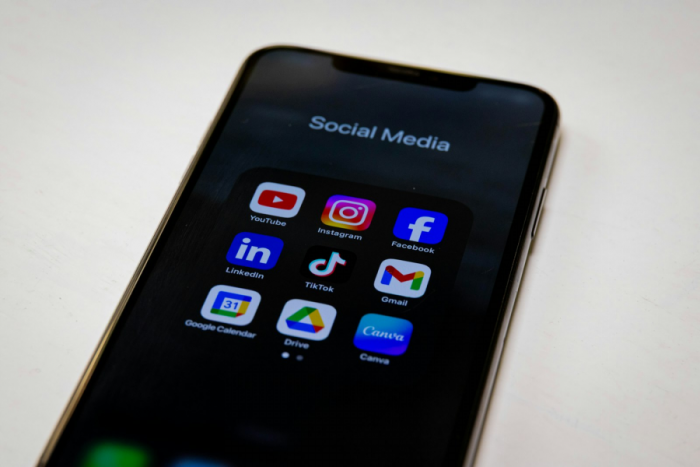
The old audit measured ownership: how many followers you had, how often you posted, whether your bio link worked. Those were fair proxies back when reach was tied to your follower graph. Pull up your feed today and most of what you see comes from accounts you never chose. The graph got demoted; the recommendation model got promoted. That single shift changes what's worth measuring.
A 2026 audit measures pull, not inventory. It asks whether your content earns distribution on its own merit every time it's posted, because that's the only thing the algorithm rewards. The contrast is stark once you lay it side by side.
| The old audit asked | The 2026 audit asks |
| How many followers do we have? | How much of our reach comes from non-followers? |
| Are we posting often enough? | Does each post earn its place in the feed? |
| What's our like count? | What are our saves, shares, and sends? |
| Is our bio link current? | Are we findable when someone searches inside the app? |
| Are we on all the platforms? | Are we on the platforms our audience actually uses? |
If your current audit template lives entirely in the left column, you're grading yourself on a test the platforms stopped giving. The rest of this guide lives in the right column.
Set Your Baseline Before You Touch Anything
Auditing without a baseline is just browsing your own analytics and feeling vaguely anxious. Before you open a single dashboard, decide what “good” means for you specifically, not the industry, not a competitor, you. That means writing down the two or three business outcomes your social presence is supposed to move, and the number attached to each.
Then apply the filter that keeps the whole audit honest: the so-what test. For every metric you're tempted to track, ask what decision would change if the number moved. If the honest answer is “nothing,” it's a vanity metric no matter how good it looks in a report.
THE SO-WHAT TEST
Impressions climbed 40% this quarter. So what? If you can't name the action you'd take differently, more budget here, less effort there, a format to kill the metric is decoration. Keep only the numbers that force a decision.
Here's how the same raw data splits into signal and noise depending on whether it's tied to an outcome:
| Vanity metric | The version that actually matters |
| Total followers | Follower growth from people who engaged first, not bought or bot |
| Impressions | Reach among non-followers (the recommendation signal) |
| Likes per post | Saves and shares per post (intent to return or pass along) |
| Total engagement rate | Engagement rate on reach, broken out by format |
| Link clicks | Clicks that turned into a signup, sale, or booked call |
Inventory Everything You Own, Including What You Forgot
This is the least glamorous step and the one most audits skip, which is exactly why it catches the biggest problems. You cannot review a presence you can't see, and almost every organization is running more accounts than anyone remembers. Map all of them before you evaluate any of them.
Go wider than the four or five profiles you post weekly. The full inventory usually surfaces things nobody's looked at in years:
● Dormant and zombie accounts, the abandoned Facebook Page from a campaign three years ago, the Pinterest account someone set up once, the YouTube channel with two videos and a stale banner. Each one is still public and still shaping how you look to a stranger.
● Old handles and redirects renamed accounts, deprecated usernames, and the X profile that still carries a logo you retired. These fracture your search results and confuse anyone trying to find the real you.
● Employee-linked and unofficial pages auto-generated LinkedIn company pages, location Pages on Facebook, a well-meaning team member's side account. You're accountable for the impression they leave whether you created them or not.
● Squatted and impersonation handles the genuinely new 2026 risk. AI cloning has made it trivial to spin up a convincing fake with your visuals and voice. Search your exact brand name across TikTok, Instagram, X, and YouTube and note anything you don't control before someone else weaponizes it.
Red flag: if it takes you more than a minute to list every account associated with your brand, you have accounts you're not managing and unmanaged accounts are where reputation problems grow quietly.
Profile and Brand Consistency
Your profile stopped being a business card the moment platforms turned into search engines. It's a landing page now, and it gets indexed a LinkedIn profile and a YouTube channel page both surface in ordinary web search, not just inside the app. That reframes what “consistency” means: it's not only about matching your logo across apps, it's about making each profile both recognizable to humans and legible to search.
Work through each account on two axes at once identity and discoverability:
● Visual identity profile image, cover assets, and highlight covers should be unmistakably you at thumbnail size, because that's the size most people see. If your avatar is illegible in a small circle, it's illegible where it counts.
● Bio as search real estate the words in your name field, handle, and bio are now ranking factors inside the app. On Instagram and TikTok especially, a bio that only lists adjectives about your vibe is a wasted field; one that names what you actually do, in the words people search, works for you around the clock.
● Link strategy audit whether you're leaning on a link-in-bio tool where a native feature would convert better, and whether every link still resolves. A dead link on a profile signals neglect faster than an empty feed.
● Voice continuity read three recent posts from each account back to back. Your LinkedIn voice and your TikTok voice should differ by design, but they shouldn't sound like three unrelated companies. If they do, your audit just found a brand problem the metrics were hiding.
The Content Audit: Signal Over Volume

The instinct here is to tally what you posted. Resist it. The number of posts is an input, and inputs don't tell you anything about whether the work landed. What you're auditing is which content earned its distribution and the pieces the algorithm decided to push beyond your existing audience.
Pull your last quarter of content and sort it not by date but by non-follower reach. Patterns appear fast. Usually a small share of posts carried almost all the reach, and they tend to share a format, a hook style, or a few recurring content pillars. That cluster is your real content strategy, whether or not it matches the one written in your deck. .
Format is where platform differences bite hardest, and auditing them together is a mistake. Short video TikTok, Reels, Shorts is what carries non-follower reach almost everywhere, but a LinkedIn document carousel, a YouTube long-form video, and an X thread each earn their keep in completely different ways. Judge each format against what that platform actually rewards, not against a single company-wide benchmark.
The uncomfortable finding for most brands is that cadence isn't the lever they think it is. Posting more doesn't buy reach in a recommendation feed; it just produces more posts that don't travel. One TikTok a week that gets recommended will out-earn five that don't, and it costs you less to make.
REFRAME
Stop asking “are we posting enough?” and start asking “what's our hit rate?” the share of posts that break past your followers. Raising that percentage is the whole game. Volume is what you do when you don't know what works.
Engagement Quality, Not Quantity
Likes are the engagement equivalent of a follower count: cheap, abundant, and largely ignored by the systems that decide your reach. The interactions that matter now are the ones that cost the viewer something, a moment of effort or a small social risk.
Audit the signals in rough order of weight:
● Saves: someone found your post useful enough to file it away. On Instagram and TikTok this is one of the strongest intent signals the platform can read, and a leading indicator that your content is genuinely helpful rather than merely pleasant.
● Shares and sends : a viewer put their own reputation on the line by passing your post to someone else, or into a group chat. This is how content actually spreads in 2026, well beyond public comments, and it's the metric most brands still don't track.
● Comment depth : not the count, the substance. Ten replies that continue a conversation are worth more than a hundred emoji drops, and the algorithm can tell the difference. This matters more on LinkedIn and YouTube, where comments carry real discussion.
● Your own reply behavior : audit whether you show up in your own comments within the window that matters. Early creator replies pull a post back into circulation; silence lets it die.
Red flag: a spike in engagement with no matching lift in saves, shares, or reach is usually hollow bots, engagement pods, or AI-generated comments. Growth that doesn't compound into distribution isn't growth.
Discoverability and Social Search
This is the section most competitors won't have, and it's where a genuinely current audit separates itself. A large and growing share of people now search inside social apps the way they'd search a browser looking up a recipe on TikTok, a how-to on YouTube, a product on Instagram. If your content isn't structured to surface in those results, you're invisible to demand that's already looking for you.
Treat each major platform as a search engine and audit accordingly:
● Keywords over hashtags : TikTok and Instagram now read the actual words in your captions, on-screen text, and spoken audio. A caption written for a human that happens to include the phrase people search will out-perform a wall of hashtags.
● On-screen and spoken text : video platforms transcribe and index what's said and shown. If your key terms only exist in your head, the search engine can't find them.
● YouTube as a durable search asset : it behaves less like a feed and more like a library. Titles, descriptions, and chapters decide whether a video keeps earning views for years, which is why it deserves its own SEO discipline.
● Cross-surface overlap : LinkedIn posts and YouTube videos increasingly appear in general web search too. A profile optimized for in-app discovery often earns a second life in the open web without extra work.
The Platform-by-Platform Read
Everything so far applies everywhere. This section is where you stop treating “social” as one thing. Each platform rewards a different behavior in 2026, and a single audit standard flattens exactly the distinctions you need to see. Run every account you kept from the inventory through the lens that fits it.
| Platform | What it rewards in 2026 | Your audit priority |
| TikTok | Pure recommendation; short video that earns watch-time and sends | Your hit rate with non-followers, and searchable captions and audio |
| Reels for reach, carousels for saves, Stories for the audience you have | Whether the format you default to is the one actually earning reach | |
| Groups and community; Page broadcast reach keeps thinning | Is this a community and service surface for you, or a ghost town? | |
| X | Real-time, text-first, news and niche conversation | Does it still fit your voice and risk tolerance, or is it cross-posted noise? |
| Native text and document posts; professional search visibility | Native content vs. reshared links, and whether people outperform the Page | |
| YouTube | Search and long-term compounding; Shorts feed discovery | Are you building a searchable library or dumping repurposed clips? |
A few of these deserve a sentence more, because they're the ones brands most often misjudge:
● Facebook gets written off too early. Organic Page reach really has thinned, but the platform is far from dead, it's older-skewing and the genuine activity has moved into Groups, Marketplace, and messaging. Audit it as a community and customer-service channel, not a broadcast one, and it may still be pulling its weight.
● LinkedIn rewards people over logos. Content posted by individuals, founders, employees, subject-matter experts consistently travels further than the same content from a company Page. If your LinkedIn audit only looks at the brand account, you're missing where the reach actually lives.
● YouTube is the one everyone under-audits. It's effectively the second-largest search engine, and unlike a feed post, a good video keeps working for years. Most brands treat it as an afterthought dump for repurposed footage; the audit question is whether you're treating it as the durable search asset it is.
● TikTok is stable again, but watch the mechanics. The long US ownership saga resolved in early 2026 its US operations moved into a new majority-American joint venture, so the platform keeps running rather than facing a ban. The practical audit note is that data governance and the algorithm sit under new stewardship, so expect shifts and don't stake your entire distribution on a single platform whose rules may still change.
Audience: Who's Actually There
Every brand carries a mental image of its audience, and that image is usually a few years out of date. Platforms age, communities drift, and the followers you gained during one campaign may have nothing to do with the customers you want now. The audience audit checks the picture against reality.
Platform-audience fit is the sharpest part of this. A B2B software company grinding out TikToks while ignoring LinkedIn is fighting the current; a youth apparel brand pouring effort into Facebook Page posts is talking to an empty room. Match the platform to where your people actually are, and look for these gaps:
● Demographic drift : compare who you think follows you with who your analytics say does. Facebook's core skews older, TikTok's core skews younger even as it broadens, and LinkedIn is professional by definition. A mismatch between platform and audience explains a lot of “good content, no results” frustration.
● Authenticity of the count : estimate what share of your following is dormant, purchased, or fake. A smaller real audience beats a padded one, because the padding drags down every engagement rate the algorithm looks at.
● Active versus nominal : separate followers who've engaged in the last few months from the ones who followed once and vanished. The active slice is your true audience size.
● Platform fit : the hardest question and the most valuable: are you on this platform because your audience is here, or because you always have been? Habit is not a distribution strategy.
Competitive and Category Benchmarking
Benchmarking isn't spying, and it isn't copying whoever posted the viral thing last week. It's locating yourself inside your category so you can tell the difference between what's now table stakes and what's still a genuine differentiator. Those two things demand opposite responses: you have to match the first to stay credible, and protect the second because it's your edge.
Pick three or four real competitors and look past their follower counts to the substance:
● Share of voice : within the conversations that matter to your category, whose content shows up, and where do you sit in that mix?
● Content gaps : the questions your audience clearly has that nobody in the category is answering well. Gaps are cheaper to own than crowded topics.
● Rising table stakes : the format or feature that's quietly become expected on a given platform. When every competitor is running Shorts or posting document carousels, it stops being an advantage and starts being a requirement you can't skip.
Brand Safety, Authenticity and the AI Problem
This is the section that dates an audit fastest, because the threats here barely existed a couple of years ago. AI has made two things cheap that used to be hard: impersonating you convincingly, and flooding feeds with content that looks fine and means nothing. Both land on your audit whether you invited them or not.
Cover the exposure honestly:
● Impersonation and deepfake risk beyond the squatted handles from your inventory, check whether anyone is generating audio or video “of” you. Know how you'd report and respond on each platform before it happens, not during the scramble.
● Platform-specific risk climate moderation standards differ, and they matter to your exposure. X has loosened moderation and its reach is volatile, so brand-safety risk there runs higher; TikTok is operating under new ownership and evolving data governance. Audit whether each platform's current climate still matches your risk tolerance.
● Disclosure norms audiences and platforms are converging on the expectation that AI-assisted content gets labeled. Audit your own practices now, on your terms, rather than getting caught out later.
● Comment moderation and crisis readiness open comment sections are a reputation surface, and AI-generated junk is filling them faster than ever. Review how quickly it gets cleared, who's responsible, and who acts if a post goes wrong tomorrow. An audit that never stress-tests the bad day is only auditing the good ones.
Tools, Automation and Data Hygiene
Tools are where audits go to feel productive without being useful. A dashboard full of charts is not insight, and the more of your review you outsource to automation, the easier it is to stop actually looking. The audit here is deciding what a machine should watch and what still needs a human's judgment.
Draw the line deliberately:
● Automate the counting : collection, tracking, and scheduled reporting across platforms are exactly what software is good at. Let it handle the tedium so your attention goes to interpretation.
● Keep the judgment human : deciding whether a trend is meaningful, whether a comment thread is a problem, whether a piece of content is on-brand: these are yours. An AI summary of your engagement is a starting point, not a verdict.
● Check your data hygiene : disconnected integrations, double-counted metrics, and native analytics that define “reach” differently on every platform and quietly corrupt every conclusion you draw. Audit the plumbing, or you're auditing bad numbers with great confidence.
Turn Findings Into a Prioritized Plan
An audit that ends in a list of observations has failed. The point was never to describe your accounts; it was to decide what to do about them. This is the step most guides skip and most audits die at the conversion of “here's what we found” into “here's what we're doing, in this order.”
Sort every finding into one of four actions. It's fast, it's honest, and it forces a decision on things that would otherwise sit in a document forever:
| Action | Applies to | What it means |
| Keep | What's working and earning reach | Protect it, resource it, don't fix what isn't broken |
| Kill | Zombie accounts, dead formats, wrong-platform effort | Shut it down or archive it it's costing attention it doesn't return |
| Fix | Broken links, weak bios, thin moderation | Cheap, high-impact corrections to make first |
| Scale | The formats and platforms that overperformed | Do more of what already breaks past your followers |
Run each finding through impact against effort while you sort. The fixes that are high-impact and low-effort are your first week's work; the scale plays are your next quarter. Anything high-effort and low-impact goes to the bottom, honestly, where it belongs.
Build an Audit Rhythm, Not an Annual Event
A once-a-year audit is a snapshot of a moving target. By the time you finish it, half of it is out of date, because the platforms change faster than your calendar. TikTok's ownership shift and X's moderation swings are only the loudest recent examples. The fix isn't a bigger annual audit; it's a smaller, more frequent one that never lets problems compound for twelve months.
A workable rhythm has two layers. The monthly layer is a pulse check: a quick look at your hit rate, your reach among non-followers, and anything that broke. The quarterly layer is the deep dive, the full walk through every section above. The monthly check catches drift early; the quarterly review catches the structural stuff a pulse check can't see.
MINDSET SHIFT
The goal isn't to audit harder once a year. It's to build a system where small corrections happen continuously, so the annual reckoning stops being a reckoning at all.
The Verdict: The Real Goal Isn't a Cleaner Profile
It's tempting to treat an audit as a tidying exercise: fix the links, refresh the bios, close the dead accounts, feel organized. Do all of that and you'll have a cleaner presence that performs exactly as poorly as before, because none of it touched the thing that decides your reach.
The work in this guide points at one outcome, and it's worth saying plainly. You're not auditing to look neat. You're auditing to stay relevant in feeds that owe you nothing and recommend you only when you earn it whether that feed belongs to TikTok, Instagram, YouTube, or LinkedIn. Every section here the signal metrics, the discoverability, the hit rate, the platform-by-platform read, the four-way sort is in service of a single question the platforms ask about you thousands of times a day: is this worth showing to someone new?
Answer that question honestly, quarter after quarter, and the follower count takes care of itself. Ignore it, and no amount of cleanup will save you. That's the whole audit. Everything else is just where you look.
Comments