

Two posts, same account, same week. The first one, a polished carousel about industry trends pulled 41,000 impressions and three comments, two of which were from the author's own colleagues. The second was a four-line text post written in about ninety seconds. It reached 4,000 people and collected 214 comments.
Reach wasn't the variable. Effort wasn't the variable either. What separated them is something most engagement advice never bothers to name: comments and shares are not the same behaviour, and they are not caused by the same thing. Almost every "50 post ideas" list treats them as one interchangeable blob called engagement. That's why the ideas on those lists feel so hollow when you actually try them.
The two-currency model
Think of every post as asking your reader to spend one of two very different currencies.
A comment is spent on the poster. It's a small act of self-expression aimed inward, at you and at the handful of people in the thread. It's cheap, low-risk, and semi-private a comment lives on your post, not on your reader's profile. People comment to be seen by someone specific, to correct something, to agree loudly, or to tell a story they've been waiting for an excuse to tell.
A share is spent on the sharer's own audience. It's an act of self-presentation aimed outward, at their followers, their colleagues, their group chat. And this is the part people miss: nobody shares content that makes them look uninformed, gullible, cruel, or dull. When someone shares your post, they're borrowing it to say something about themselves. Your content becomes a costume they wear in public.
Once you internalise that split, a lot of confusing behaviour resolves cleanly:
● A mildly contrarian opinion gets buried in comments and almost no shares, because arguing with you is fun but endorsing you costs the reader social capital they aren't ready to spend.
● A beautifully made resource gets hundreds of shares and near-silence in the replies, because there's nothing left for anyone to add the post is complete, and completeness kills conversation.
● An emotional personal story gets both, because it gives readers something to respond to and something that signals warmth when they pass it on.
The practical consequence is that you should stop writing posts that vaguely aim at "engagement" and start deciding, before you write the first line, which currency you're asking for. Posts built for both usually get neither.
What actually makes someone comment
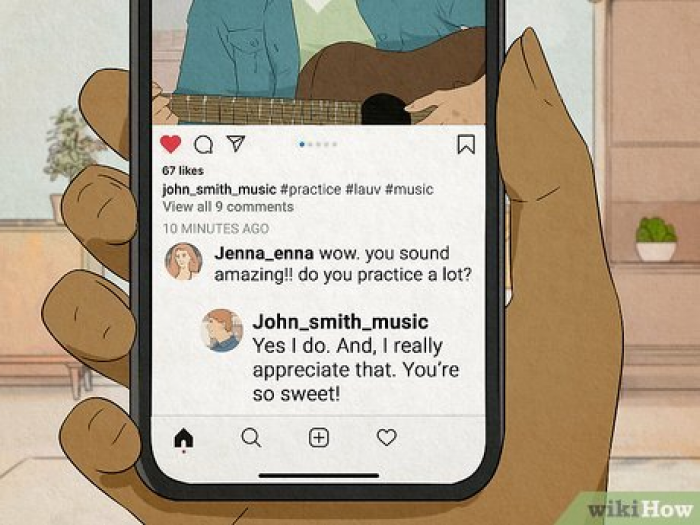
The mechanism is simple and mildly unflattering to all of us: a comment happens when the effort required drops below roughly five seconds of thinking, and there's some payoff to being seen saying it.
That's the whole formula. Effort down, identity payoff up. Almost every failed question post fails on one of those two axes either it demands original thought the reader isn't willing to produce for free, or answering it makes them look like nobody in particular.
Here are the formats that reliably clear both bars.
The narrow question
Broad questions get broad silence. "What do you think about remote work?" requires the reader to construct an entire position from scratch. "What's the one thing you'd quietly refuse to give up if your company mandated four days in the office?" hands them a slot to drop an answer they already have.
Narrowness does the work. Compare:
● Weak: "What's your best career advice?" the reader has to sort through a lifetime of possibilities and pick one worthy of public display. Too expensive.
● Strong: "What's the worst career advice you were ever given by someone who genuinely meant well?" specific, slightly funny, and most people have exactly one story queued up for this.
The pattern: add a constraint, a time frame, or a mild emotional charge. Constraints make answering easier, not harder.
The productively wrong take
State a position you can actually defend, but pitch it slightly against the consensus of your audience and leave one obvious hole in it. Correcting a smart person in public is one of the most reliable pleasures on the internet, and unlike an insult, it costs the corrector nothing.
Example: "Most 'personal brand' advice is just telling introverts to behave like extroverts and calling it strategy. If you're building an audience without ever showing your face or your voice, you're not building a brand you're building a newsletter."
That's arguable. It's also got a visible gap (plenty of faceless accounts are genuine brands), and people will pour into the comments to point it out. That's the design, not a flaw. The rule is that the take has to be one you'd defend at a dinner table. Manufactured contrarianism reads as manufactured, and readers punish it by scrolling.
The two-option split
The lowest-effort comment format in existence, and the one that most reliably lifts a flat account off the floor. Give people a binary and let them pick a side.
"Two kinds of people in every meeting: those who read the agenda beforehand, and those who read it during. No judgement. Which one are you?"
One word answers the question. It's near-zero cost, and the tribal element gives it a small identity payoff. Use this sparingly it produces volume, not depth but it's the right tool when a page has gone quiet and you need to remind the algorithm that people are still there.
The experience prompt
Ask people to report something they've lived through, not to form a fresh opinion. Memory is cheap to access; analysis is expensive.
"Tell me about the moment you realised you were going to quit not the day you resigned, the moment before that."
These threads run long because each answer is a story, and stories attract replies from other commenters, not just from you. This is where the deepest conversations happen, and it's the format most worth reaching for if you care about relationships over raw numbers.
The unfinished list
Publish four items and openly ask for the fifth. An incomplete artifact invites completion in a way a finished one never can.
"Four things I've stopped doing on client calls: sending an agenda no one reads, taking notes live, saying 'circle back', and scheduling anything for 60 minutes when 25 would do. There's a fifth I haven't figured out yet what would yours be?"
The trick is that the four you list must be genuinely good. Weak items make the reader think you're fishing. Strong items make them want to be on the list.
What actually makes someone share

Different currency, different mechanism. A share happens when your content does social work for the person sharing it.
Jonah Berger and Katherine Milkman's research on the most-emailed articles from The New York Times found that content producing high-arousal emotions awe, anger, anxiety, amusement travelled significantly further than content producing low-arousal states like sadness or contentment. Practically, that means the question isn't "is this useful?" It's "does passing this along make the sharer feel something worth broadcasting?"
The articulation post
The highest-value share format there is. You say clearly what your audience already believes but has never been able to phrase. The reaction you're aiming for is "finally, someone said it" and that reaction converts to a share almost automatically, because sharing it lets the reader express a belief in words better than their own.
To write one, listen for the complaint your audience keeps making badly. Then make it well, once, without hedging.
"'We're like a family here' has never once meant you'll be looked after. It means the boundaries you'd expect at work don't apply, and the compensation you'd expect at work is being replaced with belonging."
Hedging is what kills these. Every "of course, there are exceptions" you add is a reason for someone not to pass it on.
The useful artifact
A checklist, a template, a teardown, a pricing breakdown, a decision tree. These get shared for two reasons at once: passing them along is a favour to a colleague, and having found them first signals good taste.
Artifacts share best when they're finished and self-contained. If understanding it requires reading a thread and clicking a link and signing up, it won't travel the friction lands on the sharer's reputation, and they know it.
The single surprising number
One statistic, properly sourced, that contradicts something your audience assumes. Not five statistics. One. A post with a single number is screenshot-able, quotable, and easy to attach an opinion to when passing it on.
The sourcing matters more than people think. A sharer's implicit endorsement of your claim is exactly what they're risking, so a visible, credible source is what makes them comfortable spending it.
The defence post
Argue on behalf of a group your reader belongs to junior designers, small agency owners, working parents, people who still like email. Shares here are close to automatic, because passing it on says this is my group and someone stood up for us.
The failure mode is punching down. Defending a group by mocking another one gets you a burst of angry reach and a slow decline in the quality of your audience.
The compressed insight
An idea short enough to survive being screenshotted, repeated, and stripped of your name. It should read like something someone would say out loud in a meeting three weeks later.
"You don't have a content problem. You have a 'nothing you make is worth arguing with' problem."
Compression is a genuine skill and worth practising deliberately: write the idea in 60 words, then force it to 20, then to 12. What survives is usually the shareable version.
The rare posts that do both
They exist, but the recipe is narrow: make one firm claim, then open one honest door.
The firm claim carries the share, because a hedged post has nothing worth endorsing. The open door carries the comments, because a fully closed argument leaves nobody anything to say.
"Most engagement problems are actually opinion problems. If nothing you publish could plausibly be disagreed with by a reasonable person in your field, there's no reason for anyone to reply agreement is silent. Where I'm genuinely unsure is what this looks like in regulated industries, where a strong public opinion can carry real professional cost. If you work in one, how do you handle it?"
Claim first, uncertainty second, and the uncertainty must be real. Fake uncertainty at the end of a confident post the tacked-on "thoughts?" is transparent, and audiences read it as a request for free labour.
The same idea across platforms
The psychology holds everywhere. The mechanics don't, because each platform's ranking system rewards a different signal.
| Platform | Signal that drives reach most | What this changes about your post |
| Comments, especially early ones with substance | Lead with a claim, put the question in the last line, and reply properly to every comment for the first hour | |
| Instagram (feed/carousel) | Saves and sends to friends, more than public comments | Build a slide that's worth keeping; sends are the closest thing to a private share |
| X / Threads | Reposts and quote-posts | Compression matters most; the post has to work as a standalone screenshot |
| Facebook (groups) | Comment threads and replies within them | Experience prompts and local specificity outperform polished expertise |
| TikTok / Reels | Watch time first, then shares | The comment prompt has to be spoken in the first three seconds, not added as a caption |
| Upvotes plus comment depth | Any promotional framing kills both; the post must read as a genuine question or a genuine contribution |
The mistake worth avoiding is porting a post format across platforms without porting the mechanic. A LinkedIn-style claim-plus-question post dropped onto X reads as bloated. A punchy X-style compressed line dropped onto LinkedIn reads as thin.
What actively kills engagement
This section matters more than the idea lists, and it's the one most articles skip.
● Engagement bait is now a ranking liability, not a shortcut. "Tag a friend who…", "comment YES if you agree", and "share to win" are explicitly demoted across Meta's platforms and are treated as low-quality signals elsewhere. They also train an audience to interact without reading, which quietly ruins your data.
● Questions with no wrong answer produce no answers. "What's your favourite productivity tip?" has a thousand valid replies and therefore no stakes. Add friction pick one, defend it, rank them.
● Posts that answer themselves close the conversation. If you explain a topic exhaustively and end with "thoughts?", you've left the reader nothing to contribute. Deliberately leave a gap.
● Asking a question you clearly don't care about is visible. If you never reply to comments, people stop leaving them, and the drop-off is faster than most people expect. The reply is part of the post.
● Volume without a point of view. Posting daily with nothing arguable in any of it trains your audience to scroll past your name, which is far harder to undo than starting from zero.
Measuring it properly
Raw comment and share counts tell you almost nothing, because they scale with reach and reach fluctuates for reasons that have nothing to do with your writing. Use ratios instead.
| Metric | How to calculate | What it actually tells you |
| Comment rate | Comments ÷ reach | Whether your prompts are cheap enough to answer |
| Share rate | Shares ÷ reach | Whether your ideas are worth being seen endorsing |
| Conversation depth | Total replies ÷ top-level comments | Whether you're building a community or collecting one-word drops |
| Reply latency | Median time to your first reply | The single input you fully control |
Track these by post archetype, not by individual post. Ten narrow questions versus ten articulation posts over a month will tell you more about your specific audience than any general advice including this article. Most accounts discover they're unusually strong in one or two formats and mediocre in the rest, and the correct response is to lean hard into what works rather than maintain artificial variety.
The verdict
Go back to those two posts from the opening. The carousel was complete: well-designed, thoroughly explained, nothing left unsaid, and nothing anyone could disagree with. It was a monologue. The four-line post made a claim, left a hole in it, and asked a question the author actually wanted answered.
That's the whole difference, and it doesn't require better design, more frequency, or a bigger following.
Decide which currency you're asking for. Make it cheap to spend. And write things that a reasonable person could argue with because agreement, in every corner of the internet, is completely silent.
Comments