

Hashtags still matter on Instagram and TikTok, but not in the way many creators were taught to use them. Long blocks of broad tags are becoming less useful, while topic clarity, search language, and accurate categorization matter more.
The important difference is that Instagram and TikTok do not use hashtags inside identical discovery systems. A tag such as #SmallBedroomIdeas may appear on both platforms, yet the job it performs around the content can be quite different. A useful hashtag strategy therefore starts with the platform, not with a saved list of tags.
One Post, Two Systems
Let's take an example that a creator makes a short video called “3 storage ideas for a small bedroom with no closet.” The video could work perfectly well as both an Instagram Reel and a TikTok. The mistake would be assuming that the caption and hashtag strategy should also be identical.
On Instagram, the creator needs to think about where the post fits inside the account's broader subject matter. Is this a home-organization account, a rental-living account, an interior-design page, or a creator covering affordable home improvements? The hashtags help reinforce that categorization, but they sit alongside the caption, the visual content, previous account activity, audience behavior, and Instagram's recommendation systems.
TikTok has many of the same contextual signals, but its discovery culture makes search language particularly useful to think about. TikTok's own recommendation explanation says captions, sounds, and hashtags are among the pieces of video information used in recommendations, alongside much stronger behavioral signals such as user interactions and whether viewers keep watching.
TikTok has also built Creator Search Insights specifically around what people are searching for, including topics that may have a shortage of relevant content. Its newer AI Outline feature can even create titles, hashtags, hooks, and outlines from highly searched topics in Creator Search Insights.
The result is a subtle but important difference: Instagram hashtags often make the most sense as precise labels around a piece of content, while TikTok creators should think more aggressively about the language people use when they are actively looking for that subject.
Neither approach means hashtags control distribution. They simply help provide context to systems that are already reading many other signals.
Hashtags Are Context, Not a Reach Button
One of the most persistent social-media myths is that each additional hashtag gives a post another opportunity to reach a new group of people. That mental model is increasingly outdated.
The broader question of whether hashtags are still relevant is therefore less about whether they still “work” and more about the job they now perform inside search, classification, and recommendation systems.
Instagram moved decisively away from high-volume hashtagging in December 2025, limiting posts and Reels to five hashtags and encouraging creators to use fewer, more specific tags rather than large groups of generic ones. Instagram's own creator account announced the change, while Instagram head Adam Mosseri has also emphasized that hashtags are more useful for helping content appear in search than for directly increasing reach.
TikTok's guidance reaches a similar conclusion from a different direction. TikTok explicitly says that adding more hashtags does not guarantee wider reach and advises creators to choose tags that best describe the actual video. It has also stated that tags such as #FYP, #ForYou, and #ForYouPage work like other hashtags rather than providing a special route into the For You feed.
That changes how hashtags should be evaluated. A good hashtag does not tell an algorithm, “Show this to more people.” It provides another piece of evidence about what the content represents.
If the rest of the post sends weak or conflicting signals, a hashtag will not rescue it. A Reel tagged #BeginnerPhotography is not particularly useful to beginner photographers if the video itself is a vague lifestyle montage. A TikTok carrying #BudgetTravel will struggle to satisfy that audience if its hook, caption, and actual footage never establish a useful budget-travel idea.
The better question is therefore not “Which hashtags get the most reach?” It is “Which hashtags describe this content precisely enough to support the audience and search context already present?”
The Difference at a Glance
The platforms overlap more than many guides suggest, so it would be misleading to claim Instagram hashtags are only for categorization while TikTok hashtags are only for search. Both systems use multiple recommendation and discovery signals.
The difference is better understood as a matter of emphasis.
| Area | TikTok | |
| Hashtag limit | Posts and Reels are limited to five hashtags | TikTok advises relevance rather than simply adding more tags |
| Main strategic role | Precise topic and niche labeling within a limited tag set | Topic labeling combined with search behavior, trends, and viewer language |
| Search relationship | Keywords and hashtags can help Instagram understand and surface relevant content in Search | TikTok actively provides creators with search-topic and content-gap research through Creator Search Insights |
| Generic reach tags | Broad generic tags provide little useful specificity | TikTok says #FYP and similar tags do not guarantee For You placement |
| Best starting question | “What specific category does this post belong to?” | “How would a viewer describe or search for the problem in this video?” |
| Biggest mistake | Wasting limited slots on vague, overlapping tags | Treating trending or high-volume tags as substitutes for topic relevance |
Instagram's Search guidance has long advised creators to place relevant keywords and hashtags in captions because those signals can help content appear for matching searches. TikTok similarly identifies captions and hashtags as recommendation information, but its newer creator tools make search-demand research much more visible inside the creation process.
That is why copying the exact same hashtag block between the two platforms often misses an opportunity, even when the underlying video is identical.
Instagram Hashtags Need Precision
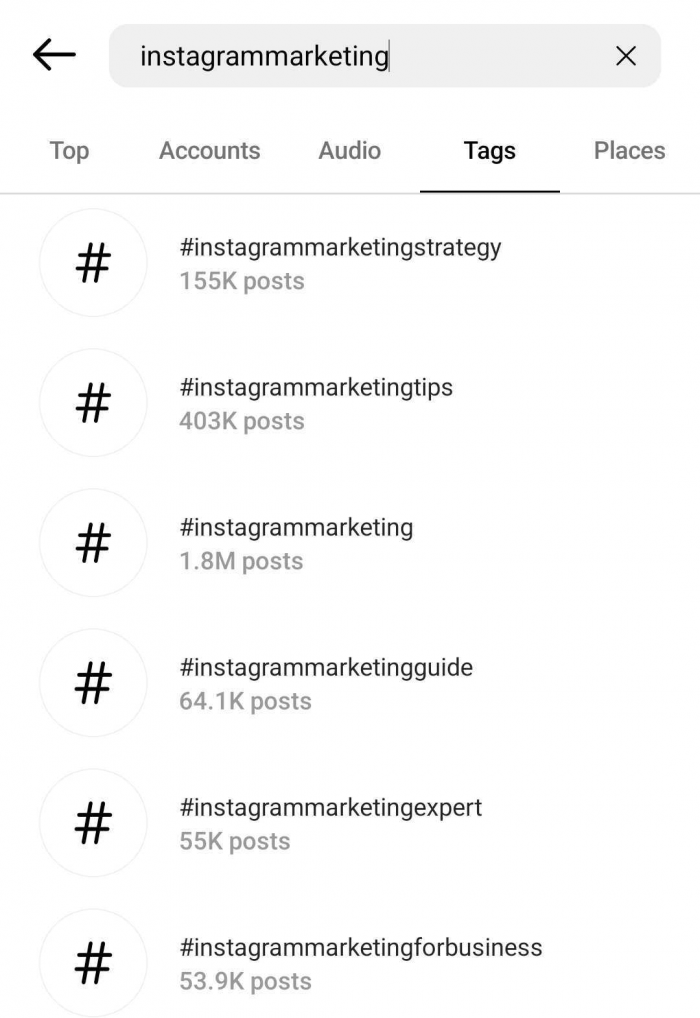
Instagram's five-hashtag limit completely changes the economics of tag selection. When creators could attach much larger groups of tags, it was common to mix broad, medium, narrow, location-based, branded, and experimental tags in the hope that one combination would help discovery. With only five available, every vague hashtag now consumes a much larger share of the available space.
Return to the small-bedroom video. A creator might consider a set such as:
#SmallBedroomIdeas #BedroomStorage #SmallSpaceLiving #HomeOrganization #RentalDecor
Those five tags describe several useful layers of the content without drifting very far from the actual subject. They identify the problem, the niche, and the context.
Compare that with:
#Home #Lifestyle #Viral #Inspiration #Reels
The second set covers enormous categories but tells Instagram relatively little about what makes this particular Reel distinctive. A person interested in “lifestyle” could be looking for fashion, food, travel, parenting, fitness, or almost anything else.
The limited tag count also makes the caption more important. If the video is genuinely about storage for bedrooms with limited closet space, the creator should write that naturally in the caption rather than expecting #BedroomStorage to carry the entire topic.
For example: “These three small-bedroom storage ideas work especially well when you have very little closet space.”
That sentence contains far more usable context than: “Obsessed with these ideas. Which one would you try?”
The second caption may invite comments, but it removes most of the descriptive language that explains what the post actually covers.
Instagram's search guidance specifically recommends relevant keywords and hashtags in captions. In practical terms, that means hashtags should reinforce a well-described post rather than compensate for a vague caption.
A useful Instagram tag mix
There is no universal five-tag formula, but creators can think about the available slots as different forms of specificity:
● Use at least one tag that describes the exact subject rather than the broad industry. For the example above, #BedroomStorage carries more information than #Home.
● Add adjacent niche tags only when the content genuinely belongs there. #RentalDecor makes sense if the ideas are suitable for renters; adding it purely because rental content is popular weakens the match.
● Reserve branded or series tags for content that benefits from internal organization. A recurring tutorial series may justify one consistent tag, but a barely used personal hashtag should not automatically occupy one of five slots.
The point is not to fill all five at any cost. It is to make each tag defensible.
TikTok Needs Search Language
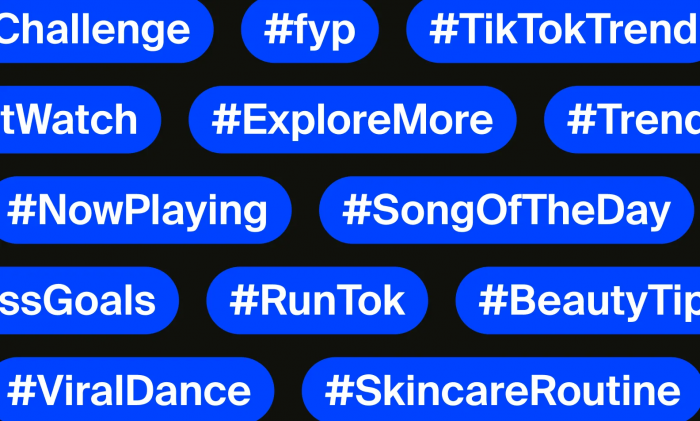
TikTok requires a slightly different way of thinking because users increasingly behave as searchers as well as feed viewers.
Creator Search Insights allows creators to explore subjects people are searching for and identify potential content gaps. TikTok's 2025 AI Outline release went further by connecting highly searched topics directly with suggested hooks, titles, outlines, and hashtags.
This creates a useful workflow: start with the viewer's problem, then make sure the wording around the video reflects that problem clearly.
For the bedroom-storage video, a weak TikTok caption might be: “You NEED these hacks 😍 #fyp #viral #trending.”
It contains excitement but very little searchable context.
A better version would be: “3 small-bedroom storage ideas for rooms with almost no closet space.”
Relevant hashtags could then support it: #SmallBedroomIdeas #BedroomStorage #SmallSpaceLiving
Notice that the stronger version does not depend on the hashtags to explain the video. The title or caption already states the subject in language a person might naturally type into search.
TikTok itself recommends using captions to provide context and adding hashtags that accurately represent the video. It specifically warns that more hashtags do not guarantee broader distribution.
That is an important distinction because it prevents creators from confusing search volume with search fit.
A high-volume hashtag may describe a large conversation while still being a poor match for a specific video. If someone searches #InteriorDesign and encounters a highly practical storage tutorial, the content may technically fit the broad category, but #BedroomStorage communicates the useful part of the video much more directly.
On TikTok, relevance becomes especially powerful when the caption, on-screen wording, spoken content, and hashtags all describe roughly the same problem.
One Video, Two Strategies
The same small-bedroom Reel can now be packaged differently without fundamentally changing the content.
Instagram version
The Instagram caption could emphasize the idea as something worth saving:
“Three small-bedroom storage ideas that make better use of vertical space when your closet is already full. The second one works especially well in rentals because it does not require built-ins.”
Hashtags: #SmallBedroomIdeas #BedroomStorage #SmallSpaceLiving #HomeOrganization #RentalDecor
The hashtags classify the Reel precisely, while the caption provides useful descriptive context.
TikTok version
The TikTok version could lead more directly with the viewer's problem:
“No closet space? Here are 3 storage ideas for a small bedroom that don't require built-in furniture.”
Hashtags: #SmallBedroomIdeas #BedroomStorage #SmallSpaceLiving
The TikTok version is phrased more like an answer to a recognizable search or feed-level problem. The tags support that intent without overcrowding the caption.
The actual hashtags overlap significantly, which proves an important point: the difference is not necessarily the words following the # symbol. The difference is the discovery strategy surrounding them. A creator does not need two completely separate hashtag universes. They need to understand why each tag is being used on each platform.
What Should Not Be Copied
Cross-posting the same short-form video can save a great deal of production time. Copying every piece of metadata without reconsidering it saves much less.
Several habits are particularly weak across the two platforms:
● Do not paste the same large saved tag collection beneath every post. Instagram now limits posts and Reels to five tags, while TikTok explicitly says adding more hashtags does not automatically broaden reach.
● Do not choose tags merely because they are huge. A broad tag can expose the content to a loosely related context, but it cannot make weakly matched viewers care about the post.
● Do not make hashtags responsible for explaining the topic. Captions, video content, on-screen text, and spoken language can provide richer context than a small group of tags.
● Do not assume #FYP is a TikTok distribution hack. TikTok has directly said that #FYP, #ForYou, and #ForYouPage do not necessarily increase the chance of entering For You feeds.
These problems go beyond cross-platform copying, and creators who want to audit their current approach can also look at the common hashtag mistakes that limit visibility, particularly around relevance, repetition, and overly broad tag selection.
The common thread is simple: hashtags should clarify content, not compensate for unclear content.
Stop Judging Tags by Views
Hashtag advice often becomes unreliable because creators attribute the success or failure of an entire post to one metadata choice.
A TikTok reaches 200,000 views after a creator adds three new hashtags, so the tags are declared a winning formula. Another Reel performs poorly after the creator changes its hashtags, so the new tags are blamed.
Neither conclusion is particularly strong.
TikTok's recommendation system uses many signals, including user interactions and video information such as captions, sounds, and hashtags. TikTok also states that a strong behavioral signal, such as a viewer finishing a longer video, can carry more weight than weaker contextual signals.
Its creator guidance similarly advises looking at broader analytics patterns rather than treating one metric or one video as definitive evidence. Hashtags should therefore be evaluated across groups of related posts.
If a creator regularly publishes home-organization videos, they can watch whether tightly relevant topics consistently attract the right non-followers, appear around relevant searches, and generate useful behaviors such as saves, shares, completion, or profile visits.
The aim is not to prove that one hashtag “caused” 15,000 extra views. That level of attribution is rarely possible from ordinary creator analytics. The aim is to build metadata that consistently matches the content with the right context.
A Better Cross-Platform Workflow
Creators who publish on both platforms do not need two complicated hashtag spreadsheets. They need a short process that forces them to define the content before choosing tags.
Start by writing the subject in one plain sentence. “Small-bedroom storage” is still broad; “storage ideas for small bedrooms with limited closet space” is much more useful.
Next, identify the words an actual viewer would use. Avoid industry language that sounds clever but is unlikely to describe the problem naturally.
For Instagram, turn that subject into a small group of precise categories. With only five available slots, weak or generic tags have a higher opportunity cost.
For TikTok, check whether the topic matches search behavior, and use Creator Search Insights when it is available to your account. Then write the caption around the actual question, need, or subject before adding relevant hashtags.
Finally, review performance across several comparable posts. One viral video can teach you something about the content, but it rarely proves that a particular hashtag formula should become permanent.
Which Platform Needs More Hashtag Work?
Neither. The useful difference is not that Instagram requires “five perfect hashtags” while TikTok requires endless research into trending tags. Both platforms are moving creators away from quantity-first hashtag strategies.
Instagram makes that shift unusually visible because it now caps posts and Reels at five hashtags. TikTok makes it visible through its emphasis on relevant tags, search-oriented creator tools, and recommendation signals that extend far beyond metadata.
For Instagram, think precise categorization. Use the limited tag space to reinforce what the post is clearly about. And for TikTok, think viewer language and discovery intent. Use hashtags as supporting context around a caption and video that already answer a recognizable question, interest, or problem. The same hashtag can be useful on both. The mistake is assuming it is doing the same job.
A better rule for cross-platform creators is simple: create one strong content idea, then translate its discovery language for each platform instead of copying its metadata unchanged.
Comments