

A post can rack up 300 likes and never leave its own comment section. Here's why likes and shares are two different games and how to write for the one that actually spreads. Likes feel like the goal, but they're a dead end. They tell you people saw the post and approved of it, then went right back to scrolling. The post stops with them.
A share does something else entirely: it hands your words to a whole new room of people who've never heard of you. That's the difference between being noticed and being spread, and almost nobody writes for the second one on purpose.
The Like Is Private. The Share Is Public.
A like is a quiet, low-stakes gesture. It lives inside the app, costs the reader nothing, and says almost nothing about them. A thumb tapped a button and moved on. Nobody's reputation is on the line when they like a post.
A share is a public act with the reader's name attached. When someone shares your post, it lands on their own timeline, in front of their friends, family, and coworkers, with an unspoken "I stand by this." That's a much bigger ask, which is exactly why most posts never earn it.
A like is a nod. A share is a recommendation with your name stapled to it.
Why "Shared" Is a Completely Different Goal Than “Liked”
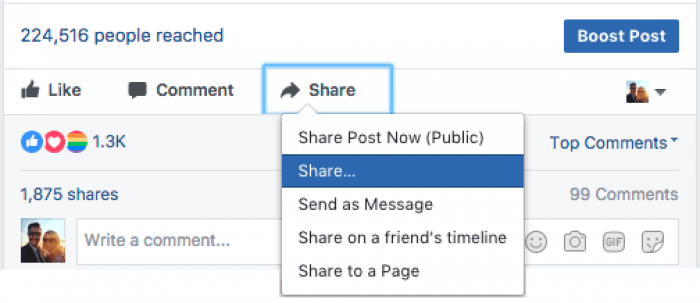
Writing for likes and writing for shares pull you in different directions. A like-optimized post just has to be agreeable in the moment. A share-optimized post has to be something the reader wants to be seen passing along.
Once you accept they're separate goals, you stop measuring the wrong thing. High likes with low shares isn't a small win, it's a signal that your post was pleasant enough to approve of but never gave anyone a reason to put their name on it.
| Action | What it costs the reader | What it signals | Where it goes |
| Like | A tap, zero risk | "I saw this, it's fine" | Stays on your post |
| Comment | A few seconds, mild exposure | "I have a reaction" | Stays on your post |
| Share | Public endorsement | "This represents me" | Travels to a new audience |
That last column is the whole point. Likes and comments keep your reach capped at whoever already saw the post; a share is the only button that breaks it out to people you'd never have reached on your own.
Every Share Is Secretly About the Sharer
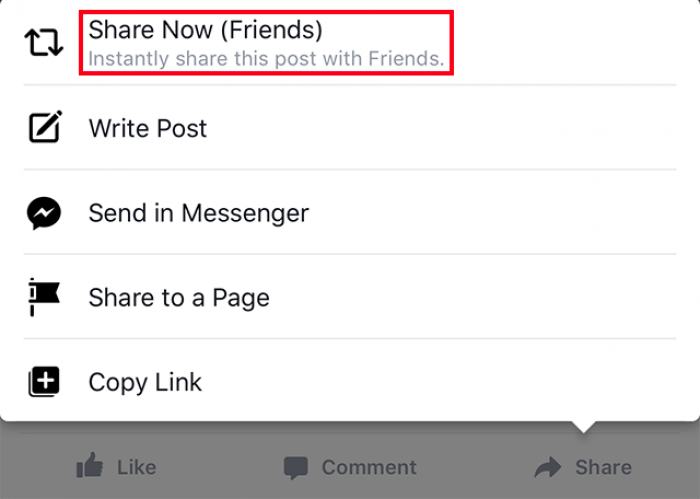
Here's the uncomfortable truth that changes how you write: people don't share your post because it's good. They share it because of what it says about them.
Every share is a small piece of self-expression. It tells the sharer's audience "this is the kind of person I am" someone smart, funny, caring, plugged-in, or bold enough to say the thing. Your post is really just a costume they get to wear for a moment in front of their friends.
So the practical question stops being "is this post good?" and becomes "who does the reader get to be when they share this?" Give them a flattering answer and the share becomes easy.
Write posts that make the sharer look good. You're not the star of the share they are.
The Handful of Feelings That Move a Thumb to "Share"
Not all emotions travel. Calm, pleasant, mildly positive feelings tend to stay put people enjoy them and scroll on. What actually pushes a thumb toward the share button is high-energy emotion, the kind that builds a little pressure the reader wants to release by passing it on.
Awe, righteous anger, pride, a sharp laugh, and that jolt of "this is so true" all share one trait: they're activating, not soothing. A post that makes someone feel something strongly enough that sitting still feels wrong is a post that moves.
● Awe and surprise get shared because the reader wants their friends to feel the same "wow" they just felt.
● Anger and indignation spread fast because sharing feels like taking a stand, not just having an opinion.
● Pride and identity ("this is us") get passed around by people who want to signal which side or group they belong to.
● Validation that "finally someone said it" feeling moves because the reader borrows your words to express their own view.
Aim for high-arousal emotion, not just "nice." Pleasant gets a like; intense gets a share.
People Share What They Wish They'd Said
One of the quietest engines of sharing is language. Plenty of people hold an opinion or a feeling they've never quite managed to put into words. When your post nails it for them, sharing it is how they finally say it.
This is why a sharply worded take on something ordinary parenting, work, a small daily annoyance often outperforms genuinely novel information. You didn't tell them anything new; you handed them the sentence they'd been reaching for.
The move here is to write the thing your reader already half-believes, but phrase it better than they could. Clarity and a little courage do more for shares than cleverness does.
Give readers the words for what they already feel. A borrowed sentence is an easy share.
The First Line Is the Whole Game
Facebook cuts your post off after a line or two and hides the rest behind "See more." That means your opening line isn't the introduction, it's the entire advertisement for whether anyone reads the next sentence at all.
A weak first line eases in slowly, sets context, warms up. By the time it gets interesting, the reader is three posts down. A strong first line drops them straight into tension, a bold claim, or a question they suddenly need answered.
Spend real time on line one. If it doesn't stop the scroll, nothing after it gets read.
Build In a Reason to Attach Their Name
A share-worthy post has a built-in trigger for a moment where passing it on does something for the reader, not just for you. Without that, even a good post has no engine behind the share.
The trigger is almost always social: the post lets the sharer make a point, back a side, tag someone it describes perfectly, or look like the friend who always finds the good stuff. You're handing them a reason that serves them.
● Write posts a reader can send to one specific person "tag someone who does exactly this" works because it turns your post into their inside joke.
● Take a clear stance readers already agree with, so sharing becomes a low-risk way for them to plant their own flag.
● Make the reader look useful or in-the-know, so sharing earns them a little credit with their own audience.
Ask what the reader gets out of sharing. If the answer is "nothing," rewrite until there's a payoff.
Write for the Skimmer, Not the Reader
Nobody reads Facebook carefully. They skim at speed, thumb moving, half-watching. A dense block of text reads as work, and work gets scrolled past no matter how good the writing inside it is.
Short lines, generous whitespace, and one idea per line let a skimmer absorb the shape of your post in a second and decide it's worth slowing down for. The structure does the persuading before the words even get a turn.
| Reads like work | Reads like a breeze |
| One long dense paragraph | Short lines with space between them |
| Several ideas crammed together | One idea per line, room to breathe |
| Point buried in the middle | Point sitting on its own line |
Format for the thumb. If your post looks like effort, it loses before it's read.
The Shape of a Post People Pass On
Posts that travel tend to share a rough skeleton, even across wildly different topics. It's not a rigid formula, but the beats show up again and again because they match how a reader moves through a post.
The pattern is simple: a hook that stops the scroll, a bit of tension or a relatable problem, a turn where you say the thing, and a clean line at the end worth repeating. Each beat hands the reader to the next one instead of letting them drift off. This structure also fits naturally into a broader Facebook content strategy built around stronger reach and engagement.
| Beat | Its job |
| Hook | Stop the scroll and earn the "See more" |
| Tension | Name a problem or feeling the reader recognizes |
| Turn | Deliver the insight, take, or payoff |
| Quotable close | Leave one line clean enough to pass along |
Give the post a shape. Hook, tension, turn, close each beat sets up the next.
End on a Sentence People Want to Steal
The final line does more work than any other. It's the note the reader is left holding when they decide whether to share, and a flat ending quietly kills a post that was doing everything else right.
The best closers are short, clean, and quotable a line the reader could paste into their own share caption and sound smart. When your last sentence feels like something they'd want to have said, the share becomes almost automatic.
Write a last line worth stealing. A quotable close is a silent "share me."
5 Tools to Write and Test Share-Worthy Posts
None of these write the post for you, and none replace understanding why people share. What they do is speed up the parts that are easy to get wrong the hook, the clutter, the research, and the image that earns the stop.
1. SmartPostly.com : Write & optimize
Smartpostly is the lead pick for the actual writing. It helps you draft and reshape Facebook posts with sharing in mind tightening the hook writing, trimming the fat, and testing angles so the post reads like something worth passing on rather than a first draft. Use it as your starting point, then edit in your own voice so it doesn't sound machine-made.
2. CoSchedule Headline Studio : The hook
Built to score and sharpen opening lines. Since your first line decides whether anyone reads the rest, running a few versions of it through a headline scorer is a fast way to catch a weak opener before you publish.
3. Hemingway Editor : Skimmability
Flags long sentences, dense phrasing, and anything that reads like effort. Paste a post in and it shows you exactly where a skimmer would stall, so you can cut it down to lines that move at scrolling speed.
4. BuzzSumo : Research
Shows what's already getting shared in your topic and format. Instead of guessing what resonates, you can see the angles and framings that earned real shares recently and borrow the pattern, not the post.
5. Canva : The visual
Handles the image or graphic that stops the scroll before your words get a chance. A clean, readable visual paired with a strong first line does more for shares than either does alone.
The Mistakes That Quietly Kill Shares
Most posts that flop on shares aren't badly written; they just quietly commit one of a few common own-goals. The frustrating part is that each one is easy to miss because the post still collects likes, so it looks like it worked.
Run a post that underperformed past this list and you'll usually find the leak. It's rarely one big failure; it's a small hole the share slipped out of.
The usual share-killers
● The post is too self-contained it wraps up so neatly the reader feels no pressure to pass it on to anyone.
● It reads as a sales pitch, and nobody wants to endorse an ad to their own friends by sharing it.
● It's pleasant but flat agreeable enough to like, never intense enough to move.
● The point is buried three lines deep, so the skimmer scrolls off before the good part ever loads.
● There's no line worth repeating, so even a reader who agreed has nothing to attach their name to.
Likes can hide a broken post. Diagnose by shares, and the real leak shows up fast.
How to Actually Tell If It's Working
The like count is the number that lies to you most. It goes up on almost anything decent and tells you nothing about whether the post traveled. To see if you're actually writing shareable posts, you have to watch a different set of signals.
The one that matters is your share rate relative to reach, and where that reach came from. A post that reached far because it was shared is behaving the way you want; a post that reached far only because you paid or posted at a busy time isn't teaching you anything repeatable.
● Compare shares to likes, not shares alone a rising ratio means your posts are getting more contagious, not just more visible.
● Watch how much of your reach comes from shares versus your own followers, since share-driven reach is the part that compounds.
● Notice which specific posts got passed around and look for the common thread the emotion, the format, the type of line then do more of that on purpose.
Judge posts by share rate and where reach came from. Likes flatter you; shares inform you.
Stop Writing to Be Liked. Start Writing to Be Repeated.
Writing for likes is writing to be approved of, and approval is a ceiling it keeps your post safely inside the room it started in. Writing for shares is writing to be repeated, and that's the only thing that carries you into rooms you were never in.
So before you hit post, ask the sharper question. Not "will people like this?" but "would anyone put their name on it?" because a like ends with the reader, and a share is where your reach actually begins.
Get that one shift right, post after post, and the numbers stop being a popularity score and start being a distribution engine. The likes were never the goal. They were just the part that felt like one.
Comments