

Not All Engagement Is Created Equal
Two posts can pull the same number of likes and perform nothing alike. One fades in a day. The other keeps surfacing on Explore three weeks later, quietly pulling in new followers while you sleep. The difference usually isn't the like count at all, it's what people did besides liking.
Likes, shares, and saves get lumped together under the word "engagement," but they're three separate behaviors driven by three separate motives. Treating them as one number is where most people go wrong. This piece pulls them apart and asks the only question that matters: which one should you actually care about?
Engagement Is a Hierarchy of Intent
Here's the frame worth holding onto for the rest of this article. Every engagement action costs the user something attention, effort, or a little bit of their own reputation. The more it costs, the more it tells you.
Think of the three signals as three kinds of currency:
● A like is approval. It's the cheapest thing a person can give you a thumb tap that says "this was fine" and costs nothing socially.
● A share is trust. When someone sends your post to a friend or reposts it to their Story, they're stapling their own name to it. That's a reputational bet, and people don't make it casually.
● A save is intent. A save is a private promise to come back. Nobody is watching, so there's no social payoff; it happens purely because the content is useful enough to keep.
So "which signal matters most" isn't really a question about Instagram. It's a question about what you're trying to achieve. Hold that thought we'll come back to it.
Decoding the Like: The Currency of Approval
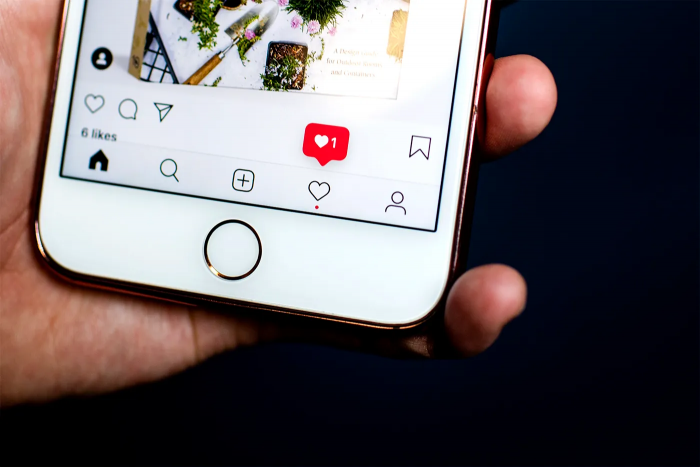
The like is the oldest signal on the platform and the most misunderstood. Because it's so easy to give, it's also easy to dismiss as a vanity metric and for measuring real impact, that criticism mostly holds. A wall of likes tells you people didn't dislike your post. It rarely tells you they'll remember it.
But writing off entirely is a mistake. Likes still do real work in one specific window: the first hour. When a post goes out, the platform is looking for early signs that it's worth showing to more people, and a fast cluster of likes is one of the quickest reads it has. Likes are the warm-up act, not the headliner useful for momentum, weak as proof of value.
Decoding the Share: The Currency of Trust
Sharing is the only engagement action that pushes your content beyond the people who already follow you. That alone makes it structurally different from a like or a save, both of which stay inside your existing audience.
It's worth splitting shares into two flavors, because they mean different things:
● Public shares : reposting to a Story or feed are a broadcast. The person is telling their whole audience "this is worth your time," which is a louder endorsement but a more considered one.
● DM shares : sending a post straight to one person are quieter but often stronger. Sending something to a specific friend means the content felt personally relevant to a real relationship. That's about as high-intent as social behavior gets.
Both tell the platform the same thing: this post was good enough to travel. Content that travels is content the algorithm wants more of, because reach is the platform's entire business.
Decoding the Save: The Currency of Intent

If the like is the loudest signal and the share is the most public, the save is the most honest. There's no audience for a save. Nobody sees it. A person saves a post for one reason only; they expect it to be useful to them, later.
That's why saves tend to cluster around a specific kind of content: things people want to reference or act on later. A recipe. A workout. A packing list. A useful piece of evergreen content. A “how I actually did this” breakdown.
It's also the signal that ages well. Likes and shares tend to happen in the first burst; saves keep trickling in as new people find the post over time which is often the fingerprint of content that has real staying power on Explore.
How the Algorithm Actually Weighs Them
The platform doesn't publish a scoreboard, and the exact weighting shifts constantly, so anyone quoting you precise percentages is guessing. But the underlying logic has stayed consistent, and it lines up neatly with the intent hierarchy: the harder a signal is to fake, and the more interest it implies, the more the algorithm trusts it.
By that logic, saves and shares generally carry more weight than likes, because they're costlier actions that indicate deeper interest. Where they rank relative to each other tends to depend on the surface:
● On Reels and Explore, where the goal is spreading content to strangers, shares are especially powerful because they're direct evidence a post can travel between audiences.
● On feed posts and saveable content, saves often carry the heaviest signal, since they mark the post as reference-worthy.
A caution worth keeping: Instagram changes its ranking behavior often, and its own guidance evolves. Treat the direction of these principles as reliable, but verify any specific claim against current sources before you build a strategy on it.
The Signal-to-Effort Ratio
Here's a cleaner way to think about all of this. Rank each signal by two things: how much effort it takes the user, and how much information that effort gives you in return. The two rise together and that's the whole point.
| Signal | Effort to give | What it tells you | How fakeable |
| Like | Almost none | "This didn't bother me" | Very easy |
| Share | Moderate puts their name on it | "My people should see this" | Hard |
| Save | Low effort, high commitment | "I'll need this later" | Nearly impossible to fake meaningfully |
Notice the pattern: the signals that are hardest to manufacture are the ones that mean the most. A thousand likes can be shallow. A hundred saves rarely are. When you measure your content, weight the rare signals heavier than the common ones. That's where the truth lives.
It Depends on Your Goal
Now we can answer the "which matters most" question properly, because the honest answer is: it depends on what you're building. A creator chasing reach and a business building authority should not be optimizing for the same signal.
| If your goal is | Prioritize | Because |
| Reaching new audiences | Shares | Only shares push content past your existing followers. |
| Building authority or a resource | Saves | Saves prove your content is worth returning to. |
| Warming up a community | Likes + comments | High-frequency, low-effort signals keep a base engaged and loyal. |
Pick your target before you judge your numbers. A post that gets saved constantly but never shared isn't failing, it's just doing a different job than a post built to go viral.
Content That Triggers Each Signal
Once you know which signal you're after, you can build content that naturally earns it. Different formats pull different behaviors:
● Content that gets saved is content people can't absorb in one pass step-by-step tutorials, checklists, dense infographics, resource round-ups, anything they'll want to act on later.
● Content that gets shared is content that says something about the sharer: relatable observations, a joke that fits a specific friend, a strong take, or even caption changes that make the idea easier to pass along. Sharing is partly self-expression.
● Content that gets liked is the quick emotional hit, a clean aesthetic, a satisfying moment, a feel-good image that earns a tap and a scroll-on.
One warning: you can design for a signal, but you can't fake the value underneath it. Which brings us to the part most guides skip.
When Chasing Signals Backfires
The moment a metric becomes a target, people start gaming it, and audiences feel it before the algorithm does. "Save this for later!" slapped on a post nobody wants to save doesn't produce saves it produces fatigue. Begging for shares, running constant "tag a friend" prompts, manufacturing fake urgency: these read as desperation, and platforms have gotten good at penalizing obvious engagement-bait.
There's a deeper trap too. If you optimize purely for saves, you can drift into making content that looks useful with endless checklists and "10 tips" carousels while slowly draining the personality that made people care in the first place. The metric is a map. It is not the territory. Content that's genuinely worth saving gets saved without being told to.
Reading the Signals Together
No single number tells the story. The real insight is in the ratios of how the signals stack up against each other and against your reach. A raw count is noise; a rate is a diagnosis.
A few combinations and what they usually mean:
● High saves, low shares: your content is useful but not spreadable. People keep it for themselves rather than passing it on. Great for authority, weak for growth.
● High shares, low saves: emotionally resonant and viral-friendly, but disposable. It travels far and gets forgotten fast.
● High likes, low everything else: pleasant and forgettable. People approved and moved on without a second thought.
Track save rate and share rate against reach rather than staring at totals. Ratios cut through follower-count vanity and show you what your content is actually doing.
A Diagnostic Framework for Your Own Content
Here's how to turn all of this into something you can run on your own account this week:
● Pull your top posts from the last few months and, for each one, note which signal dominated likes, shares, or saves. Don't average them; look at the shape.
● Match that shape against your goal. If you want to reach but your best posts are all saves and no shares, your content is useful but stuck inside your own audience that's a specific, fixable problem.
● Make one deliberate change and watch the ratio, not the raw number. Add a genuinely shareable angle to a save-heavy format, or add practical takeaways to a share-heavy one, and see which lever moves.
The goal isn't to max out every signal. It's to make sure the signal you're winning is the one your strategy actually needs.
The Verdict: Which Signal Matters Most?
If you want a straight answer instead of a shrug: saves and shares beat likes, almost always. They cost more, they're harder to fake, and they map onto the two things that actually grow an account: proving your content has lasting value, and getting it in front of people who don't follow you yet. Likes are a pulse check, not a growth engine.
Between saves and shares, there's no universal winner, and anyone who claims one is selling something. Chasing reach? Shares win. Building a resource people trust? Saves win. The signal that matters most is simply the one pointed at your goal and the real skill is knowing which goal you're playing for before you check the numbers.
Because in the end these are just proxies for something older than any algorithm: human attention, and the far rarer thing, human trust. The counts on the screen are only worth chasing when they stand for those. Get the trust right, and the numbers tend to follow on their own.
Comments