

You posted on a Wednesday at 11 a.m. because a guide told you to. It got fourteen likes. Then a throwaway Reel you dropped on a random Sunday night quietly pulled a few thousand views while you were asleep. So who lied to you, the guide, or the algorithm?
Neither, really. There is a best day to post, but it isn't a fixed square on the calendar. It's a moving window shaped by who follows you, where they live, what they came to your account for, and even which format you're publishing. This guide lays out every benchmark worth knowing for 2026 by day, hour, niche, format and region and then shows you how to replace all of it with the one schedule that's actually yours.
THE SHORT VERSION Midweek wins. Across nearly every large 2026 study, Tuesday, Wednesday and Thursday pull the strongest engagement, with Wednesday usually first. Friday and Saturday sit at the bottom almost everywhere. A safe starting slot is Wednesday around midday or Thursday at 9 a.m. Post 3–5 times a week across formats, keep Stories near-daily, and judge success by saves and shares rather than likes. But every number here is an average treat it as a starting bet, then let your own Instagram Insights overrule it. |
Why “best day” is trickier than a chart lets on
Almost every timing guide hands you one confident answer and moves on. The reason that answer keeps failing people is that it quietly ignores four variables that control everything:
• Your followers aren't in one place. If your audience is split between, say, New York and London, there is no single “best hour” 6 p.m. for one half is the middle of the night for the other. A universal chart assumes everyone shares your time zone, and almost no account actually does.
• Your niche runs on a completely different clock. A fitness coach's followers are scrolling at 5:30 a.m. before the gym. A software company's audience surfaces during weekday lunch breaks. A restaurant needs to catch people right before they decide where to eat. These peaks can sit eight hours apart.
• The content format shifts the timing. Reels, carousels and Stories don't peak together. Reels earn attention later in the day and keep spreading for days; Stories reward daily consistency far more than a perfectly chosen minute.
• Instagram stopped rewarding “post at the exact right second” years ago. The feed is interest-based, not chronological, so a strong post can keep travelling hours or days after you hit publish. What the platform leans on heavily now is sends per reach how often people DM your post to a friend. That reframes the whole question: you don't just want people online, you want them online and in the mood to share.
That last point is the one most guides skip, and it's the most useful. Chasing the minute of peak scrolling matters less than posting when your audience is likely to actually do something save it, send it, comment. A slightly quieter hour full of engaged followers beats a busy hour full of half-asleep thumbs.

What the data actually says (and where it argues with itself)
Four or five major studies ran the numbers in 2026, together covering well over 19 million posts and billions of interactions. They broadly agree on the shape of the week and then split, sometimes dramatically, on the exact hours. That disagreement is worth understanding, because it tells you something the individual headlines don't.
| Study | Sample | Top day(s) | Standout finding |
| Buffer | 9.6M posts | Wednesday, then Thursday | Strongest single slots were Thursday 9 a.m. and Wednesday noon |
| Sprout Social | Large panel | Tuesday, Wednesday | Midweek afternoons drive the steadiest engagement |
| Hootsuite | 1M+ posts, 118 countries | Early week, afternoons | Two daily peaks: early morning and early evening |
| Metricool | 2026 study | Weekdays | 6–9 a.m. sweet spot; 8 p.m. drew the most views |
| Later | 6M+ posts | Monday | The outlier 5 a.m. beat every other hour |
Notice that Buffer says Wednesday noon and Later says 5 a.m. Monday. They can't both be universally right, and they aren't they're describing different slices of Instagram. Later's early-morning result likely reflects a creator-heavy, globally spread audience, where a 5 a.m. post in one region lands in prime evening scrolling somewhere else. Buffer's midday result leans toward business accounts posting to a working audience.
The takeaway isn't “pick the study you like.” It's this: the studies converge on the week (midweek good, weekend weak) and scatter on the hour which is exactly the signal that the hour is the part you have to work out for yourself.
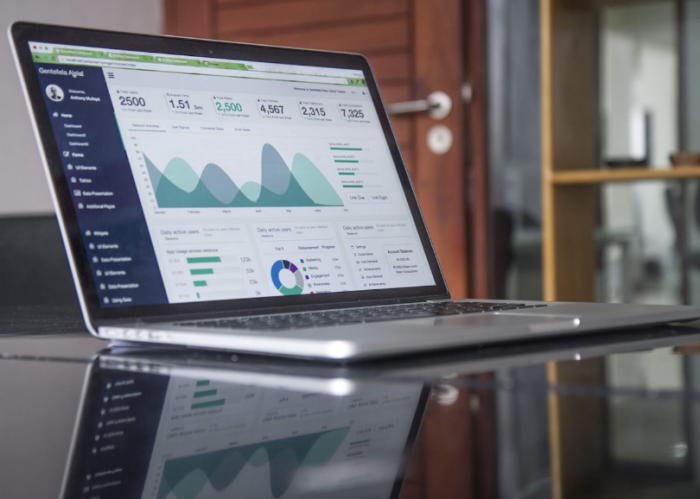
The best day, hour by hour
Zoom in and the week has a clear texture. These windows synthesise the day-by-day findings across the major studies, in your audience's local time. Treat them as the middle of a range your own peak can sit an hour or two either side.
| Day | Strongest window(s) | What's happening |
| Monday | 3–9 p.m. | Slow to start; picks up as people re-enter the week |
| Tuesday | 5–8 a.m. and 3–7 p.m. | Two clean peaks a reliably strong day |
| Wednesday | 11 a.m.–1 p.m. and 5–6 p.m. | The best all-rounder, with the widest active window |
| Thursday | 9 a.m. and 4–7 p.m. | Morning posts punch above their weight here |
| Friday | Late morning | Attention drifts to the weekend after lunch |
| Saturday | 10 a.m.–12 p.m. | Weekend-friendly niches only; quiet otherwise |
| Sunday | 5–7 p.m. | “Planning the week” browsing strong for the right content |
Underneath all of it is one simple pattern: two daily tides. An early-morning surge as people wake and check their phones, and a late-afternoon-to-evening surge as work winds down. Most “best time” results are really just one of those two tides for a particular audience. Post slightly ahead of the tide you're aiming for, so your content is already sitting in the feed when the wave arrives.
Best days and times by niche
This is where a general chart stops being useful and niche thinking takes over. A food brand and a B2B consultant should not share a schedule. The windows below are strong starting points from the 2026 niche data but pay as much attention to the “why” as the times, because that logic is what survives when next year's numbers shift.
| Niche | Strong days | Best windows | Why it lands then |
| B2B / SaaS / tech | Tue–Thu | 11 a.m.–3 p.m. | Buyers scroll on work breaks; keep it in business hours |
| E-commerce & fashion | Tue–Thu, Sun | Lunch and 6–9 p.m. | People browse and buy after work and on the Sunday reset |
| Food & beverage | Weekdays, Fri | 11 a.m.–2 p.m.; 5–7 p.m. | Hit appetite right before a meal decision |
| Fitness & wellness | Tue, Wed, Sat | 5–7 a.m.; noon; post-work | Tied to workout routines morning prep, evening recovery |
| Creators / travel / lifestyle | Sat, Sun | Sat mornings; Sun 5–7 p.m. | Weekend browsing and “planning my week” energy |
| Local business | Tue–Thu | 10 a.m.–12 p.m.; 4–7 p.m. | Reach nearby people before lunch and the commute |
A few of these deserve a note, because the mechanics matter more than the numbers:
• Fitness is the one niche where dawn genuinely works. For most accounts, a 6 a.m. post lands in empty pockets on a commute. For fitness, it's the opposite that's exactly when the people who care are lacing up and looking for motivation. The audience defines the window, not the clock.
• Food is about intent, not attention. An 11:30 a.m. lunch post isn't timed for peak traffic; it's timed for peak hunger, when the people online are about to make a decision you can influence. Time the appetite, not the crowd.
• Sunday evening is quietly a great weekend slot for the right niches. Recipe saves, travel inspiration, fitness plans and wishlist products all ride the “getting my week together” mood between roughly 5 and 7 p.m. A B2B product update in that same window vanishes.
• Weekends aren't dead, they're selective. Business and education drop off hard on Saturday. Entertainment, travel, food and lifestyle hold up fine. “Avoid the weekend” is only good advice if your niche sits on the wrong side of that line.
Timing changes with the format
A Reel, a carousel, a single photo and a Story are four different products with four different lifespans. Handing them all the same posting time is a quiet mistake.
| Format | Best windows | What actually drives its reach |
| Feed photo | Right at your audience's peak | Most reach lands in the first hours timing matters most here |
| Carousel | Same peak windows, more forgiving | Every swipe is another signal; strong for saves and shares |
| Reels | Late morning to evening; long tail | Watch time and shares the exact minute matters least |
| Stories | Evening 6–9 p.m.; midday for B2B | Daily consistency beats timing; judged on completion rate |
The logic is worth internalising. Reels are Instagram's discovery engine and keep resurfacing for days, so a perfect publish minute barely moves the needle quality and watch time do. Feed photos, by contrast, collect most of their reach up front, so timing them to your peak matters most. Carousels are the quiet overperformer: because each swipe counts as an interaction, they hand the ranking system more to work with and tend to earn saves. And Stories aren't an event at all they're a rhythm. Show up most days and stop agonising over the hour.
If your audience is global, post to the overlap
Most of the big studies normalise their results to local time, so “noon Wednesday” means noon wherever you happen to be. The real complication isn't the clock it's a split audience. Here's roughly where common regions peak:
| Region | Typical peak (local time) |
| United States | Weekdays 9 a.m.–3 p.m. ET, plus 7–9 p.m. local in the evening |
| UK & Europe | 11 a.m.–2 p.m. and 6–9 p.m. local; midweek strongest |
| India & South Asia | Evenings 7–10 p.m.; Saturday around 8:30 p.m. is strong |
| Middle East | Evenings 8–11 p.m.; the weekend shifts to Friday–Saturday |
| Australia | Commute windows 7–9 a.m. and 5–7 p.m. |
If half your followers are in New York and half in London, there is no single perfect hour so you look for overlap instead. A post at 12 p.m. Eastern is 5 p.m. in the UK, catching Americans at lunch and Europeans after work in the same critical first hour. Open your Insights, find your two biggest regions, then either anchor to the more valuable one or publish in the window where both are awake. Trying to serve every time zone equally usually means serving none of them well.
How often should you post?
Timing decides when a single post goes out; frequency decides whether you build any momentum at all. The number almost everyone converges on and it matches guidance from both Buffer's data and Instagram's own Adam Mosseri looks like this:
| Format | Sensible cadence | Why |
| Feed posts (photos / carousels) | 3–5 per week | Enough fresh signal without burnout; prioritise carousels for saves |
| Reels | 3–5 per week | Your main route to non-followers quality over quantity |
| Stories | Near-daily (1–2+ a day) | Keeps you top-of-mind; measured on completion, not likes |
| Lives | 1–2 per month | Optional good for community and depth |
The honest answer, though, is that the right frequency is the highest one you can sustain at a quality your audience still engages with. Seven forgettable posts lose to three that earn saves and shares. And to clear up the most common myth: there is no secret “posting too much” penalty; the ceiling is your own quality and stamina, not an algorithmic punishment. Consistency is the real lever. A steady three posts a week for six months will beat a viral week followed by a month of silence, every time.
A consistent schedule is easier to maintain when the content is planned ahead. A simple content calendar can help balance formats, campaigns and posting windows without turning every publish day into a last-minute decision.
Seasons, launches and when to re-test
Your best window isn't a setting you configure once. It drifts, and a few predictable things move it:
• The calendar shifts attention. School terms, holidays, daylight hours and travel season all change when people scroll. A slot that worked in January is worth re-checking in June.
• The goal changes the target. For a product launch you want the single busiest hour, for maximum first-minute velocity. For a community question or a poll, post when replies are most likely which may be a quieter, more engaged window rather than the loudest one.
• Growth changes the map. As your audience expands into a new country or age group, your peak can move without warning. Re-audit a couple of times a year, or after anything big a major algorithm change, a growth spurt, or a real shift in what you post.
How Instagram decides who sees your post in 2026
It helps to know what timing is actually a lever for. The feed hasn't been chronological in years, so the exact second you publish matters less than it once did. What governs reach now starts with early velocity: Instagram watches the first 30–60 minutes closely, and fast, strong engagement in that window tells it to push your post to more people. This is the real reason timing matters at all you want to publish when your people are around to react quickly.
After that, a handful of engagement signals do the real work. The single most important one now, per Head of Instagram Adam Mosseri, is how often people DM your post to someone else, relative to how many saw it. It's the digital version of "you have to see this," rewarding content worth passing on rather than just content worth glancing at. Saves and watch time sit close behind: a save says "worth coming back to" and watch time on a Reel says "worth finishing," and both carry more weight than a like, which is why likes are the first metric to stop trusting.
The last piece is the interest graph. Instagram shows content to people who engage with similar things, not just your followers, and a strong post keeps spreading for hours or days. That long tail is exactly why one perfect minute matters less than sustained quality. The practical upshot: timing is a lever for early velocity, and early velocity is a lever for reach. It multiplies good content. It cannot manufacture it.
Timing gets the post in front of people, but the caption still has to earn a response. Understanding how to write Instagram captions that drive comments, saves and shares can help turn that early exposure into stronger engagement and wider reach.
How to find your own best day
Every benchmark above is a hypothesis. Here's how to replace it with your account's real answer which, once you have it, beats any study ever published.
1. Read what Instagram already knows
Open your profile, go into the professional dashboard (or Insights), tap into your total followers and scroll to Most Active Times. You'll get a breakdown by day and by hour, built entirely from the people who actually follow you. If it shows a clear Thursday-evening spike, that fact outranks anything a global chart says. Post slightly ahead of those peaks, not into the middle of them.
2. Run a real test, not a vibe check
Pick two or three candidate windows from your Insights and the niche table above. Post the same type of content into those slots over three to four weeks, keeping everything else as steady as you can. One or two posts prove nothing engagement is noisy, and a single viral fluke or dead post will lie to you. You're looking for a pattern that repeats, not a lucky day.
3. Judge by the right number
Likes are the metric to stop trusting first. In 2026 the signals that move reach are the ones that show real intent:
• Sends and shares someone DMing your post to a friend is the strongest vote of confidence there is, and Instagram treats it that way. Track sends relative to reach.
• Saves a save means “I want to come back to this,” which the algorithm reads as durable value. Educational and how-to content lives or dies here.
• Early comments and velocity engagement in the first half hour tells Instagram whether to keep pushing. A slot that reliably produces fast early comments is doing more for you than one with a higher final like count.
Whichever window wins on those numbers is your best time regardless of what the charts predicted.
Tools that make this easier
You can do all of this by hand, but a few tools remove the friction that makes people give up. Start with Instagram's own, because they're free and built from your real followers: the professional dashboard shows Most Active Times, and Insights shows per-post saves, shares and reach. Get comfortable reading those before you pay for anything else they're the closest thing to ground truth about your audience.
Once you're posting often enough that manual scheduling starts eating your week, a scheduler earns its place. Tools like Buffer, Later and Metricool all publish automatically in your audience's local time and include a "best time to post" suggestion that reads your own history rather than a global average which is exactly the personalised signal this whole guide is chasing. Pick one, let it handle the clock, and stop setting alarms to hit publish.
The other half of the battle is planning, and that's where a content-calendar tool helps. SmartPostly's calendar generator, for instance, auto-builds a social content calendar in seconds and sits alongside its caption and hook generators, so you can map out a week or two of posts in one sitting instead of staring at a blank grid. Whatever you land on, the workflow that keeps people consistent is the same: batch-create in one session, queue everything, and separate the creative work from the daily scramble of remembering to post at the right moment.
Mistakes that quietly cap your reach
• Copying a competitor's schedule. Their followers aren't your followers. Unless your audiences are nearly identical, their peak hour is just noise to you.
• Optimising for likes. In 2026, saves and sends move reach; likes barely register by comparison. Picking a time slot because it earns more likes can send you in the wrong direction entirely.
• Believing in one golden hour. There's no magic minute there's a decent window, and most posts inside it perform within the same range. Agonising over 11:00 versus 11:15 is effort spent in the wrong place.
• Giving up on a slot after one flop. A single weak post isn't data. Give a time window at least a few weeks before you rule it out.
• Ignoring where your audience lives. A perfectly timed post to the wrong time zone reaches sleeping phones. Check your top regions before locking in a schedule.
• Letting timing distract from the content. Perfect timing can't rescue a weak post. The schedule decides how many people get the first look; the content decides whether that look turns into anything.
The verdict
The honest one-liner: post midweek, lean toward Wednesday and Thursday, keep your best work off Friday and Saturday and then stop trusting that advice the moment your own Insights say otherwise. The “best day to post on Instagram” isn't a secret someone's keeping from you. It's a small experiment you run on your own account, judged by saves and sends rather than likes, and re-run every few months as your audience shifts. The benchmark gets you into the right neighbourhood. Your data hands you the address. And keep timing in proportion. The right hour helps a good post travel further; it can't turn a forgettable one into a hit. Nail the content first, show up consistently, and let timing be the multiplier it actually is, not the miracle it's often sold as. |
Comments