

Instagram search works best when the platform can quickly understand what an account covers and what an individual post is about. Hashtags can still provide context, but they are no longer enough to carry discovery on their own.
A stronger search strategy connects profile positioning, captions, on-screen text, topic consistency, location signals, and content quality. The objective is simple: make the subject clear enough that Instagram can match the content to relevant searches and useful enough that people stay once they find it.
Understand What Instagram Needs to Identify

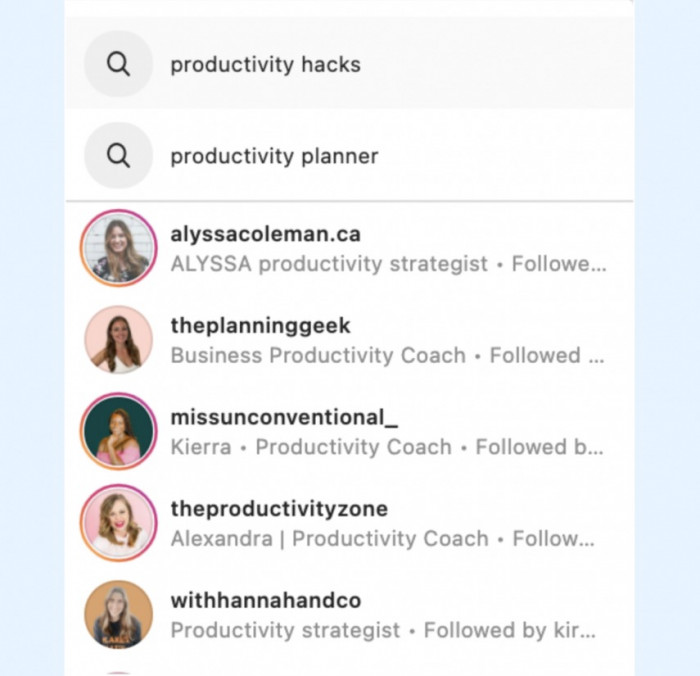
Search starts with relevance. When someone types a phrase into Instagram, the platform needs enough information to decide which accounts and posts are connected to that query. That information can come from profile names, bios, captions, content context, locations, hashtags, and previous user behaviour.
This means discoverability is built across the account rather than inside one hashtag block. A food creator whose name, bio, captions, and posts consistently focus on quick vegetarian meals gives Instagram far more useful context than an account posting unrelated topics and adding #vegetarianrecipes underneath one Reel.
| Search element | What it communicates |
| Profile name and bio | The account's broader subject and positioning |
| Captions | The specific topic covered by each post |
| Reel or carousel text | The main idea visible inside the content |
| Location information | Geographic relevance |
| Content history | Topics the account covers repeatedly |
| Hashtags | Supporting categorization |
The practical goal is not to place a keyword everywhere. It is to make every major signal point in the same direction.
Build Content Around Search Intent
Broad topics are rarely useful enough on their own. Search strategy improves when a creator understands what someone wants after typing a phrase.
Take Instagram captions as an example. Someone searching those words could want caption hooks, product captions, short captions, business captions, or ideas for Reels. An account targeting the broad phrase without understanding the need behind it will usually produce equally broad content.
A more useful approach is to build posts around specific intent:
● Instagram captions for product launches.
● Reel hooks for educational content.
● Short travel captions that do not sound generic.
● Calls to action that encourage comments without sounding forced.
Specific topics help in two ways. They make the post easier for Instagram to categorize and give the reader a clearer reason to open it. Search content performs better when it solves a defined problem rather than simply mentioning a popular keyword.
Make the Profile Easy to Understand
Search optimization should start with the profile because every post sits underneath it. A vague account description weakens the context surrounding otherwise strong content.
The profile name should identify the creator or business clearly, while the name field and bio can explain the area of focus. A well-structured Instagram bio can reinforce that positioning without turning the profile into a block of keywords. Keyword stuffing is not necessary. A readable description is usually more useful.
For example, this profile:
Maya Patel
Creator | Growth | Digital | Social
contains several broad terms but says very little.
A clearer version would be:
Maya Patel | Social Media Strategist
Instagram and short-form content ideas for small brands.
The second version communicates profession, subject, and audience without sounding written for a search engine.
A strong profile should answer three things quickly: what the account covers, who the content is for, and what someone can expect to find after following. If those points are unclear, adding more keywords usually makes the bio busier rather than more searchable.
Write Captions That Describe the Actual Post
Captions are one of the easiest places to improve search clarity because many Instagram posts still rely on vague teaser copy.
A caption such as:
This changed everything. Save it for later.
creates curiosity but gives almost no information about the topic.
A more useful version would be:
Three Instagram Reel hooks that can improve the opening of educational videos and give viewers a clearer reason to keep watching.
The second version naturally contains relevant language without repeating the same phrase. More importantly, it tells readers exactly what they are about to get.
Search-friendly captions should be descriptive rather than stuffed. Mention the topic early enough that the subject is clear, then use the rest of the caption to explain the idea. Strong Instagram captions can add context without making the wording feel written purely for search, or provide details that the visual content could not cover.
Specific writing usually performs this job better than generic optimization. “Easy indoor product photography using window light” gives Instagram and the reader more usable information than “Try this photography trick.”
Use Clear Topic Signals Inside the Content
Search context should not exist only in the caption. Reels and carousels can make their subject obvious through title cards, headings, spoken explanations, and supporting visuals.
A Reel about carousel design should ideally include language connected to carousel design inside the content itself. The title card might say “How to Make Instagram Carousels Easier to Read”, while the Reel explains spacing, slide hierarchy, and text size. The caption can then expand on those points rather than repeating the same phrase.
This creates consistency across the post. The content, caption, and profile all reinforce the same subject.
The same principle applies to carousels. A first slide titled “Three Ways to Improve Reel Retention” is more useful than a vague opener such as “You Need to Fix This.” Clear headings help people understand the post immediately and reduce the amount of interpretation Instagram needs to do.
Build Depth Around a Topic
Accounts become easier to understand when they repeatedly cover related subjects from different angles.
A creator focused on Instagram captions could publish posts about caption hooks, product captions, emoji use, calls to action, caption length, Reel captions, Story captions, and common writing mistakes. Each post is different, but all of them strengthen the same broader subject.
This is more useful than chasing unrelated search terms simply because they appear popular. Topic depth creates a clearer account identity and also makes it easier for someone who finds one useful post to discover another relevant one.
The goal is not repetition. A good topic cluster explores different problems within the same area. If every post says the same thing with a different headline, the account will feel repetitive even if the keywords are technically consistent.
Match the Format to the Search
The format matters because people do not want every answer delivered in the same way. A visual demonstration usually works better as a Reel. A checklist or comparison is often easier to consume as a carousel. A local recommendation may work well as a Reel or photo post with strong location context.
| Search need | Better format |
| Quick demonstration | Reel |
| Step-by-step explanation | Carousel |
| Checklist | Carousel |
| Visual inspiration | Photo or carousel |
| Before-and-after result | Reel or carousel |
| Local recommendation | Reel or location-focused post |
The format should make the answer easier to understand. A Reel promising a tutorial should show the process, while a comparison carousel should make differences visible without forcing readers to search through long caption text.
Matching format to intent makes search traffic more useful because the content immediately feels appropriate for the query.
Make the Post Worth Finding
Search optimization fails when the title is relevant but the content is weak.
If a Reel is titled “How to Improve Instagram Reel Retention,” it should begin with retention advice rather than spending the opening seconds on an unrelated introduction. The viewer searched for a specific answer and should receive it quickly.
The same applies to carousels. A post titled “Five Caption Hooks for Product Launches” should show actual hooks and explain when they work. Filling the slides with broad motivational advice weakens the value of the result even if the headline contains the right keyword.
Useful search content normally has three qualities: it matches the query, gets to the point quickly, and provides enough substance to justify the click or view. Saves, shares, watch time, profile visits, and follows can then become useful indicators of whether the content actually satisfied the audience.
Give Local Search Proper Context
Local businesses need to make location as clear as the service they provide. A wedding photographer who never mentions Jaipur, a café that does not identify its neighbourhood, or a fitness coach with no service area listed gives Instagram limited local context. This makes it harder to connect the account with location-based searches.
Local accounts should use relevant geographic information naturally across the profile and content. That can include a city or service area in the bio, location names in appropriate captions, geotags, accurate business categories, and posts that consistently show work from the area.
For example, “Wedding photographer in Jaipur specializing in small destination ceremonies” is much more informative than “Capturing your special moments.”
The first version tells both the potential customer and Instagram what the business does and where it operates.
Use Hashtags as Support, Not the Strategy
Hashtags can still help categorize content, connect branded campaigns, support event discovery, and add another layer of context. They are simply less useful when treated as the main discovery system.
A clear post about beginner sourdough baking should already communicate that topic through the content and caption. A few relevant hashtags can support the classification, but a large block of tags should not be responsible for explaining what the post is about.
This is also a useful quality check. Remove the hashtags temporarily and look at the post again. If the subject becomes unclear, the content itself needs stronger context.
The better approach is to build discoverability into the post first and treat hashtags as an additional signal rather than a substitute for clear writing.
Common Instagram Search Mistakes
Most search problems come from weak context rather than missing keywords. Common mistakes include:
● Writing captions that rely on curiosity but never state the actual subject of the post.
● Filling the bio with broad terms that do not explain what the account really offers.
● Targeting very broad phrases without understanding the specific search intent behind them.
● Using strong titles that promise more than the content delivers.
● Posting unrelated topics so frequently that the account has no clear subject identity.
● Relying on hashtags to provide context that should already appear in the content.
● Ignoring location information even when the business depends on local customers.
● Repeating the same keyword unnaturally instead of using related, descriptive language.
A better workflow is straightforward. Identify what the audience may search, understand what they expect to find, choose a suitable format, make the subject clear in the post, write a descriptive caption, and add relevant profile or location context where needed.
Before publishing, check whether someone who knows nothing about the account could understand the topic without relying on hashtags. If the answer is yes, the post is already much better prepared for search.
Final Perspective
Instagram search visibility comes from clear context, not keyword tricks. Profiles should explain what the account covers. Captions should describe the actual post. Reels and carousels should make their topic obvious. Related posts should build depth around recognizable subjects, and local businesses should make geographic relevance easy to identify.
Hashtags can still support discovery, but they should not carry the strategy. The strongest search foundation is content that is easy to categorize, easy to understand, and useful enough to justify appearing when someone searches for that topic.
Comments