

Most small businesses skip Facebook Stories for one reason: they assume the format needs something new to announce every single day. A florist isn't launching products weekly. A tax accountant goes quiet for months at a stretch. So the Stories tray sits empty, and a shaky assumption hardens into a rule: no news, no Story.
That rule is wrong, and it quietly hands away the most visible slot on Facebook. Stories reward showing up with a bit of personality on a steady rhythm, not breaking news nobody was waiting for. Everything below is written for businesses that post two or three times a week at most, and every idea is one you can use without inventing a single thing to "announce."
Why Posting Less Can Work in Your Favor
High-volume brands have a problem you don't: fatigue. When a page posts five Stories a day, each one gets a lighter tap-through and people start swiping past the profile picture out of habit. Scarcity flips that. If you only appear twice a week, your Story carries a small sense of occasion. There's a reason it's there.
The 24-hour expiry works in your favor too. A Story that vanishes by tomorrow never looks stale, so you're not penalized for gaps the way you would be with a thin, abandoned feed. An empty week between Stories reads as normal; an empty week on your main feed reads as "are they still open?"
There's a quieter advantage as well. Because you're not feeding a daily machine, you can actually put thought into the few Stories you do post. One well-made poll or a clear behind-the-counter clip will almost always beat seven rushed ones.
What Facebook Stories Actually Reward
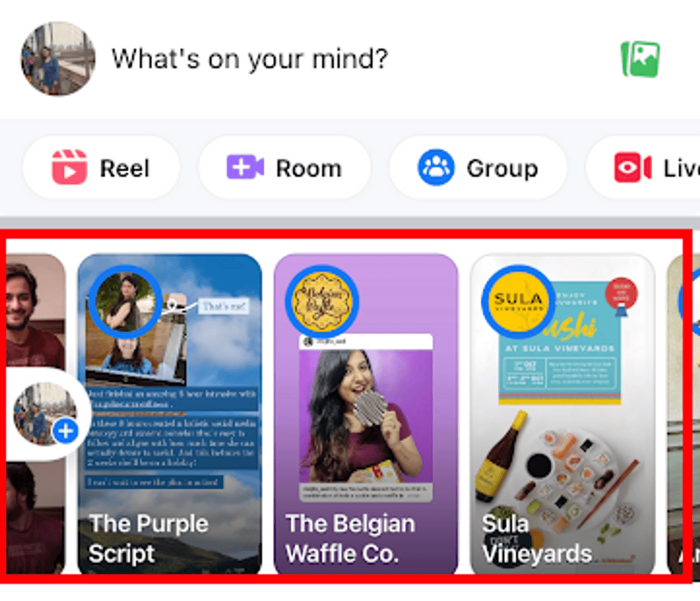
Before you plan a single Story, it helps to know what the format is rewarding, because it isn't the same thing your feed rewards. Stories live at the very top of the app, above the feed, in that row of circles people check first. That placement alone means one good Story a week lands in prime real estate without fighting the feed algorithm for reach.
Inside that slot, two signals matter more than likes ever will. The first is watch-through whether people tap forward to your next frame or swipe away to the next account. The second is replies and sticker taps, because a Story that gets answered tells Facebook it's worth showing.
The practical takeaway for a low-update business is freeing: you don't need volume, you need Stories that are easy to finish and easy to respond to. A short clip with one clear idea beats a long, polished sequence nobody taps through. Build for the tap and the reply, and the placement does the rest.
Build an Evergreen Story Bank
The single best move for a business without daily news is to stop thinking in terms of "today" and start building a bank of Stories that are true any day of the year. Having a few reliable Story ideas makes it easier to keep posting when nothing new is happening. These are the ideas that don't expire, the ones you write once and rotate back in whenever the week is quiet.
Start by banking a handful of these, each as its own Story you can re-film or re-post in a slightly fresh way:
● Explain why you do one thing differently from competitors for a bakery, that it proves its dough overnight; for a plumber, that it texts an arrival window instead of giving a vague morning slot.
● Walk through how a product is actually made or how a service actually works, since most customers have never seen the steps behind what they pay for.
● Answer the question you get asked most often, the one you're slightly tired of answering in person, because if ten people ask it, a hundred are wondering.
● Share the belief or standard behind your business, such as why a consultant refuses rush jobs or why a cafe won't cut its milk supplier to save money.
● Show a small tip for getting more out of what you sell how to store the cheese, how to keep the plants alive, how to prep before the appointment.
The point of a bank is that it removes the weekly panic. When nothing is happening, you're not starting from zero; you're reaching into a shelf you already stocked.
Turn One Piece of Content Into Five
Most businesses already produce content without realizing it: an invoice email that got a kind reply, a photo of a finished job, a blog post gathering dust. Repurposing is the skill of squeezing several Stories out of one of these, and it's where time-poor businesses win the most ground.
Take a single thank-you email from a happy customer. That one message can become a quote card, a Story showing your reply, and a follow-up on how you fixed their problem. Here's how a handful of common sources break apart:
| Source you already have | Stories you can pull from it |
| One five-star review | A quote card of the best line, a Story naming the problem it solved, a thank-you to the customer |
| One finished project photo | A before shot, the after, and a close-up of one detail you're proud of |
| One blog post or newsletter | The headline as a hook, the main tip on its own frame, a "full version at the link" Story |
| One FAQ you answer in person | The question as a poll, your answer, and a myth you want to correct about it |
The discipline here is to never post the source as-is. Break it into single ideas, give each its own frame, and space them out across a week or two. One good source, handled this way, can quietly cover most of a slow month.
Behind the Scenes, Without the Drama
The most common objection to behind-the-scenes content is honest: "nothing interesting happens here." But that's judging your workday by entertainment standards, when the real currency of a Story is familiarity. People trust businesses they can picture, and they can't picture a logo.
The mundane is the point. A thirty-second clip of an order being wrapped, a desk before the first client, the coffee that starts the shop day none of it is dramatic, and all of it makes you feel like a real place run by real people. A dentist filming the sterilised tray before a patient arrives is doing more for trust than another "book now" graphic ever could.
The trick is to lower the bar on purpose. You're not producing a documentary; you're letting people glance over your shoulder. Film it in one take, add a line of text explaining what they're looking at, and post it. Ordinary and genuine beats are polished and staged almost every time.
Let Your Customers Create for You
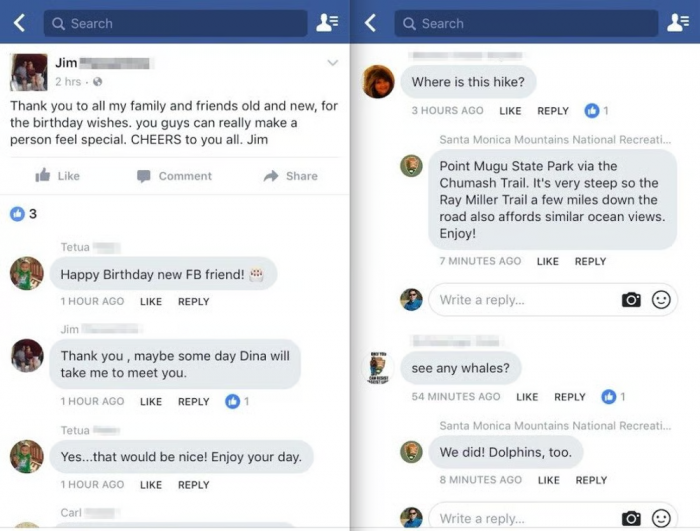
The cleanest fix for "I have nothing to post" is to let other people post for you. Your customers are already making content about your business, tagging photos, leaving reviews, replying to your sticker questions and resharing it costs you almost nothing while carrying more weight than anything you say about yourself.
There are a few reliable sources worth building a habit around:
● Reshare any Story or post a customer tags you in, which both fills your tray and quietly encourages the next person to tag you too.
● Turn a written review into a Story, screenshotting the words or typing the best line over a plain background.
● Answer a real question someone sent through your question sticker, so the content is literally handed to you by the audience.
Two practical notes keep this clean. Always ask before resharing anything that shows a person's face or name, even a glowing review, because a quick "mind if I share this?" protects you and flatters them. And give credit by tagging the original account. It's polite, and it pulls their followers toward you.
Stickers Do the Heavy Lifting
If you take one tactic from this article, make it stickers. A poll, a quiz, an emoji slider, a question box, or a countdown can carry an entire Story on its own, and each one generates exactly the taps and replies the format rewards. For a business short on content, a sticker is the closest thing to a free Story.
The reason they work is that they ask almost nothing of the viewer. Tapping one of two poll options takes a thumb and half a second, far less effort than typing a comment, which is why Stories built around a sticker get engagement that feed posts struggle to match.
A few prompts that suit a slow-update business:
● Run a this-or-that poll on two of your products and let the audience settle a genuine stocking decision for you.
● Drop a question box asking what people struggle with most in your area, then mine the answers for weeks of future Stories.
● Use a countdown for the one dated thing you do have, whether that's a market stall on Saturday or a sale that ends Friday.
The bonus is that every sticker doubles as research. The poll that flops and the question that floods your inbox are both telling you what your audience actually cares about.
Use the Calendar as Your Content Plan

When your business doesn't generate its own news, borrow the calendar's. Holidays, local events, seasons, weather, and industry "days" are a never-ending supply of reasons to post, and the best part is you can see them coming weeks out. The calendar becomes the posting schedule your business doesn't produce on its own.
The key is to pick hooks that genuinely connect to what you do, not to wish everyone a happy National Donut Day if you sell insurance. A garden centre leaning into the first frost warning, a bookshop posting a shelf for the start of the school term, a cafe reacting to a heatwave with its iced menu each of these feels timely rather than forced.
Local moments are the most underused of all. A street festival, a big match in town, a road closure, everyone's annoyed about reacting to something your whole neighbourhood is already talking about makes you feel like part of the community instead of a business shouting into it. Plan the obvious dates in advance, and leave room to jump on the local ones as they happen.
Teach One Small Thing at a Time
You know things your customers don't, and teaching one of them is some of the easiest content you'll ever make. A quick tip, a common mistake, a "most people don't realise" each one positions you as the person who knows their craft, with no news required.
The rule that makes this work is one idea per Story. The instinct is to cram everything you know into a single frame, which guarantees nobody finishes it. Instead, take the smallest useful thing how to tell if an avocado is ready, which setting ruins a washing machine, the one form people always fill in wrong and give it a frame of its own.
This is also where repurposing and teaching meet. A single list of "five mistakes people make" isn't one Story; it's five, posted across two weeks, each one small enough to watch in full and useful enough to screenshot. Done steadily, this quietly builds the thing every business wants: a reputation for actually knowing what you're doing.
Create Repeatable Story Series
Everything so far gets easier the moment you stop treating each Story as a blank page and start running a few recurring formats. A named series "Meet the Maker," "Tip Tuesday," a weekly poll removes the hardest part of posting, which isn't the filming, it's deciding what to post.
Series work on both sides of the screen. For you, the decision is already made: it's Tuesday, so it's a tip. For your audience, a format they recognise builds a small habit, and habits are what keep an irregular poster from being forgotten between posts. People start to expect your Friday poll even if that's the only day they hear from you.
Two or three series is plenty, and it's more than enough to carry a business that posts a few times a week. Pick formats you can genuinely sustain, give them names, and let the repetition do the work your news cycle can't.
A Posting Rhythm That Fits a Slow Week
Forget the advice to post daily; it was written for brands with a content team. A good Facebook strategy should reflect how much useful content a business can realistically produce. For a business without daily news, two to three Stories a week is a rhythm you can actually keep, and keeping it is what counts. A steady trickle beats a burst followed by three dead weeks.
The habit that makes this painless is batching. Set aside twenty minutes once a week, film three or four quick things in one go, and you've covered the week without touching it again on busy days. Here's what a realistic week might look like for a shop that pulls from the ideas above:
| Day | Story | Where it came from |
| Monday | A this-or-that poll on two products | Sticker that doubles as stock research |
| Wednesday | A thirty-second behind-the-counter clip | Batched in your weekly filming session |
| Friday | A customer review reshared with a thank-you | Customer-created content |
Three Stories, one of which the customer made for you and one of which is just a sticker none of it required news. Adjust the days to when your audience is actually online, but keep the shape: light, repeatable, and spread across the week.
Track What Actually Matters
You don't need a spreadsheet or a dashboard to read how your Stories are doing. Facebook gives you a few simple numbers inside Insights, and for a small business, glancing at them now and then is enough to learn what your audience likes. The goal is direction, not obsession.
Four numbers tell you almost everything worth knowing:
| What to look at | What it's telling you |
| Reach | How many people saw it your baseline for everything else |
| Replies and sticker taps | That people cared enough to respond, the strongest signal you have |
| Exits | Where someone left your Story, which flags a frame that lost them |
| Forward taps | Fast taps can mean it was snappy, or that nobody lingered read it with the others |
Don't judge a single Story too harshly; one quiet post means nothing. Look for patterns over a month instead. If polls always get taps and long clips always get exits, you've just been told what to make more of and that's the only real reason to check the numbers at all.
The Verdict: Show Up Regularly, Not Daily
The whole "I have no daily updates" worry rests on a false belief that Stories are a news feed. They're not. They're a way to stay familiar, and familiarity is built by showing up on a rhythm your audience can rely on, not by having something to announce.
Every idea here points the same direction. Bank the content that never expires, break one thing into many, let customers and stickers carry the load, and lean on the calendar and a couple of named series when the week is quiet. None of it depends on news, and all of it is sustainable for a business that posts a few times a week.
So don't try to do everything above. Pick two or three ideas that fit how you actually work, batch them into a twenty-minute session, and post them this week. Consistency, not frequency, is what keeps a small business in front of its customers and that's a bar you can clear without ever running out of things to say.
Comments