

On most feeds the same kind of post shows up written two ways. One carries a single line. The other runs several sentences before the platform hides the rest behind a "more" link. Creators defend both, and both can point to results that prove their side.
The debate never settles because caption length is not one decision with one answer. It shifts with the platform, the goal of the post, and what the image or video already does on its own. This article covers where short captions perform better, where long ones do, and how to decide which length a specific post needs.
Length Is a Cost the Reader Pays
Every caption competes for a reader who is moving through the feed fast. A short caption asks for about a second of reading. A long one asks the reader to stop and give thirty seconds or more, which is a bigger request in a space built for speed.
The attention a reader is willing to spend also changes by moment. Someone scrolling slowly in the evening reads more than the same person checking their phone between tasks. The caption has not changed, only the patience available for it, which is one reason the same copy performs differently at different times and on different platforms.
So the question that matters is not short or long. It is whether the extra words return more than the attention they ask for. A long caption that adds real information is worth its length, and a short caption that adds nothing wastes the space it takes.
The cost also depends on what the first line promises. A caption that opens with a clear benefit or a specific claim justifies more length, because the reader can see where the text is going. A caption that opens with a vague line spends attention before giving a reason to continue, so even a short one can feel too long.
What a Short Caption Is Good At
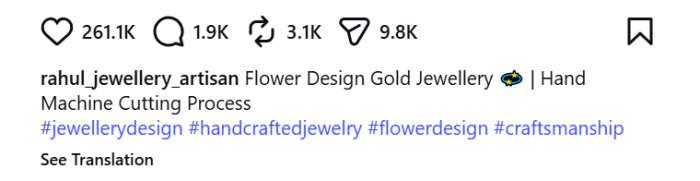
Figure: Short form Caption
Short captions work best when the visual has already delivered the message. A product photo, a meme, a reaction clip, or a before-and-after frame does not need a paragraph beneath it, because the image has made the point.
They also fit reaction-based engagement. One strong line under a strong image prompts a quick like or a short reply, and those actions build up because they ask almost nothing of the reader. Short captions tend to fit these cases:
• Posts where the image or video carries the full message and extra words would only repeat it.
• Fast-moving feeds where people react in a second and keep scrolling.
• Accounts that use a steady one-line style, so the audience learns the voice over time.
• Video posts where on-screen text and sound already handle the explaining.
Short does not mean careless. The strongest short captions are usually a longer draft cut down to its best line, not one line written and left alone. The effort goes into choosing which single idea to keep.
What a Long Caption Is Good At
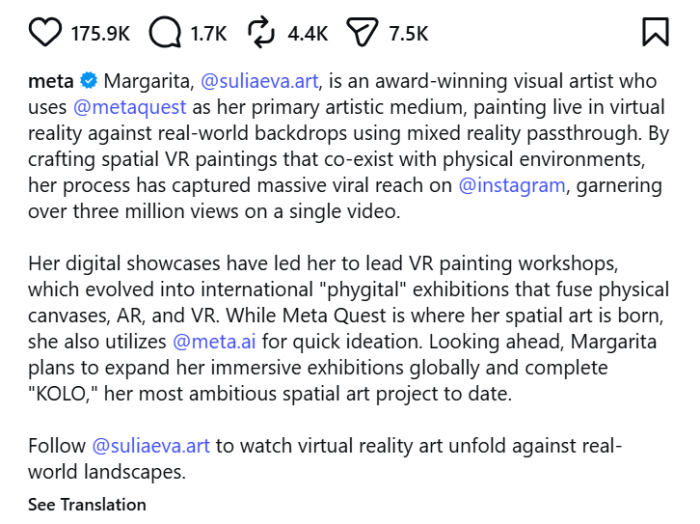
Figure: Long form Caption example
Long captions earn their length when the words add something the image cannot show. A photo can display a finished room, but only the caption can explain what went wrong during the work and how it was fixed. That added information is the reason to keep reading.
Longer copy also supports actions that short captions reach less often. It keeps a reader on the post longer, gives a reason to save it for later, and shows that someone with real experience runs the account. A reader who spends a minute with the text is more likely to remember who wrote it.
There is a search benefit too. Captions are text that platforms index, so copy that includes the words people search for can keep pulling a post back weeks after it went up. A single line rarely holds enough of those words to do the same.
Saves and shares also do more than show a number. On most feeds those two actions tell the platform a post was worth more than a glance, and it often responds by showing the post to more people. Longer captions reach saves and shares more easily, because detail is what makes a post worth keeping or passing on, which is how a long caption can widen reach instead of limiting it.
The First Line Carries Both
A caption gets read past its first line only if that line earns it. This applies to both lengths, because length is the second decision and the first is whether anyone reads the next word.
In a long caption the first line has to survive the "more" cut-off. The platform hides most of the text, so the visible part has to give a reason to tap and expand. A weak opening buries everything written below it.
A short caption has one line and no backup. If that line does not land, the post is over. A specific detail or an open question works better in that spot than a general statement, because it gives the reader a reason to stop scrolling.
Leading with the most useful or surprising point is a habit worth building for both lengths. It gives every reader the main value at once, and the rest of the caption then supports that point for the ones who stay. The same principle applies when writing Instagram captions for engagement.
How Far People Actually Read
Most readers never reach the end of a long caption. Attention drops off after the first line or two, and the "more" link marks the point where a large share of readers stop.
The cut-off is concrete. Instagram shows roughly the first 125 characters before it truncates. LinkedIn shows about two or three lines before the "see more" fold. The exact number depends on the platform and the device, but the point holds: the important words belong near the top, not at the end.
This is why the opening usually carries the hook, the main point, the reason to care, and the next step, with the detail placed afterward for readers who continue. The structure follows how news articles are built, where the first lines carry the story in case the reader leaves early.
Other platforms set their own limits. X allows 280 characters on a standard post, which caps length by design. TikTok allows up to 2,200 characters but shows only a line or two over the video. Facebook truncates after about three lines in the feed, and YouTube hides most of a description behind its own "show more" link. The visible portion, not the full limit, is what decides how a caption should be written.
What Platforms Count as Engagement
Engagement is not a single number. Platforms count several separate actions, and caption length affects each one differently. A caption written for likes is not built the same way as one written for saves or clicks.
The main actions split along these lines:
• Likes and quick comments favor short captions that earn a fast reaction.
• Saves and shares favor captions with enough detail to be worth keeping, which usually means more words.
• Dwell time, which many feeds now weigh heavily, favors anything that holds the reader on the post, where longer copy has the edge.
• Profile taps and link clicks depend less on length and more on a clear closing instruction.
Once the target action is clear, the length tends to follow from it. Trying to win every action with one caption usually produces a caption that wins none of them.
It also helps to separate reach from engagement rate. A short caption can lift raw reach by collecting fast reactions, while a longer caption can lift the rate at which viewers act even when fewer people see it. The two goals pull in different directions, so a caption built for one will not automatically serve the other.
Length That Fits Each Platform
Caption norms came from how each platform is used, how its feed cuts text, and what its audience expects to do there. The table is a reference point rather than a fixed rule, since a strong post can ignore it and still work.
| Platform | Length that fits | Why |
| Short to medium | The image leads and the caption supports it, so the first line before the "more" cut-off does most of the work. | |
| TikTok | Short | Sound and on-screen text carry the post, and the caption matters less than both. |
| Medium to long | Readers come for ideas and stories, and the feed rewards time spent and comments. | |
| X | Short | The character limit and the speed of the feed favor one clear thought. |
| Short to medium | A mixed audience scrolls fast, though a longer story still spreads when it connects. | |
| YouTube | Medium | Descriptions work more for search and context than for feed engagement. |
| Short to medium | Keyword-aware copy helps discovery, but the pin image stays the main driver. |
Across the table, length follows purpose. Platforms built for discovery and quick reactions reward shorter captions, and platforms built for reading and discussion give longer captions room to work.
Choose Length by What You Want
The quickest way to settle the length question for a single post is to start from the result and work back. The goal sets the length, not habit.
A post aimed at reach and fast reactions works better short, because each extra line slows the quick engagement that reach depends on. A post aimed at saves, trust, comments, or shares works better long, because those actions come from detail and context that need room.
In practice the goal points straight to a length. Reach calls for a short caption and a strong visual. Saves and authority call for a longer caption with information worth keeping. Comments depend less on length than on leaving a clear opening for people to reply. Clicks call for a short caption that ends on one plain instruction. The aim is to match the caption to one goal instead of a middle length that serves none of them.
A single post can also carry more than one goal, and that is where priority decides the length. A launch post may want both saves and clicks, but the caption still has to lead with one and treat the other as secondary, because a reader follows one instruction more reliably than two.
Where Each One Goes Wrong
Both lengths fail in predictable ways. A short caption fails when it says nothing. A single line with no idea and no reason to act is not concise, it is empty, and readers move past it.
A long caption fails when it pads. Three paragraphs that carry one paragraph of information train readers to skip the account's captions. The problem is not the length but the missing reason for it.
The common mistakes repeat on both sides. Writers force a word count because a guide suggested one, instead of writing to the post. They bury the call to action so far down that readers who finish still do not know the next step. They stuff keywords until the caption reads like it was written for a search crawler. They copy one viral post's length and treat a single result as a rule. Each of these comes from choosing length out of habit rather than from the post in front of them.
Length is also the easiest thing to blame when a caption fails, and usually the wrong thing. A caption that does not work almost always fails on substance first, and changing the length of an empty caption fixes nothing. The idea has to carry before the word count matters.
Find Your Own Number
Benchmarks from other accounts are a starting guess, not an answer, because another account's audience behaves differently. The only length data that fully applies to an account is the data from that account.
Testing it is simple. Hold everything steady except caption length, post similar content once short and once long across a few weeks, then measure against the goal rather than raw likes. A few rules keep the test honest:
• Compare posts of the same type and topic, since a reel measured against a carousel says nothing about length.
• Use enough posts to show a pattern, because one strong or weak post can mislead on its own.
• Measure the action tied to the goal, not the number that is easiest to see.
Run the comparison inside a steady stretch rather than across a quiet week and a busy one, since swings in reach will distort the result. After about a month the account shows which length its audience prefers, and the answer is usually more specific than a general rule.
A smaller version of the test can run in Stories or other quick formats before the feed commits to it. The aim is a pattern the account can trust, built from its own posts rather than borrowed from a report about a different audience.
Control Length on Purpose
The skill is writing to the length a post needs rather than defaulting to one. This works in both directions and takes effort either way.
Cutting a long caption means removing lines that repeat a point and the slow opening before the real start. A quick test is to delete the first sentence and check whether the caption reads worse. It often reads better, because the opening was only warm-up.
Adding to a short caption is harder, because it is not about stretching one idea. It means adding a detail the image does not show, such as the reason behind the moment or the cost that stayed off camera. Reading the caption out loud also exposes weak lines, since padding is easier to hear than to see on the screen.
Length is easier to control when the caption is drafted before the post goes up, not typed in the moment. A draft can be cut or expanded with the goal in view, while a caption written at the point of posting usually lands at whatever length came out first. The habit of drafting is what makes a deliberate length possible.
The Verdict
Short and long captions are not fixed rivals with one permanent winner. The length that earns more engagement depends on the platform, the post, and the single result the caption was written for.
Creators who get this right stop asking which length is better in general and start asking which length the current post needs, then write to that answer. That decision, made for each post, matters more than any set word count.
Comments