

There are days when Instagram feels unusually quiet. No launch is happening, there is no polished photo waiting in the camera roll, and nothing seems important enough to turn into a Story. That does not mean there is nothing worth posting.
Instagram Stories work well because they can capture smaller moments, quick thoughts, unfinished work, audience interaction, and everyday context. The challenge is usually not finding content. It is recognizing what already counts as content.
Why Story Ideas Dry Up
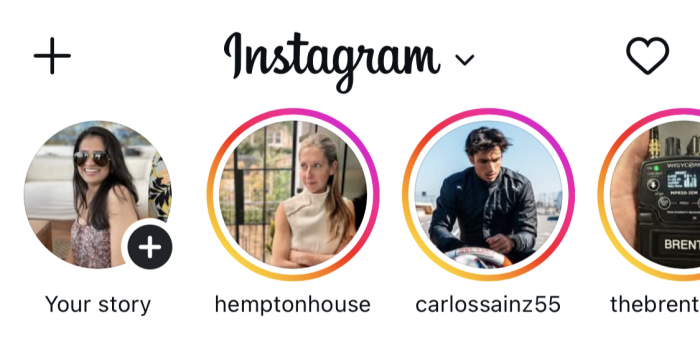
Running out of Story ideas often comes from treating Stories like feed posts. Feed content is usually more deliberate and polished, while Stories can work with far less because their value often comes from immediacy and context.
A creator may ignore an ordinary workday because nothing exciting happened. A business may skip posting because there is no promotion to announce. A consultant may assume every Story needs to teach something substantial. These expectations make simple material look too weak to publish.
The better approach is to think in smaller units. A decision being made, a question from a follower, an unfinished project, a useful recommendation, or even a minor frustration can become a Story when it has context.
Some common reasons Story ideas dry up include:
● Waiting for something exciting enough to justify posting instead of documenting smaller moments that already have a clear point.
● Assuming every Story needs polished graphics or professional photography when simple phone photos and text can work perfectly well.
● Posting mostly promotions, which makes quiet sales periods feel like content droughts.
● Trying to speak to every follower at once instead of addressing one useful idea, question, or situation.
● Repeating the same format until it stops feeling interesting to create or watch.
Once these habits are removed, Story creation becomes much easier.
Start With the Purpose
A useful Story does not always begin with an idea. Sometimes it begins with a purpose. Instead of asking, “What should I post today?” it is more useful to ask, “What do I want this Story to do?” That shifts the process from random inspiration to something repeatable.
| Story Goal | Good Content Types |
| Start conversations | Polls, questions, opinion prompts |
| Stay visible | Daily updates, quick moments, routine content |
| Build trust | Behind-the-scenes content, process, explanations |
| Educate | Small tips, mistakes, short tutorials |
| Drive action | Links, reminders, product mentions |
| Learn about followers | Polls, quizzes, question boxes |
Someone who wants interaction may post a quick poll. Someone who wants to build authority may explain one mistake people make in their niche. A brand that wants to stay visible without selling can show part of its day-to-day work.
This approach also prevents Stories from becoming a stream of unrelated posts because each frame has a reason to exist.
Share What Is Happening Right Now
One of the easiest Story sources is whatever is already happening around you. The important part is not the activity itself but the context around it.
A photo of a desk is not automatically interesting. A photo of a desk with a note saying, “Rewriting the opening because the first version sounds too sales-heavy” gives people something to understand.
The same principle works across many situations:
● Show what you are currently working on and explain what stage the project has reached.
● Share something you are researching and mention why it caught your attention.
● Post a photo from your workspace and add one specific detail about what is happening that day.
● Show a product, draft, design, or setup that is still being improved.
● Share a place you are visiting and explain why it matters to the work or routine around it.
Ordinary content becomes stronger when it answers one of three questions: what is happening, why it matters, or what happens next. That is also why Stories are often more forgiving than feed content. They allow people to see the middle of the process, not only the finished outcome.
Turn Opinions Into Stories
Not every Story needs a visual event. Opinions can create some of the most engaging content because they give followers something to react to.
A creator might share, “I think short captions work better than long ones for this type of Reel.” A marketer might say, “Most brands ask too many questions in one poll.” A designer might explain why they prefer one layout over another.
These posts work because they give the audience a position to agree with, question, or challenge. Useful opinion formats include “One thing I think people overcomplicate is…,” “I stopped doing this because…,” or “This advice sounds good, but it usually fails when…”
The point is not to manufacture controversy. Strong opinion Stories are specific enough to create discussion without being exaggerated for attention. They also help personal brands become more memorable because information can be found almost anywhere, while a clear perspective is harder to copy.
Ask Instead of Announcing
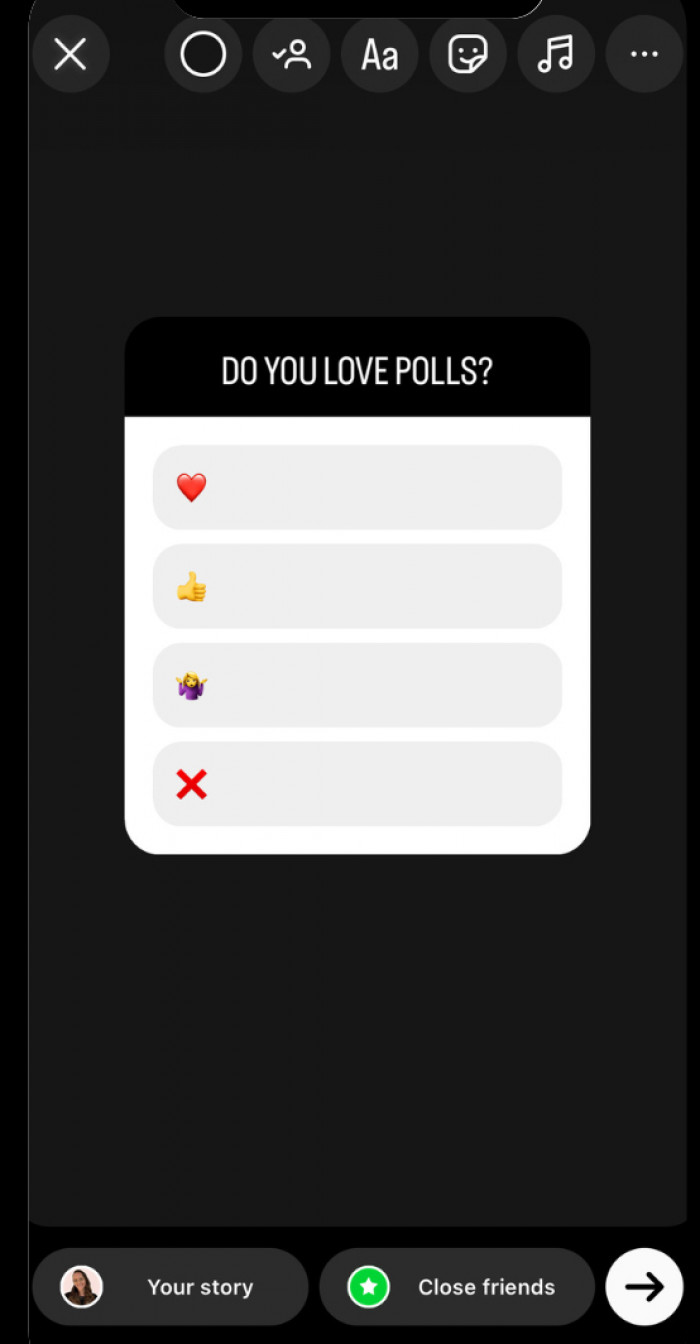
When there is nothing obvious to say, ask something. Interactive stickers work well because they turn followers into participants rather than passive viewers.
Different stickers suit different situations. Polls are best when the question can be answered instantly, while question boxes work better when the audience has some reason to contribute. Emoji sliders suit emotional or subjective responses, and quizzes work better when there is a correct answer or a playful knowledge element.
A simple question such as “Which version looks better?” is easier to answer than something broad like “What is your biggest business challenge?” The easier the response, the more casual the prompt can be.
This makes interaction feel natural rather than forced and gives the Story a clear purpose even when there is no major update to share.
Reuse Content With New Context
Having nothing new does not mean having nothing useful. Older content can become relevant again when it is given a fresh angle.
This works especially well for accounts with a backlog of Reels, posts, carousels, videos, newsletters, or saved audience questions. Instead of simply reposting something, add a reason for it to return.
You can:
● Pull one useful point from an old carousel and turn it into a one-frame reminder.
● Reshare an older Reel and explain whether your opinion has changed.
● Use an old photo but add new context about what happened afterward.
● Take one question from a previous comment section and answer it more clearly.
● Turn a longer article or video into a short Story sequence with one practical takeaway.
● Reshare customer or follower content and explain why it stood out.
The difference between recycling and repeating is context. Reposting old material adds little on its own, but a new observation, update, or follow-up gives people a reason to see it again.
Show the Work Behind the Work
Finished content hides most of the effort that went into producing it. Stories are one of the best places to reveal that hidden layer.
This works across almost every type of account. A product brand can show packaging decisions. A freelancer can share part of an editing process. A photographer can show location setup. A creator can show how a Reel moves from rough idea to finished post.
Useful behind-the-scenes ideas include:
● Show two draft versions and explain why one is likely to be discarded.
● Share a planning note and explain what is being changed before publication.
● Post part of a workspace and describe the task currently being completed.
● Show a failed attempt and explain what caused the problem.
● Reveal one decision that customers or followers normally never see.
This kind of content builds trust because it replaces the impression of effortless output with something more realistic. It also makes a brand feel more human without forcing personal content.
Teach One Small Thing
Educational Stories do not need to become mini lectures. One useful idea explained clearly is often more effective than several overloaded slides.
A simple format could look like this: the first frame identifies a problem, the second explains why it happens, and the third shows the better approach. For example, a Story about ignored polls could explain that the question takes too long to understand and then show a shorter version.
The same format works for one mistake, one shortcut, one useful definition, one before-and-after example, one tool, or one misconception worth correcting.
Small educational posts are easier to create consistently because there is no need to wait until there is enough information for a full carousel or Reel. One useful point can stand on its own when it is explained properly.
Let Followers Choose What Comes Next
One of the smartest ways to solve a content shortage is to use Stories to generate future content.
Ask followers what they want to see next. Their answers become both engagement and research. A creator can ask which topic deserves a full Reel, while a consultant can ask which problem needs a deeper explanation. A brand can ask which product feature people want demonstrated.
Simple prompts include:
● “Which topic should I explain tomorrow?”
● “Which version looks stronger?”
● “What should I test next?”
● “Which problem should I cover in more detail?”
● “Would you rather see a tutorial or a case study?”
This approach gives the account something useful to post immediately while also reducing guesswork around future content.
Use Repeatable Story Series
Creating something completely new every day is inefficient. Repeatable Story formats reduce the amount of decision-making involved while still allowing the content itself to change.
| Repeatable Series | Best For |
| One thing I learned | Educators, creators, consultants |
| Behind the scenes | Businesses and brands |
| Quick poll | Almost any account |
| Weekly recommendation | Lifestyle and niche creators |
| Ask me anything | Personal brands |
| Before and after | Designers, beauty, fitness, services |
A recurring format does not need to feel repetitive if the subject changes. “One thing I learned today” can cover a different observation each time, while “Behind the scenes Friday” can show a new process every week.
Recurring Stories also help followers understand what to expect, which creates continuity without requiring a large content series.
Match Ideas to the Account
The same Story idea does not work equally well for every account. The content should reflect why people followed in the first place.
For creators, good Story material includes work in progress, ideas being tested, opinions, audience questions, and everyday observations related to the niche.
For businesses, useful ideas include product use, staff activity, common customer questions, order preparation, restocks, and small operational moments.
For coaches and consultants, Story content can include mini lessons, misconceptions, useful frameworks, and client-facing lessons that protect privacy.
For personal accounts, recommendations, music, travel moments, memories, polls, reactions, and small daily updates often work well because the audience is following the person rather than a specific content category.
For e-commerce brands, product comparisons, customer photos, packaging, restocks, sizing guidance, and usage tips can fill Story gaps without relying on constant promotions.
A Simple Story Formula
When ideas feel vague, a simple framework can make them easier to shape. One useful structure is Moment + Context + Interaction.
The moment is what is happening, the context explains why it matters, and the interaction gives the viewer something to do. For example, someone editing a Reel might say they have changed the opening four times because the first few seconds still feel too slow, then ask followers which opening they would keep watching.
This formula works because it prevents an ordinary update from feeling empty. A photo on its own may not say much, but a photo with context becomes a Story, and adding interaction can turn it into a conversation.
What to Post When You Truly Have Nothing
Some days genuinely feel empty. There is no event, no launch, no new project, and no fresh image worth sharing.
In that situation, use a small set of fallback formats rather than forcing something complicated.
● Share one thing you learned that day and explain how it changed the way you approach something.
● Ask one simple poll that relates directly to your niche or audience.
● Show what you are currently doing and add enough context to make the activity understandable.
● Revisit an older post and add a new opinion, update, or lesson.
● Recommend one tool, resource, account, article, product, or idea that has been useful recently.
● Answer a question that customers, followers, or clients repeatedly ask.
● Share a small mistake and explain what you would do differently next time.
● Ask followers what topic they want to see next.
● Show one part of your process that normally stays hidden.
● Use an archived photo and explain why it still matters now.
These formats work because none of them depend on a major event. They depend on observation, context, and a clear reason for the Story to exist.
Avoid Posting Just to Fill Space
Consistency is useful, but constant filler is not. Posting several weak Stories because the account has been quiet can be worse than publishing one clear, useful frame.
Common filler habits include reposting content without commentary, publishing too many promotional Stories in a row, using polls that have no connection to the audience, and creating text-heavy slides that are difficult to scan.
It is also worth avoiding forced personal content. Not every account needs to show breakfast, a commute, or a coffee shop simply because those formats are common.
A useful filter is to ask whether the Story is interesting, helpful, entertaining, or revealing enough to justify the viewer’s attention. If it is not, the idea probably needs more context.
Final Words
Running out of Instagram Story ideas is rarely a content problem. It is usually a framing problem. Stories become easier when the focus moves away from finding something impressive and toward noticing what can be shown, explained, asked, or reacted to. A half-finished project, one useful opinion, a quick audience question, or a small lesson can be more effective than a polished post created only to stay visible.
The next time there seems to be nothing to post, look for something worth showing, explaining, asking, or sharing from a different angle. That shift usually produces better ideas than waiting for something exciting to happen.
Comments