

I didn't plan on spending two weeks quietly watching one public Instagram account's every like and follow, but that's what putting Dolphin Radar through its paces turns into. The pitch is simple: hand it a public username, and it builds a running report of what that account likes, who it follows and unfollows, and what it seems to care about. I went in expecting another glorified anonymous story viewer. What I found was more capable, and more uncomfortable, than that. Here's the feature-by-feature rundown.
At a glance
| What it is | A web-based tracker that monitors public Instagram activity over time and turns it into reports. |
| Best for | Marketers, competitor research, influencer scouting, and casual curiosity about public accounts. |
| Data source | Publicly available Instagram data only. It never touches private accounts. |
| Your IG login? | Not needed. You never connect or hand over your own account. |
| Price from | $2.75/month on the annual plan ($32.99/year); $4.49 month-to-month. |
| Free tier? | Free previews on the side tools; the core tracker is paid. |
| Standout | Genuinely doesn't require your credentials, plus a deep report and AI analysis. |
| Main drawback | One account per subscription, a dated interface, and features that infer more than they can prove. |
What Dolphin Radar actually is
Strip away the marketing and it's an Instagram activity monitor. You give it a username, and from that point on it keeps an eye on what that public account does and compiles the behaviour into a report you read from a dashboard. That word, monitor, matters more than the homepage lets on, because it shapes what you can realistically expect.
The distinction that trips people up:
• It is not a rewind button. Because it watches an account going forward, it can't hand you a tidy history of everything someone liked last year. It reports on activity it was present to observe, so the picture fills in over days and weeks rather than arriving whole on day one.
• It splits into two products that are easy to confuse. There's the paid core tracker (the reports, the alerts, the AI analysis), and a free toolkit of viewers and downloaders bolted on around it. They're priced and useful in completely different ways.
• It works entirely in the browser and never asks for your Instagram login, which immediately separates it from the shadier tools that want your credentials.
How I tested it
I ran a single public account through the tracker for about two weeks on desktop, then cross-checked whatever I could against the live profile: follower and following counts, and a couple of follows I already knew about. I also pointed it at a private account on purpose, to confirm it returns nothing (it does). I poked at the free tools separately.
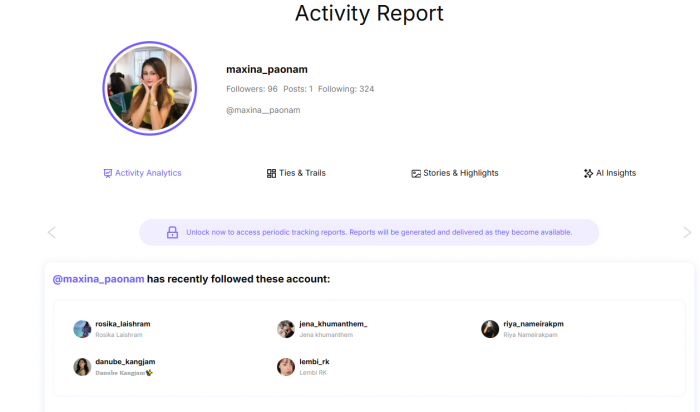
Getting in: signup, dashboard and adding an account
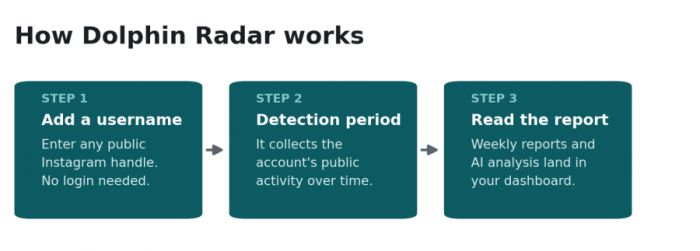
Onboarding is three steps, and they're honest about it: create an account, add the username you're curious about, and wait for the first report. Signup took a couple of minutes and, to repeat the reassuring point, at no stage does it ask for your Instagram password. Payment runs through Stripe, and the company says it stores no card details itself.
The dashboard is where the shine comes off a little. It's functional and everything is where you'd expect, but the layout feels a generation behind the polish of the marketing site: cramped in places and a bit utilitarian, the kind of interface you learn rather than glide through. That squares with what other users say, and I'd agree it's the weakest part of the day-to-day experience. Adding an account itself is painless: type the handle, confirm, and you're handed to the waiting room.
The detection period: the part nobody warns you about
After you add an account, nothing dramatic happens. There's a collection window while the tool gathers enough activity to say something useful, and reports then refresh on a weekly cadence rather than in real time. If you came expecting to type a name and get an instant dossier, this is where you'll feel let down. If you understand it as a behavioural picture that sharpens over time, the wait makes sense. Set the expectation before you buy, not after.
The core report, section by section
This is what you're paying for, so it deserves the most space. The tracker follows six categories of public activity, and it's worth being clear about which are hard facts and which are softer signals.
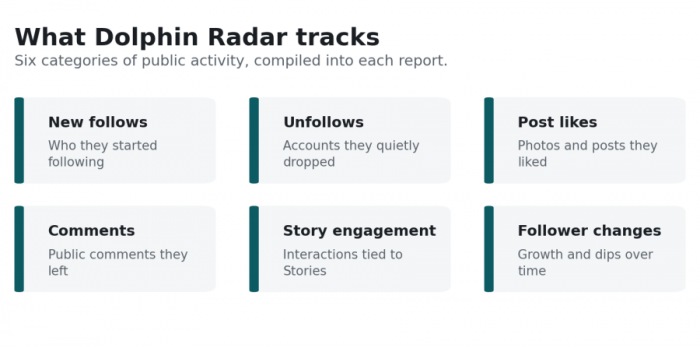
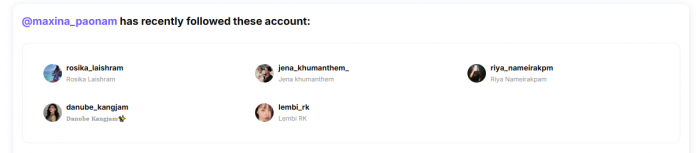
• New follows who the account has started following, the single most telling signal here and the reason most people show up. Easy to sanity-check against the profile, and in my testing it held up.
• Unfollows : accounts they've dropped, something Instagram itself never surfaces. This is genuinely useful information you can't get natively.
• Post likes : the photos and posts they've liked. This is the headline feature and, as I'll get to, also the one to treat with the most caution.
• Comments : public comments they've left on other accounts. Coverage felt patchy compared with follows.
• Story engagement : interactions tied to Stories, which by nature is more fleeting and less complete.
• Follower-count changes : the account's growth or decline over the period, plotted so you can spot spikes. Straightforward and reliable.
The AI analysis suite
On the quarterly and annual plans the report is wrapped in a set of AI modules that try to turn raw activity into a personality read. This is the flashiest part of the product and the part where you most need your skeptic's hat on. Here's how much weight I'd actually give each.
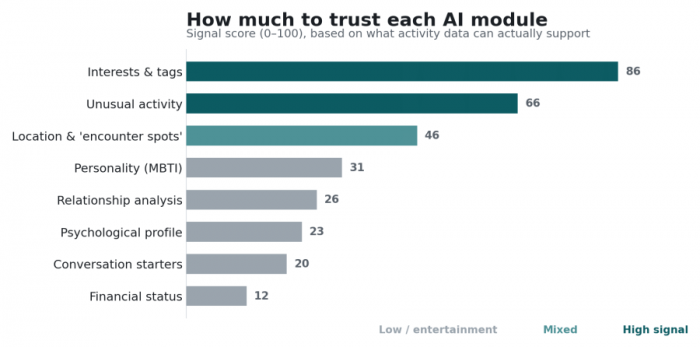
| Module | What it claims to do | My honest read |
| Interests & tags | Maps recurring themes across likes and follows | The genuinely useful one, especially for marketing |
| Personality (MBTI) | Assigns a personality type from behaviour | Fun, not evidence read it like a horoscope |
| Relationship analysis | Infers relationships and connections | Speculative; entertainment-grade inference |
| Financial status | Estimates spending or income signals | Wafer-thin basis; I wouldn't rely on it |
| Location & 'encounter spots' | Flags places tied to the account | Plausible in parts, and the most sensitive by far |
| Conversation starters | Suggests openers from their interests | Gimmicky, and a tell about who this is for |
| Unusual activity | Highlights sudden behaviour changes | Occasionally handy as a 'something changed' nudge |
The pattern is hard to miss. The modules that stick to observable behaviour (interests, unusual activity) are worth something. The ones claiming to read a person's psychology, finances or relationships are inference dressed as insight, stated with a confidence the underlying data can't support. Enjoy them, but don't mistake a generated guess for a fact about a real person.
The free toolkit
Around the paid tracker sits a spread of standalone tools, most with a free preview and paid depth. Judged on their own, they range from actually handy to filler:
• Anonymous Story Viewer and Post Viewer : view public Stories and posts without appearing in the viewer list or needing an account. These do what they say and are the tools I'd actually reach for.
• Downloaders (Stories, Highlights, and a separate Threads downloader) : save public content locally. Fine for the job, nothing exotic.
• Recent Follower and Unfollower Trackers : the practical pair for creators who want to know who arrived and who quietly left. The unfollower tool also flags accounts that don't follow back.
• Follower Export / CSV : the marketer's tool. The export carries detail the dashboard hides, including post URLs, media types, captions, location tags and timestamps, which is where serious spreadsheet analysis begins. It's gated to the paid quarterly tier and up.
• Hashtag Generator and Shadowban Checker : the generator is competent but no different from a dozen free ones elsewhere; the shadowban checker is a useful gut-check, though treat its verdict as an estimate rather than a ruling.
• Celebrity Influencers directory and a Mutual Followers checker : the directory is more of a marketing on-ramp than a tool, while the mutual-followers checker (do accounts A and B follow each other) is a neat, specific trick.
Accuracy and data quality
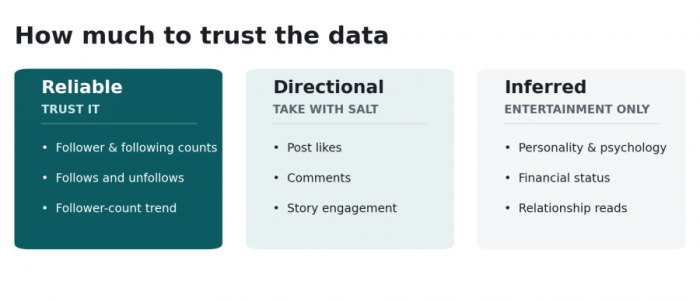
This is where a review earns its keep, so I'll be blunt about what stood up and what didn't. The objective, countable stuff was reliable: follower and following counts matched the live profile, and follow and unfollow events lined up with what I could verify. That's the tool at its best.
The likes data is a different story, and it's worth understanding why. Instagram removed the public 'following activity' feed back in 2019, so nobody, including tools like this, can pull a clean, complete record of what someone likes the way you once could inside the app. Treat the likes report as directional rather than exhaustive, and expect some lag between an action happening and it showing up. Comments and story engagement felt similarly incomplete. And private accounts, correctly, return nothing at all. In short: strongest on the hard numbers, softest on the inferred activity, and softest of all on the AI profiling built on top of it.
The privacy question worth sitting with
Two things are true about Dolphin Radar at the same time, and a fair review has to hold both.
The first is genuinely to its credit. The architecture is built to keep you safe: it uses only public data, it never asks for your Instagram credentials, and it stores no payment details on its own servers. Measured against the tools that phish your login or install something dubious, that's a meaningfully safer design, and it's the strongest reason to trust it over the bottom of this market.
The second is the part the marketing glides past. The entire value proposition is one-directional visibility. You are invisible; the person you point it at is exposed, and they never agreed to any of it. Look again at the AI modules 'relationship analysis', 'financial status', 'conversation starters', 'encounter spots' and it's plain these weren't designed for competitor analytics. They're designed for sizing up a person, and the company's own blog leans openly into checking on partners, exes and crushes.
One detail says more than the marketing does: Dolphin Radar excludes users in certain US states, Illinois and Texas among them, precisely the states with the toughest biometric and consumer-privacy laws. A company that carves out the strictest jurisdictions knows exactly which side of the line the product walks. Instagram's terms, for what it's worth, also take a dim view of scraping regardless of the 'public data' framing.
None of this makes the tool illegal to use, and it poses little risk to your own account. But the ethics live in why you're pointing it at a specific person. For marketing, competitor tracking and influencer research, there's nothing to agonise over. For quietly surveilling an individual who hasn't consented, that's a decision only you can make, and one worth making with your eyes open rather than on autopilot.
Pricing and value
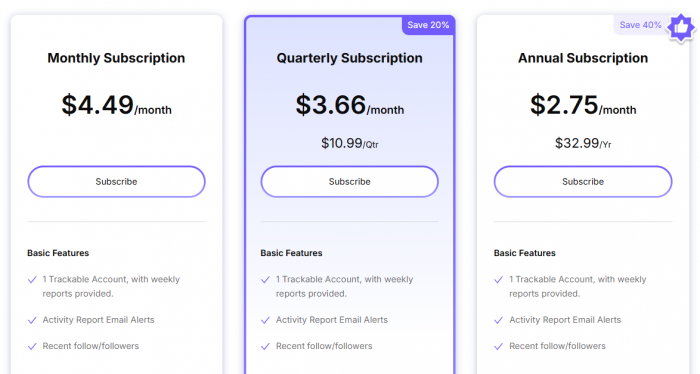
There are three tiers, all covering a single tracked account. The catch worth internalising before you pick one is that the AI insights and CSV export arguably half the reason to bother are withheld from the cheapest monthly plan. Month-to-month runs $4.49; the quarterly plan is $10.99, an effective $3.66 a month; and the annual plan is $32.99, which works out to $2.75 a month.
That annual number is genuinely cheap for what the tool does, and if you're doing ongoing research it's easy to justify. The structural annoyance is the one-account rule: tracking three profiles means paying for three separate subscriptions, which stacks up fast for anyone doing real competitive work. My practical advice is to start on the quarterly plan rather than monthly. It's the cheapest way to see the tool at full strength, because monthly quietly strips out the AI features you'll most want to judge.
What's good and what's not
What works
• It never asks for your Instagram login, the single biggest safety point in this category.
• Follow, unfollow and follower-count tracking is accurate and surfaces things Instagram hides from you.
• The interests and tag mapping is genuinely useful for marketing and audience research.
• It's cheap on the annual plan, and the CSV export is a real tool for spreadsheet analysis.
• A broad set of free viewers and downloaders comes bundled alongside the tracker.
What doesn't
• The dashboard is dated and a little clunky next to the slick marketing site.
• One account per subscription makes multi-profile research expensive.
• The AI profiling oversells what activity data can actually reveal about a person.
• The best features are locked out of the monthly plan, so month-to-month feels deliberately hobbled.
• Likes data is directional at best, thanks to Instagram's own 2019 changes, and can lag.
Who it's for and who should skip it
It's a clear fit for marketers, competitor researchers and influencer scouts the group the tool serves best and the one with no ethical baggage to carry. Creators who want to know who unfollowed them or track follower churn will get honest value from the tracking tools too. Casually curious people watching a public figure or a brand will find it entertaining enough, provided they read the AI parts as guesswork.
Two groups should think twice. Anyone hoping to peer into a private account should skip it outright, because it can't and won't do that. And if you're an anxious partner reaching for a surveillance report, the tool will happily oblige but it's worth asking whether a weekly log of someone's likes is really the thing your relationship needs.
How it compares
Dolphin Radar sits in a small field of Instagram activity trackers, and it publishes its own comparison against Lurk, which tells you who it treats as the rival to beat. Against that crowd, its edge is breadth: it bundles more viewers, downloaders and the AI suite into one place. The trade-off is that some single-purpose competitors do cleaner, more focused tracking without the inferential bells and whistles. If you want one tool that does a bit of everything, Dolphin Radar makes a strong case; if you want the tightest possible follow-and-like tracker and nothing else, it's worth shopping around.
| Tool | Best For | Main Strength | Main Limitation |
| Dolphin Radar | Broader Instagram tracking | Activity history, Stories, AI insights, and relationship mapping | Weekly core reports |
| Lurk | Follow/unfollow alerts | Faster, focused activity monitoring | Fewer advanced analytics |
| Snoopreport | Simple activity reports | Easy weekly tracking | Less depth and fewer extra tools |
| The Ick | Casual follow tracking | Simple mobile experience | Limited analytical features |
The Final Words
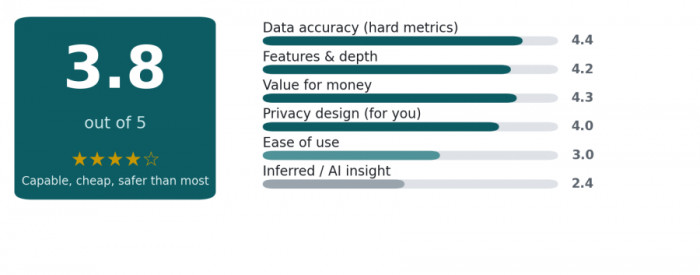
Dolphin Radar is more capable than I expected and cheaper than it has any right to be, and its refusal to touch your login puts it a clear tier above the sketchier corners of this market. The follow and unfollow tracking alone does something Instagram deliberately won't, and for marketing work the interest mapping and CSV export are the real deal. What holds it back is a dated interface, an AI layer that claims to know far more about people than activity data can support, the awkward one-account-per-subscription model, and an ethical shadow no amount of clever design fully removes.
If you'll use it for ongoing research, the annual plan is easy money. If you just want to see what it can do, buy the quarterly plan, never the monthly one, since the monthly tier withholds half the point. And whatever you track, be honest with yourself about why. Used on brands and competitors, it's a smart, low-cost edge. Used on a person, it's a mirror as much as a tool, and worth a second thought before you type in the name.
FAQ
Is Dolphin Radar legal to use?
Using it poses little risk to your own account, and it works only with public data. That said, scraping sits in a gray area under Instagram's terms, and the company excludes some US states with stricter privacy laws, so treat 'public' as a practical description, not a legal blessing.
Can it see private accounts?
No. Private accounts return nothing, which is exactly as it should be. If a profile is locked down, no tool of this kind can ethically or technically pull its activity.
Will the person know I'm tracking them?
No. You never follow or interact with the account, and you don't appear in any viewer list. The visibility runs one way, which is the whole product and also the uncomfortable part.
How long until I get useful data?
Not instantly. There's a collection window after you add an account, and reports refresh weekly rather than in real time, so the picture builds over days.
Do I have to connect my own Instagram?
No, and this is the best thing about it. It never asks for your credentials and runs entirely in the browser, so your own account is never exposed.
Comments